


Hypothermia does not increase the risk of infection: a case control study
- PMID: 21291523
- PMCID: PMC3221978
- DOI: 10.1186/cc10012
Hypothermia does not increase the risk of infection: a case control study
Abstract
Introduction: Hypothermia may improve outcome in patients after traumatic brain injury, especially when hypothermia is maintained for more than 48 hours. In the acute phase, patients with severe brain injury are more vulnerable to infections. Prolonged hypothermic treatment may further enhance the risk of infection. Selective decontamination of the digestive tract (SDD) reduces the risk of respiratory tract infections. The aim of this study was to investigate the incidence of infections in patients treated with hypothermia and normothermia while receiving SDD.
Methods: In this retrospective case control study 35 patients treated with prolonged hypothermia (cases) were identified and 169 patients with severe brain injury were included (controls). Propensity score matching was performed to correct for differences in baseline characteristics and clinical parameters. Primary outcome was the incidence of infection. The secondary endpoints were the micro-organisms found in the surveillance cultures and infection. In addition, a number of clinical characteristics were assessed.
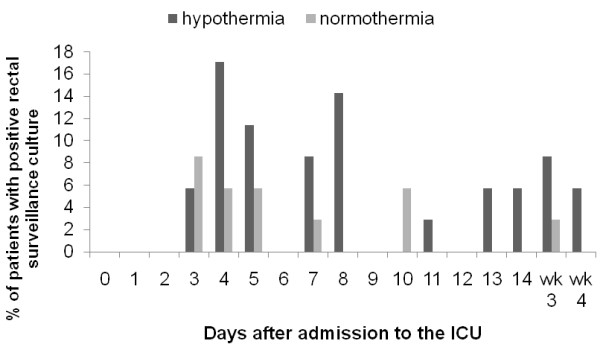
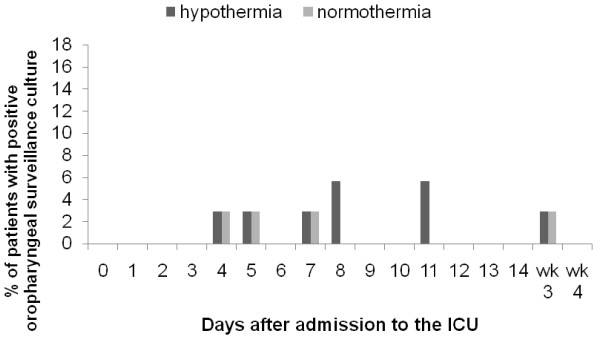
Results: The demographic and clinical data indicated that the cases and controls were well matched. The overall risk of infection during ICU stay was 20% in the hypothermia groups versus 34.4% in the normothermia group (P = 0.388). Pneumonia was diagnosed in 11.4% of patients in both groups (P = 1.000). The incidence of meningitis, wound infection, bacteremia, and urinary tract infection was low and comparable between the groups. SDD surveillance cultures indicated a higher colonization with gram-negative bacteria in the rectal samples of the hypothermia patients.
Conclusions: Hypothermia does not increase the risk of infection in patients treated with SDD.
Figures
Comment in
-
Hypothermia, immune suppression and SDD: can we have our cake and eat it?Crit Care. 2011;15(2):144. doi: 10.1186/cc10080. Epub 2011 Mar 31. Crit Care. 2011. PMID: 21489332 Free PMC article.
References
MeSH terms
LinkOut - more resources
Full Text Sources
