


Conceptual model for reducing infections and antimicrobial resistance in skilled nursing facilities: focusing on residents with indwelling devices
- PMID: 21292670
- PMCID: PMC3045539
- DOI: 10.1093/cid/ciq205
Conceptual model for reducing infections and antimicrobial resistance in skilled nursing facilities: focusing on residents with indwelling devices
Abstract
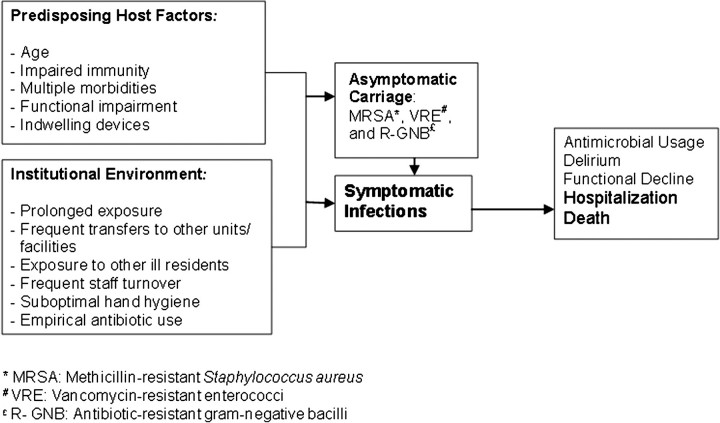
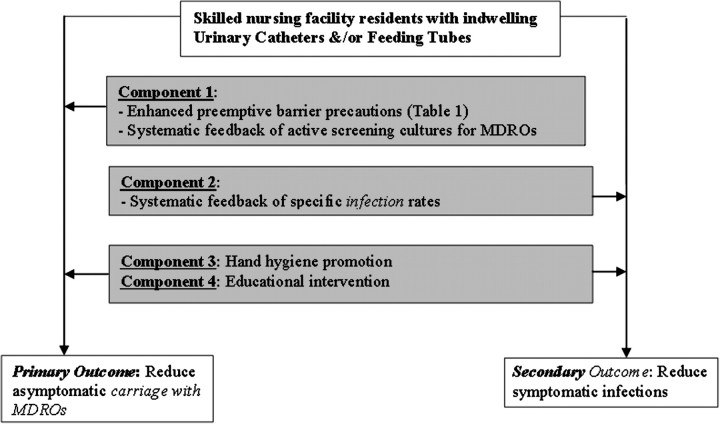
Infections in skilled nursing facilities (SNFs) are common and result in frequent hospital transfers, functional decline, and death. Colonization with multidrug-resistant organisms (MDROs) - including methicillin-resistant Staphylococcus aureus (MRSA), vancomycin-resistant enterococci (VRE), and multidrug-resistant gram-negative bacilli (R-GNB) - is also increasingly prevalent in SNFs. Antimicrobial resistance among common bacteria can adversely affect clinical outcomes and increase health care costs. Recognizing a need for action, legislators, policy-makers, and consumer groups are advocating for surveillance cultures to identify asymptomatic patients with MDROs, particularly MRSA in hospitals and SNFs. Implementing this policy for all SNF residents may be costly, impractical, and ineffective. Such a policy may result in a large increase in the number of SNF residents placed in isolation precautions with the potential for reduced attention by health care workers, isolation, and functional decline. Detection of colonization and subsequent attempts to eradicate selected MDROs can also lead to more strains with drug resistance. We propose an alternative strategy that uses a focused multicomponent bundle approach that targets residents at a higher risk of colonization and infection with MDROs, specifically those who have an indwelling device. If this strategy is effective, similar strategies can be studied and implemented for other high-risk groups.
Figures
References
-
- Jones AL, Dwyer LL, Bercovitz AR, et al. The National Nursing Home Survey: 2004 overview. Vital Health Stat. 2009;13:1–155. - PubMed
-
- Bonomo RA. Multiple antibiotic-resistant bacteria in long-term care facilities: an emerging problem in the practice of infectious diseases. Clin Infect Dis. 2000;31:1414–22. - PubMed
-
- Department of Veterans Affairs. VHA directive 2007–002: Methicillin-resistant Staphylococcus aureus (MRSA) initiative. https://www1.va.gov/vhapublications/ViewPublication.asp?pub_ID=1525. Accessed 20 January 2010.
Publication types
MeSH terms
Substances
Grants and funding
LinkOut - more resources
Full Text Sources
Medical
