


Amiodarone sensitizes human glioma cells but not astrocytes to TRAIL-induced apoptosis via CHOP-mediated DR5 upregulation
- PMID: 21292685
- PMCID: PMC3064603
- DOI: 10.1093/neuonc/noq195
Amiodarone sensitizes human glioma cells but not astrocytes to TRAIL-induced apoptosis via CHOP-mediated DR5 upregulation
Abstract
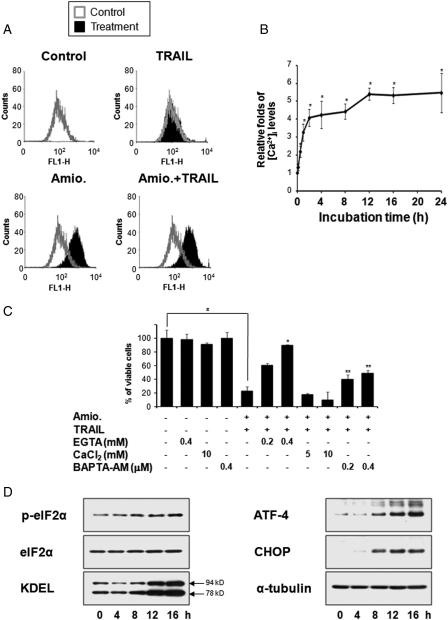
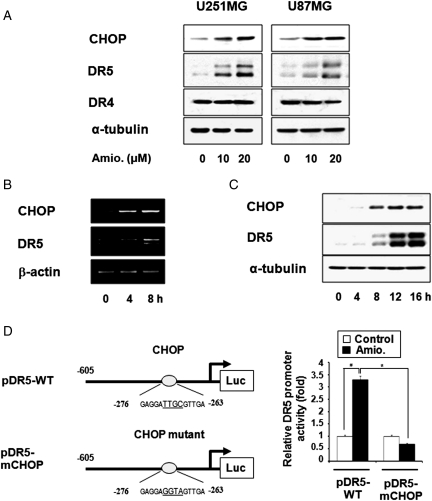
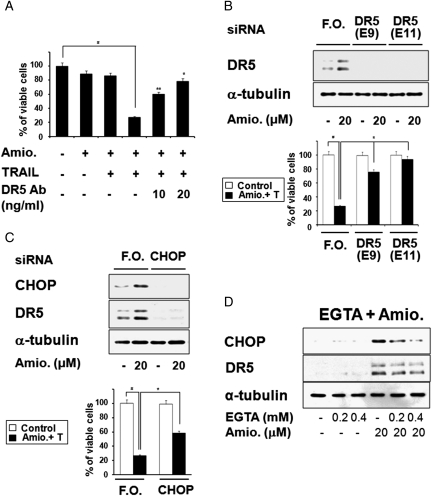
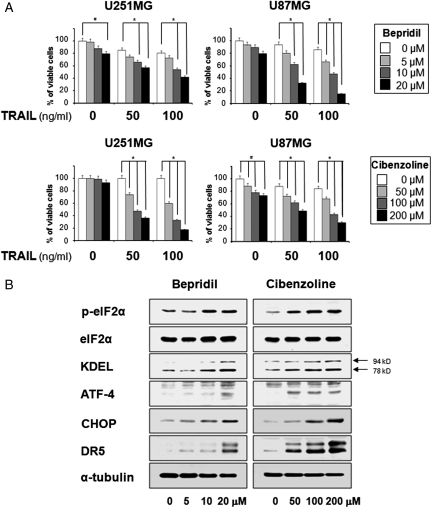
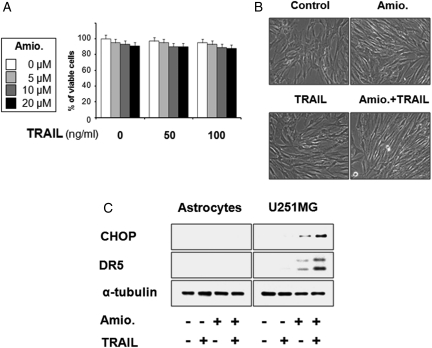
Amiodarone is a widely used anti-arrhythmic drug that inhibits diverse ion channels, including the Na(+)/Ca(2+) exchanger (NCX), L-type Ca(2+) channels, and Na(+) channels. Here, we report that subtoxic doses of amiodarone and tumor necrosis factor-related apoptosis-inducing ligand (TRAIL) synergistically induced apoptosis of various glioma cells. Treatment of U251MG glioma cells with amiodarone increased intracellular Ca(2+) levels and enhanced the expression of the endoplasmic reticulum (ER) stress-inducible transcription factor C/EBP homologous protein (CHOP). This upregulation of CHOP was followed by marked upregulation of the TRAIL receptor, DR5. Suppression of DR5 expression by small interfering (si) RNAs almost completely blocked amiodarone/TRAIL-induced apoptosis in U251MG glioma cells, demonstrating that DR5 is critical to this cell death. siRNA-mediated CHOP suppression reduced amiodarone-induced DR5 upregulation and attenuated the cell death induced by amiodarone plus TRAIL. In addition, omitting Ca(2+) from the external medium using ethylene glycol tetraacetic acid markedly inhibited this cell death, reducing the protein levels of CHOP and DR5. These results suggest that amiodarone-induced influx of Ca(2+) plays an important role in sensitizing U251MG cells to TRAIL-mediated apoptosis through CHOP-mediated DR5 upregulation. Furthermore, subtoxic doses of bepridil and cibenzoline, two other anti-arrhythmic drugs with NCX-inhibitor activity, also sensitized glioma cells to TRAIL-mediated apoptosis, via the upregulation of both CHOP and DR5. Notably, amiodarone/TRAIL cotreatment did not induce cell death in astrocytes, nor did it affect the expression of CHOP or DR5 in these cells. These results collectively suggest that a combined regimen of amiodarone plus TRAIL may offer an effective therapeutic strategy for safely and selectively treating resistant gliomas.
Figures

References
-
- Ashkenazi A, Dixit VM. Apoptosis control by death and decoy receptors. Curr Opin Cell Biol. 1999;11(2):255–260. - PubMed
-
- Hawkins CJ. TRAIL and malignant glioma. Vitam Horm. 2004;67:427–452. - PubMed
-
- Kleihues P, Cavenee WK. World Health Organization Classification of Tumors. Pathology and Genetics: Tumors of the Nervous System. 2nd. Albany, NY: WHO Publication Center USA; 2000.
-
- Maher EA, Furnari FB, Bachoo RM, et al. Malignant glioma: genetics and biology of a grave matter. Genes Dev. 2001;15(11):1311–1333. - PubMed
-
- Knight MJ, Riggkin CD, Muscat AM, et al. Analysis of FasL and TRAIL induced apoptosis pathways in glioma cells. Oncogene. 2001;20(41):5789–5798. - PubMed
Publication types
MeSH terms
Substances
LinkOut - more resources
Full Text Sources
Other Literature Sources
Research Materials
Miscellaneous
