Review
. 2011 Feb 4;108(3):353-64.
doi: 10.1161/CIRCRESAHA.110.227066.

Developmental and regenerative biology of multipotent cardiovascular progenitor cells

Affiliations
Review

Developmental and regenerative biology of multipotent cardiovascular progenitor cells

Anthony C Sturzu et al. Circ Res. .

Abstract

Our limited ability to improve the survival of patients with heart failure is attributable, in part, to the inability of the mammalian heart to meaningfully regenerate itself. The recent identification of distinct families of multipotent cardiovascular progenitor cells from endogenous, as well as exogenous, sources, such as embryonic and induced pluripotent stem cells, has raised much hope that therapeutic manipulation of these cells may lead to regression of many forms of cardiovascular disease. Although the exact source and cell type remains to be clarified, our greater understanding of the scientific underpinning behind developmental cardiovascular progenitor cell biology has helped to clarify the origin and properties of diverse cells with putative cardiogenic potential. In this review, we highlight recent advances in the understanding of cardiovascular progenitor cell biology from embryogenesis to adulthood and their implications for therapeutic cardiac regeneration. We believe that a detailed understanding of cardiogenesis will inform future applications of cardiovascular progenitor cells in heart failure therapy and regenerative medicine.


Figures
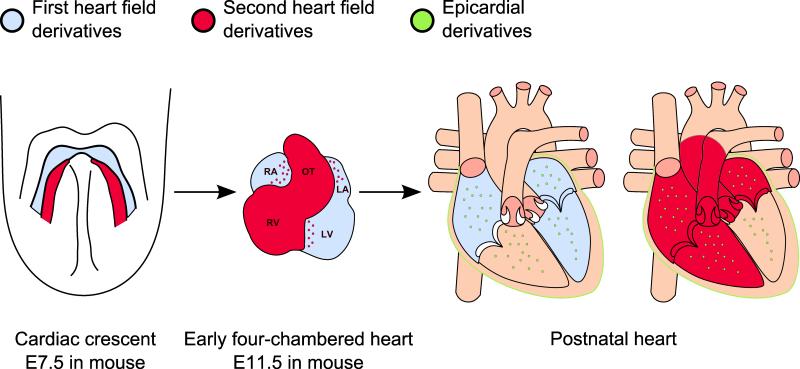
Figure 1
Figure 1. Embryologic contributions to mammalian heart development
The heart primordium is first recognizable as the cardiac crescent (left panel), a structure derived from first heart field (FHF, blue) cardiogenic precursors. The cells of the cardiac crescent join in the midline to form the linear heart tube which undergoes rightward looping to form the primitive chambers of the mammalian heart (middle panel). By this time, precursor cells that form in the second heart field (SHF, red) have migrated into the rostral and caudal portions of the developing heart. In the postnatal heart (right panel), progenitors from the FHF contribute primarily to the atria (LA, RA) and the left ventricle (LV). SHF derivatives contribute mainly to the atria, outflow tract (OT), and right ventricle (RV). Epicardial progenitors (green) also contribute to a minor portion of cardiomyocytes in all four heart chambers.
Figure 2
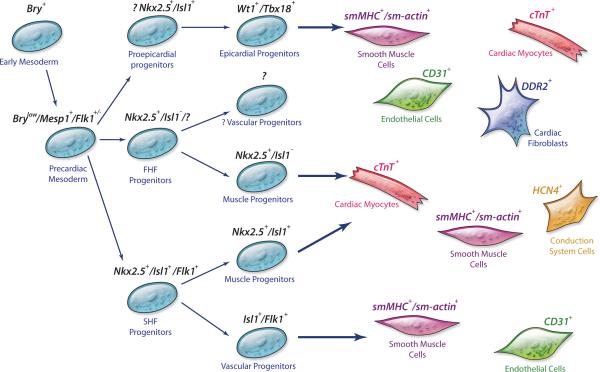
Figure 2. Proposed cellular hierarchy of cardiac progenitor cells and their lineage diversification
Precursors for heart-forming cells in the vertebrate mesoderm transition from expressing brachyury T to Mesp1 when they enter the precardiac mesoderm stage of development. As these early cardiac mesodermal cells contribute to the developing heart, their transcriptional program determines their further lineage specification. Within the second heart field, Isl1, together with Nkx2.5 and Flk1, defines multipotent Isl1+ cardiovascular progenitor cells that can give rise to myocardial, conduction system, smooth muscle, and endothelial lineages. A subset of precursors derived from Isl1+ progenitors may function as more restricted bipotent progenitors, displaying myocardial and smooth muscle potential or endothelial and smooth muscle potential. The developmental potential of the first heart field progenitors is largely uncharacterized. Epicardial progenitor cells are marked by Wt1 and/or Tbx18. These cells have been shown to give rise to cardiomyocytes, smooth muscle, endothelial cells, and fibroblasts in the heart. Abbreviations: Bry, brachyury T; CD31 (PECAM 1), platelet/endothelial cell adhesion molecule; cTnT, cardiac troponin T; DDR2, discoidin domain receptor 2; FHF, first heart field; Flk1, fetal liver kinase 1 (vascular endothelial growth factor receptor 2); HCN4, potassium/sodium hyperpolarization-activated cyclic nucleotide-gated channel 4; Isl1, Islet-1 transcription factor, LIM/homeodomain; Mesp1, mesoderm posterior 1; Nkx 2.5, NK2 transcription factor related, locus 5; SHF, second heart field; sm-actin, smooth muscle actin; smMHC, smooth muscle myosin heavy chain; Tbx18, T-box transcription factor 18; Wt1, Wilms’ tumor protein. (Illustration Credit: Cosmocyte/Cameron Slayden)
Figure 3
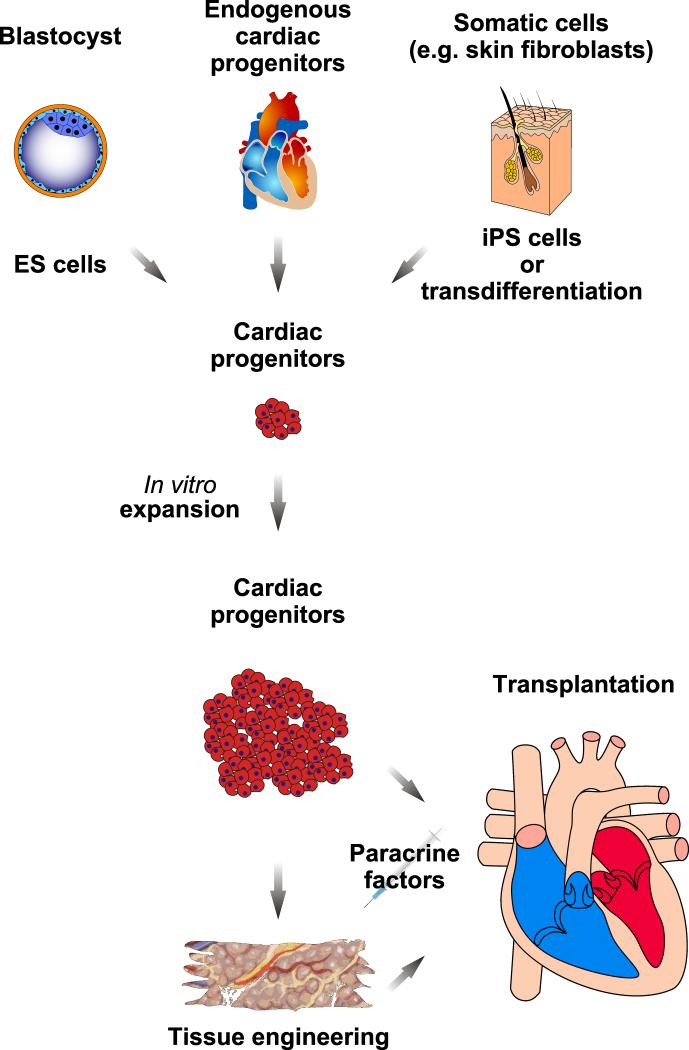
Figure 3. Strategies for delivering cardiac cell therapy
Conceptually, cardiovascular progenitor cells could be derived from human ES cells or isolated from cardiac biopsy specimens. Alternatively, they could be generated by reprogramming a patient's own somatic cells either directly (i.e. transdifferentiation) into cardiac progenitors/cardiomyocytes, or by generating iPS cells followed by differentiation into cardiac progenitors. Following expansion, they could be directly implanted into the heart or used for the generation of an engineered tissue graft. The addition of extracellular factors, either in vitro or in vivo, may enhance cardiomyocyte survival, trigger cardiac lineage-specific differentiation of endogenous or exogenous cardiac progenitor cells, or promote cardiac progenitor and/or cardiomyocyte proliferation.

References

    1. Robey TE, Saiget MK, Reinecke H, Murry CE. Systems approaches to preventing transplanted cell death in cardiac repair. J Mol Cell Cardiol. 2008;45:567–581. - PMC - PubMed
    1. Sigurdsson A, Swedberg K. The role of neurohormonal activation in chronic heart failure and postmyocardial infarction. Am Heart J. 1996;132:229–234. - PubMed
    1. Hansson EM, Lindsay ME, Chien KR. Regeneration next: toward heart stem cell therapeutics. Cell Stem Cell. 2009;5:364–377. - PubMed
    1. Odelberg SJ. Unraveling the molecular basis for regenerative cellular plasticity. PLoS Biol. 2004;2:E232. - PMC - PubMed
    1. Poss KD, Wilson LG, Keating MT. Heart regeneration in zebrafish. Science. 2002;298:2188–2190. - PubMed

Publication types