


Alteration of synaptic plasticity in rat dorsal striatum induced by chronic ethanol intake and withdrawal via ERK pathway
- PMID: 21293469
- PMCID: PMC4009942
- DOI: 10.1038/aps.2010.199
Alteration of synaptic plasticity in rat dorsal striatum induced by chronic ethanol intake and withdrawal via ERK pathway
Abstract
Aim: The dorsal striatum has been proposed to contribute to the formation of drug-seeking behaviors, leading to excessive and compulsive drug usage, such as addiction. The current study aimed to investigate the involvement of extracellular signal-regulated kinase (ERK) pathway in the modification of striatal synaptic plasticity.
Methods: Ethanol was administered to rats in drinking water at concentration of 6% (v/v) for 30 days. Rats were sacrificed on day 10, 20, or 30 during ethanol intake or on withdrawal day 1, 3, or 7 following 30-d ethanol intake. The striata were removed either for electrophysiological recording or for protein immuno-blot analysis. Extracellular recording technique was used to record population spikes (PS) induced by high-frequency stimulation (HFS) in the dorsolateral striatum (DLS).
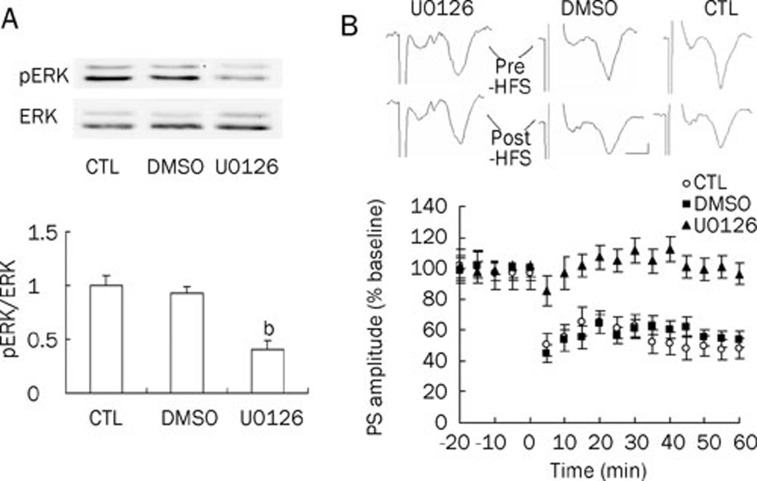
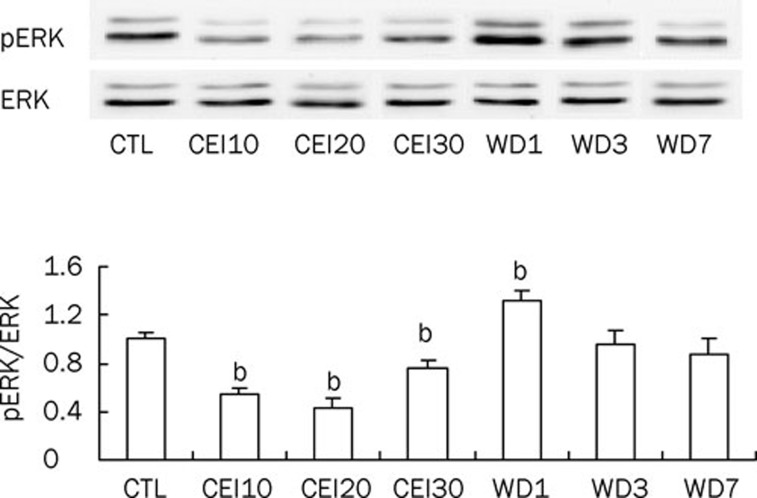
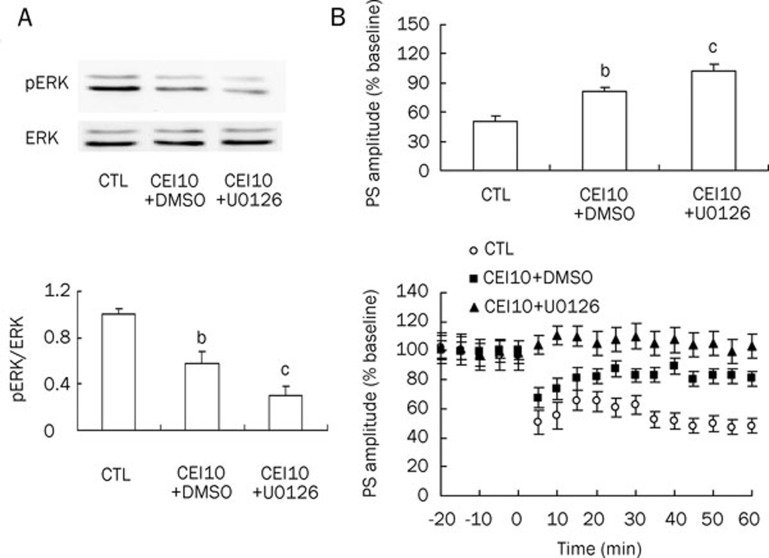
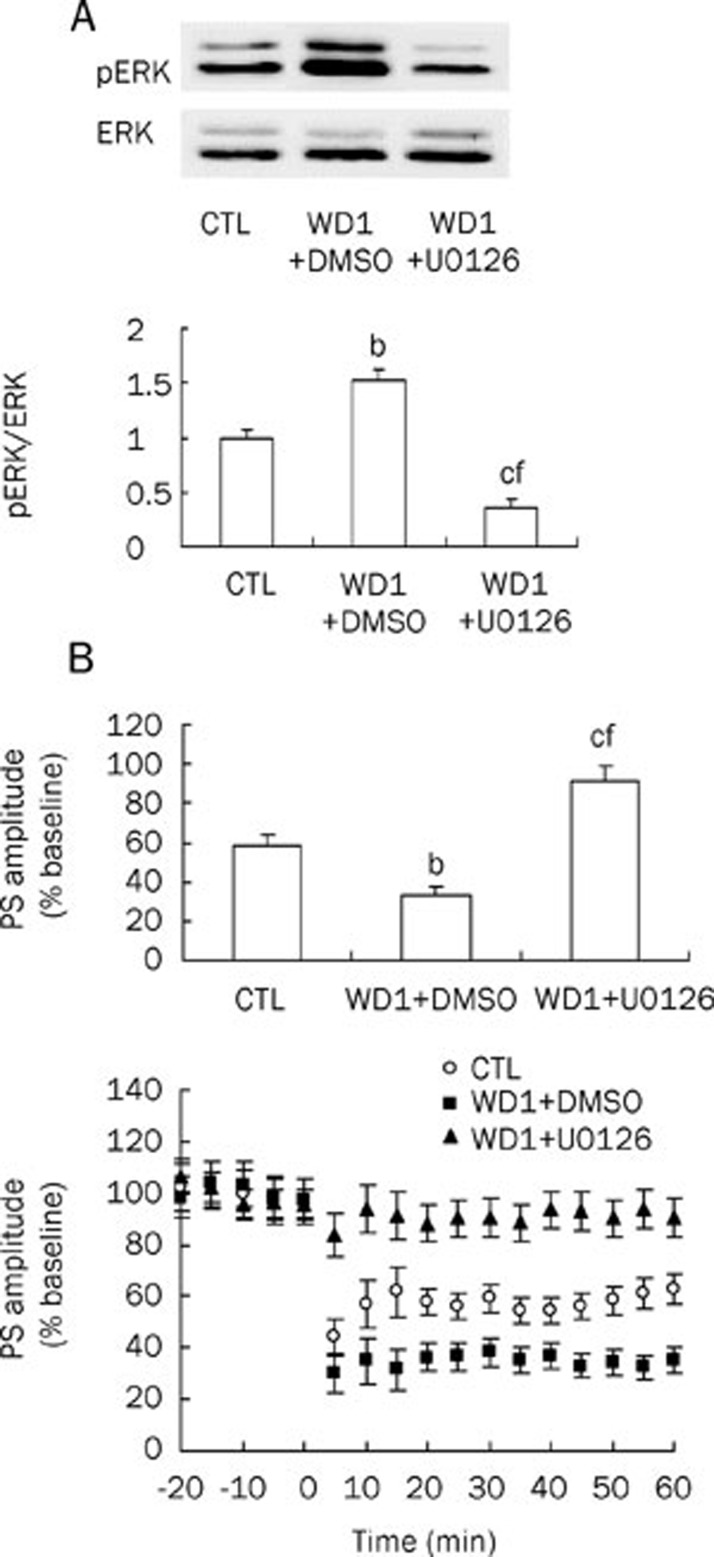
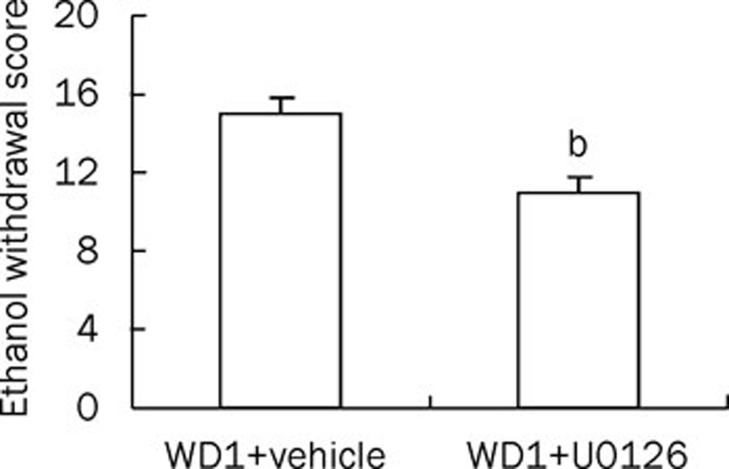
Results: Corticostriatal long-term depression (LTD) was determined to be dependent upon ERK signaling. Chronic ethanol intake (CEI) attenuated ERK phosphorylation and LTD induction, whereas withdrawal for one day (W1D) potentiated ERK phosphorylation and LTD induction. These results showed that the impact of chronic ethanol intake and withdrawal on corticostriatal synaptic plasticity was associated with ethanol's effect on ERK phosphorylation. In particular, pharmacological inhibition of ERK hyper-phosphorylation by U0126 prevented LTD induction in the DLS and attenuated ethanol withdrawal syndrome as well.
Conclusion: In rat DLS, chronic ethanol intake and withdrawal altered LTD induction via ERK signaling pathway. Ethanol withdrawal syndrome is mediated, at least partly, by ERK hyper-phosphorylation in the DLS.
Figures
References
-
- Nestler EJ. Molecular basis of long-term plasticity underlying addiction. Nat Rev Neurosci. 2001;2:119–28. - PubMed
-
- Berke JD, Hyman SE. Addiction, dopamine, and the molecular mechanisms of memory. Neuron. 2000;25:515–32. - PubMed
-
- Kelley AE. Memory and addiction: shared neural circuitry and molecular mechanisms. Neuron. 2004;44:161–79. - PubMed
-
- Hyman SE, Malenka RC, Nestler EJ. Neural mechanisms of addiction: the role of reward–related learning and memory. Annu Rev Neurosci. 2006;29:565–98. - PubMed
Publication types
MeSH terms
Substances
LinkOut - more resources
Full Text Sources
Medical
Miscellaneous
