


Ethnic and religious differentials in Bulgarian mortality, 1993-98
- PMID: 21294054
- PMCID: PMC3057429
- DOI: 10.1080/00324728.2010.535554
Ethnic and religious differentials in Bulgarian mortality, 1993-98
Abstract
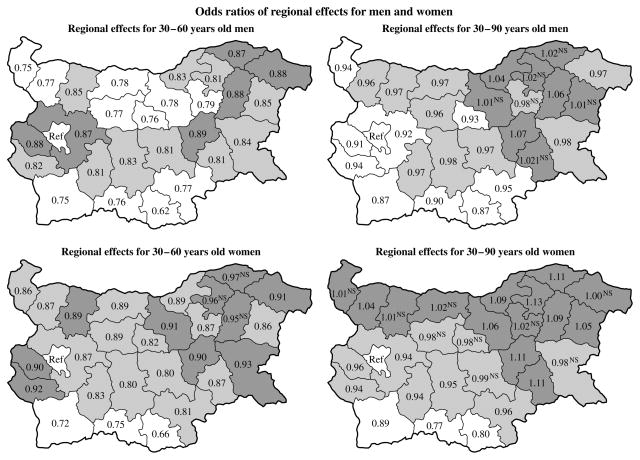
We investigated ethnic/religious mortality differentials in Bulgaria during the 1990s. The analyses employed a unique longitudinal data-set covering the entire population of Bulgaria from the census of 1992 until 1998. The mortality of Roma is very high compared to all other ethnic/religious groups. The excess applies to nearly every cause of death examined and is not entirely explained by the adverse location of Roma on social and economic variables. For young men, Muslim mortality is substantially lower than that of non-Muslims when socio-economic differences are controlled. An analysis of causes of death suggests that lower consumption of alcohol may contribute to this 'Muslim paradox'. For older Turkish women, a significant mortality disadvantage remains after controls are imposed. Suicide mortality is lower for Muslims than for Christian groups of the same ethnicity. Consistent with deteriorating economic conditions over the study period, mortality was rising, particularly for women.
Figures


References
-
- Balabanova D, Mckee M. Patterns of alcohol consumption in Bulgaria. Alcohol & Alcoholism. 1999;34(4):622–628. - PubMed
-
- Bobak M, Marmot M. East-West health divide and potential explanations. In: Hertzman C, Kelly S, Bobak M, editors. East-West Life Expectancy Gap in Europe. Environmental and Non-Environmental Determinants. Dordrecht/Boston/London: Kluwer Academic Publishers; 1996a. pp. 17–44.
-
- Bobak M, Marmot M. Alcohol and mortality in Russia: Is it different than elsewhere? Annals of Epidemiology. 1999;9(6):335–338. - PubMed
-
- Carlson P. The European Health Divide: A matter of financial or social capital? Social Science and Medicine. 2004;59(9):1985–1992. - PubMed
Publication types
MeSH terms
Grants and funding
LinkOut - more resources
Full Text Sources