


Protective and risk factors in amateur equestrians and description of injury patterns: A retrospective data analysis and a case - control survey
- PMID: 21294862
- PMCID: PMC3042925
- DOI: 10.1186/1752-2897-5-4
Protective and risk factors in amateur equestrians and description of injury patterns: A retrospective data analysis and a case - control survey
Abstract
Background: In Switzerland there are about 150,000 equestrians. Horse related injuries, including head and spinal injuries, are frequently treated at our level I trauma centre.
Objectives: To analyse injury patterns, protective factors, and risk factors related to horse riding, and to define groups of safer riders and those at greater risk
Methods: We present a retrospective and a case-control survey at conducted a tertiary trauma centre in Bern, Switzerland.Injured equestrians from July 2000 - June 2006 were retrospectively classified by injury pattern and neurological symptoms. Injured equestrians from July-December 2008 were prospectively collected using a questionnaire with 17 variables. The same questionnaire was applied in non-injured controls. Multiple logistic regression was performed, and combined risk factors were calculated using inference trees.
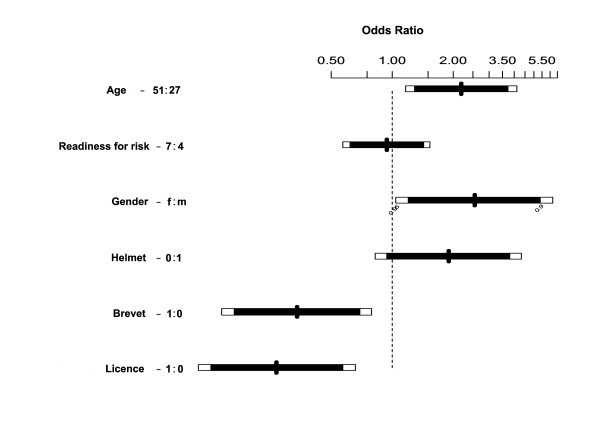
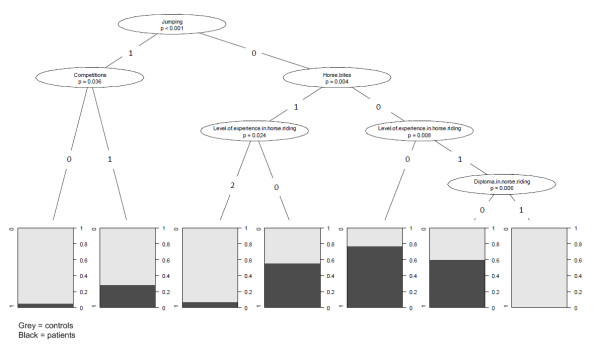
Results: RETROSPECTIVE SURVEY: A total of 528 injuries occured in 365 patients. The injury pattern revealed as follows: extremities (32%: upper 17%, lower 15%), head (24%), spine (14%), thorax (9%), face (9%), pelvis (7%) and abdomen (2%). Two injuries were fatal. One case resulted in quadriplegia, one in paraplegia. CASE-CONTROL SURVEY: 61 patients and 102 controls (patients: 72% female, 28% male; controls: 63% female, 37% male) were included. Falls were most frequent (65%), followed by horse kicks (19%) and horse bites (2%). Variables statistically significant for the controls were: Older age (p = 0.015), male gender (p = 0.04) and holding a diploma in horse riding (p = 0.004). Inference trees revealed typical groups less and more likely to suffer injury.
Conclusions: Experience with riding and having passed a diploma in horse riding seem to be protective factors. Educational levels and injury risk should be graded within an educational level-injury risk index.
Figures
References
-
- Swiss Equestrian Federation. Lizenzen/Brevets/Tests. http://www.fnch.ch/de/ausbildung/lizenzen-brevet-tests.html (last accessed 18/10/2010)
-
- Fédération Equestre Internationale. FEI standards. http://www.horsesport.org/about-us/standards (last accessed 18/10/2010)
