


Chest radiography patterns in 75 adolescents with vertically-acquired human immunodeficiency virus (HIV) infection
- PMID: 21295205
- PMCID: PMC3477630
- DOI: 10.1016/j.crad.2010.10.009
Chest radiography patterns in 75 adolescents with vertically-acquired human immunodeficiency virus (HIV) infection
Abstract
Aim: To evaluate lung disease on chest radiography (CR), the relative frequency of CR abnormalities, and their clinical correlates in adolescents with vertically-acquired human immunodeficiency virus (HIV) infection.
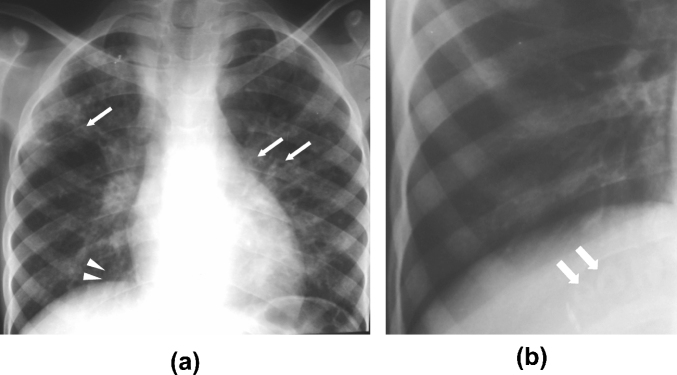
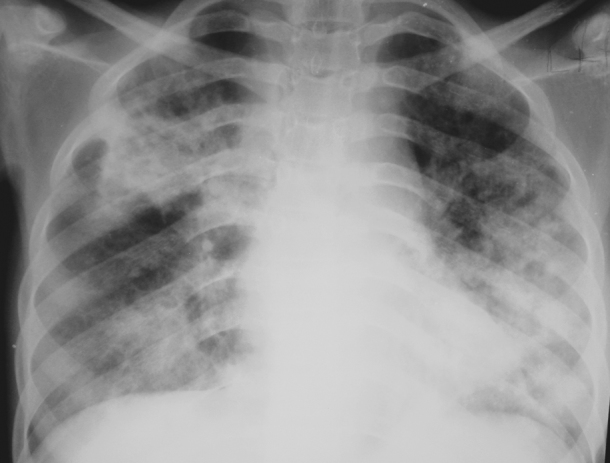
Materials and methods: CRs of 75 patients [59 inpatients (33 males; mean age 13.7±2.3 years) and 16 outpatients (eight males; mean age 14.1±2.1 years)] were retrospectively reviewed by three independent observers. The overall extent of disease (to the nearest 5%), its distribution, and the proportional extents (totalling 100%) of different radiographic patterns (including ring/tramline opacities and consolidation) were quantified. CR features and clinical data were compared.
Results: CRs were abnormal in 51/75 (68%) with "extensive" disease in 38/51 (74%). Ring/tramline opacities and consolidation predominated (i.e., proportional extent >50%) in 26 and 21 patients, respectively. Consolidation was significantly more common in patients hospitalized primarily for a respiratory illness than patients hospitalized for a non-respiratory illness or in outpatients (p<0.005, χ(2) for trend); by contrast, ring/tramline opacities did not differ in prevalence across the groups. On stepwise logistic regression, predominant consolidation was associated with progressive dyspnoea [odds ratio (OR) 5.60; 95% confidence intervals (CI): 1.60, 20.1; p<0.01] and was associated with a primary respiratory cause for hospital admission (OR: 22.0; CI: 2.7, 181.1; p<0.005). Ring/tramline opacities were equally prevalent in patients with and without chronic symptoms and in those admitted to hospital with respiratory and non-respiratory illness.
Conclusion: In HIV-infected adolescents, evaluated in secondary practice, CR abnormalities are prevalent. The presence of ring/tramline opacities, believed to reflect chronic airway disease, is not linked chronic respiratory symptoms.
Copyright © 2010 The Royal College of Radiologists. Published by Elsevier Ltd. All rights reserved.
Figures
References
-
- Joint United Nations Programme on HIV/AIDS (UNAIDS) and World Health Organisation (WHO) 1 ed. UNAIDS; Switzerland: 2007. AIDS epidemic upadate: December 2007. In: Joint United Nations Programme on HIV/AIDS (UNAIDS) and World Health Organisation (WHO) pp. 1–50.
-
- De Cock K.M., Fowler M.G., Mercier E. Prevention of mother-to-child HIV transmission in resource-poor countries: translating research into policy and practice. JAMA. 2000:1175–1182. - PubMed
-
- Newell M.L., Coovadia H., Cortina-Borja M. Mortality of infected and uninfected infants born to HIV-infected mothers in Africa: a pooled analysis. Lancet. 2004;364:1236–1243. - PubMed
-
- Marston M., Zaba B., Salomon J.A. Estimating the net effect of HIV on child mortality in African populations affected by generalized HIV epidemics. J Acquir Immune Defic Syndr. 2005;38:219–227. - PubMed
Publication types
MeSH terms
Grants and funding
LinkOut - more resources
Full Text Sources
Medical
