


Multiple barriers to recombination between divergent HIV-1 variants revealed by a dual-marker recombination assay
- PMID: 21295586
- PMCID: PMC3065980
- DOI: 10.1016/j.jmb.2011.01.052
Multiple barriers to recombination between divergent HIV-1 variants revealed by a dual-marker recombination assay
Abstract
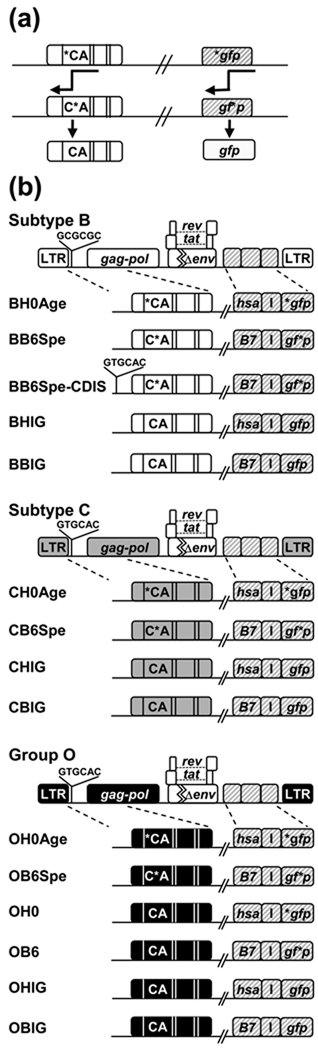
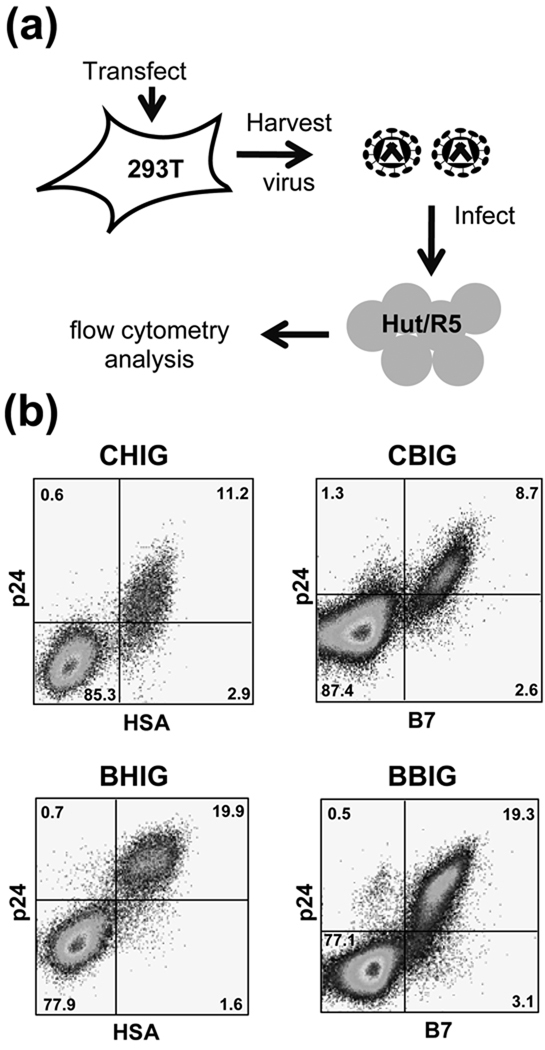
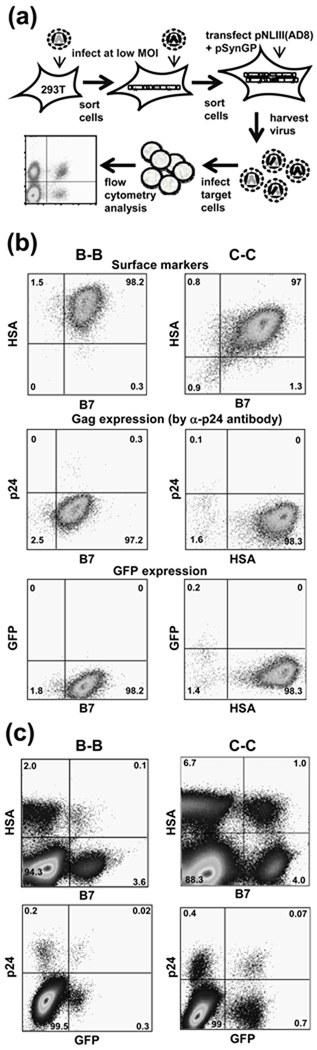
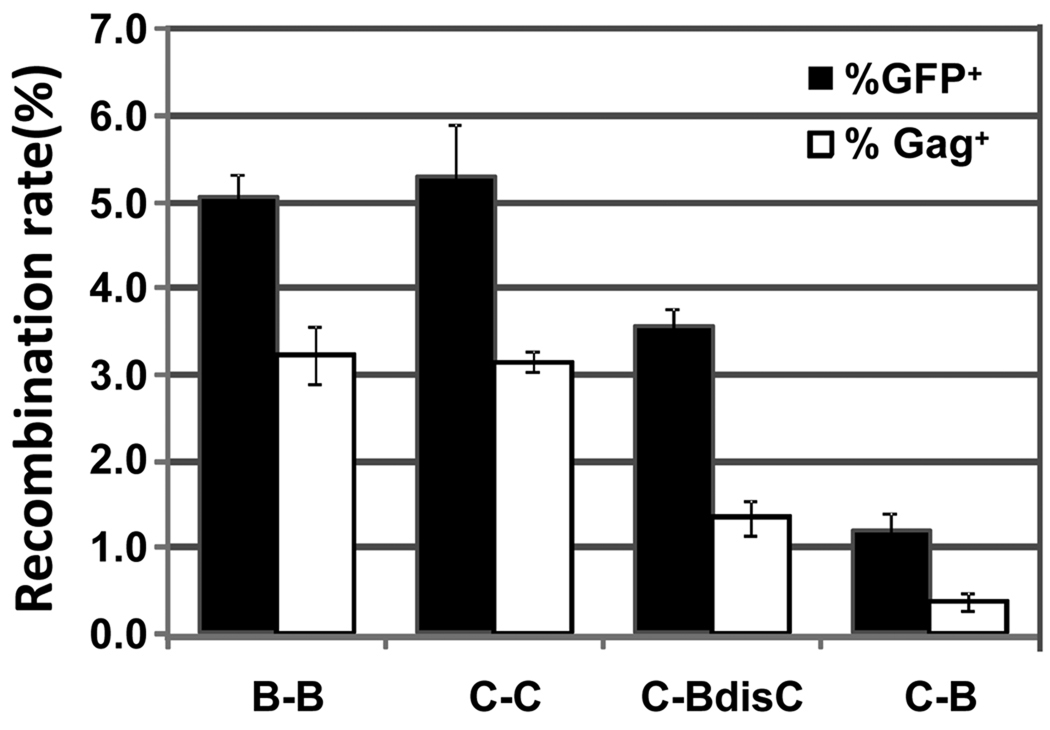
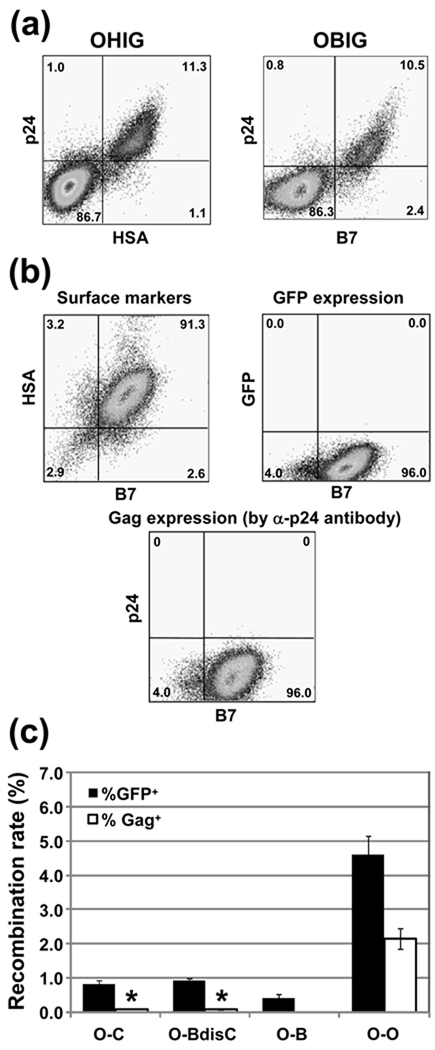
Recombination is a major force for generating human immunodeficiency virus type 1 (HIV-1) diversity and produces numerous recombinants circulating in the human population. We previously established a cell-based system using green fluorescent protein gene (gfp) as a reporter to study the mechanisms of HIV-1 recombination. We now report an improved system capable of detecting recombination using authentic viral sequences. Frameshift mutations were introduced into the gag gene so that parental viruses do not express full-length Gag; however, recombination can generate a progeny virus that expresses a functional Gag. We demonstrate that this Gag reconstitution assay can be used to detect recombination between two group M HIV-1 variants of the same or of different subtypes. Using both gfp and gag assays, we found that, similar to group M viruses, group O viruses also recombine frequently. When recombination between a group M virus and a group O virus was examined, we found three distinct barriers for intergroup recombination. First, similar to recombination within group M viruses, intergroup recombination is affected by the identity of the dimerization initiation signal (DIS); variants with the same DIS recombined at a higher rate than those with different DIS. Second, using the gfp recombination assay, we showed that intergroup recombination occurs much less frequently than intragroup recombination, even though the gfp target sequence is identical in all viruses. Finally, Gag reconstitution between variants from different groups is further reduced compared with green fluorescent protein, indicating that sequence divergence interferes with recombination efficiency in the gag gene. Compared with identical sequences, we estimate that recombination rates are reduced by 3-fold and by 10- to 13-fold when the target regions in gag contain 91% and 72-73% sequence identities, respectively. These results show that there are at least three distinct mechanisms preventing exchange of genetic information between divergent HIV-1 variants from different groups.
Published by Elsevier Ltd.
Figures
References
-
- Gao F, Bailes E, Robertson DL, Chen Y, Rodenburg CM, Michael SF, Cummins LB, Arthur LO, Peeters M, Shaw GM, Sharp PM, Hahn BH. Origin of HIV-1 in the chimpanzee Pan troglodytes troglodytes. Nature. 1999;397:436–441. - PubMed
-
- Van Heuverswyn F, Li Y, Neel C, Bailes E, Keele BF, Liu W, Loul S, Butel C, Liegeois F, Bienvenue Y, Ngolle EM, Sharp PM, Shaw GM, Delaporte E, Hahn BH, Peeters M. Human immunodeficiency viruses: SIV infection in wild gorillas. Nature. 2006;444:164. - PubMed
-
- Plantier JC, Leoz M, Dickerson JE, De Oliveira F, Cordonnier F, Lemee V, Damond F, Robertson DL, Simon F. A new human immunodeficiency virus derived from gorillas. Nat Med. 2009;15:871–872. - PubMed
-
- McCutchan FE. Global epidemiology of HIV. J Med Virol. 2006;78 Suppl 1:S7–S12. - PubMed
Publication types
MeSH terms
Substances
Grants and funding
LinkOut - more resources
Full Text Sources
Other Literature Sources
