


Melanoma cells show a heterogeneous range of sensitivity to ionizing radiation and are radiosensitized by inhibition of B-RAF with PLX-4032
- PMID: 21295875
- PMCID: PMC3050997
- DOI: 10.1016/j.radonc.2010.12.017
Melanoma cells show a heterogeneous range of sensitivity to ionizing radiation and are radiosensitized by inhibition of B-RAF with PLX-4032
Abstract
Purpose: To assess the relative radiosensitivities of a large collection of melanoma cell lines and to determine whether pharmacologic inhibition of mutant B-RAF with PLX-4032 can radiosensitize B-Raf+ melanoma cells.
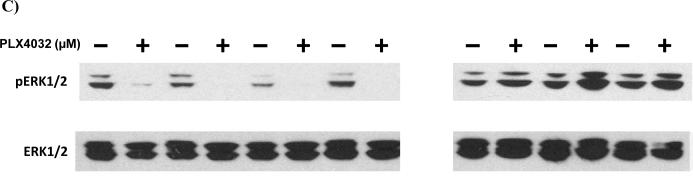
Materials and methods: A large collection of melanoma cell lines (n=37) were treated with 0-8Gy IR and clonogenic survival assays used to generate survival curves to rank relative radiosensitivities among the cell lines. The ability of a B-RAF inhibitor, PLX-4032, to radiosensitize highly radioresistant B-Raf+ cells was also assessed by clonogenic cell survival and spheroid invasion assays and the effects of treatment on the cell cycle assessed by FACS.
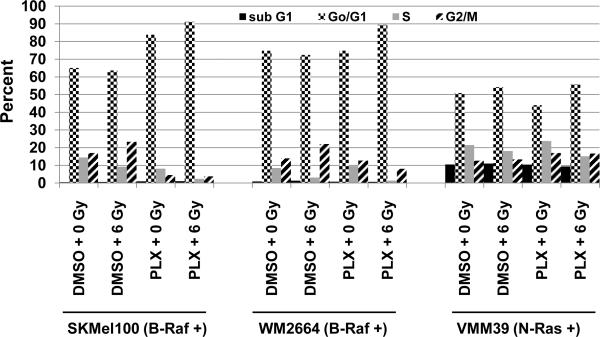
Results: Melanoma cell lines displayed a very large, heterogeneous range of SF2 values (1.002-0.053) with a mean of 0.51. Cell lines with surviving fractions of 0.29 or less at SF2 and SF4 were observed at a high frequency of 18.9% and 70.2%, respectively. Treatment of B-Raf+ cells with the B-RAF inhibitor PLX-4032 in combination with radiation provided enhanced inhibition of both colony formation and invasion, and radiosensitized cells through an increase in G(1) arrest.
Conclusions: Our data suggest that melanomas are not uniformly radioresistant with a significant subset displaying inherent radiosensitivity. Pharmacologic inhibition of B-RAF with PLX-4032 effectively radiosensitized B-Raf+ melanoma cells suggesting that this combination approach could provide improved radiotherapeutic response in B-Raf+ melanoma patients.
Published by Elsevier Ireland Ltd.
Figures
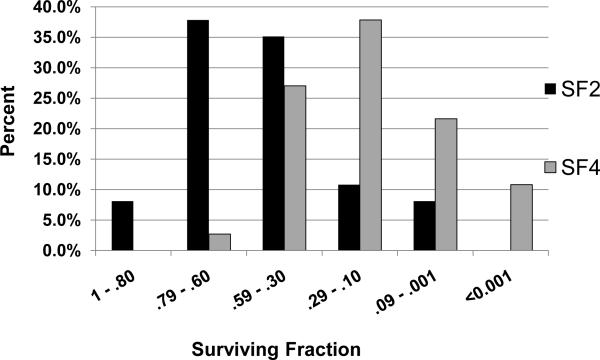
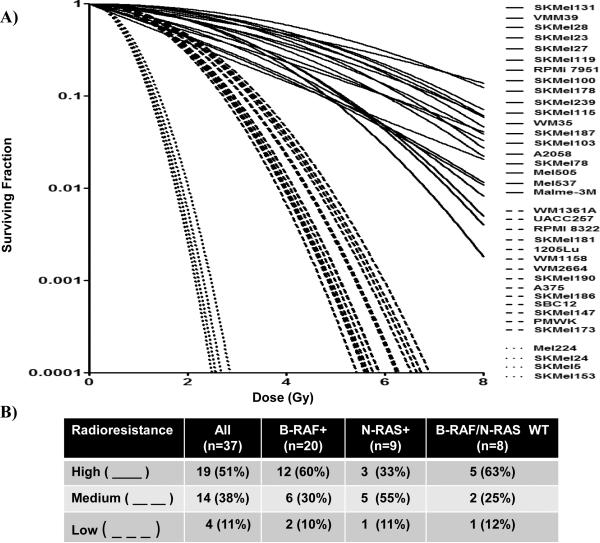
 ), medium (
 ), or high (
 ). (B) Statistical comparisons of relative radioresistance among B-Raf+, N-Ras+, or BRaf/N-Ras WT melanoma cell lines. Fisher's exact test showed no significant differences between genotypes (P=0.49).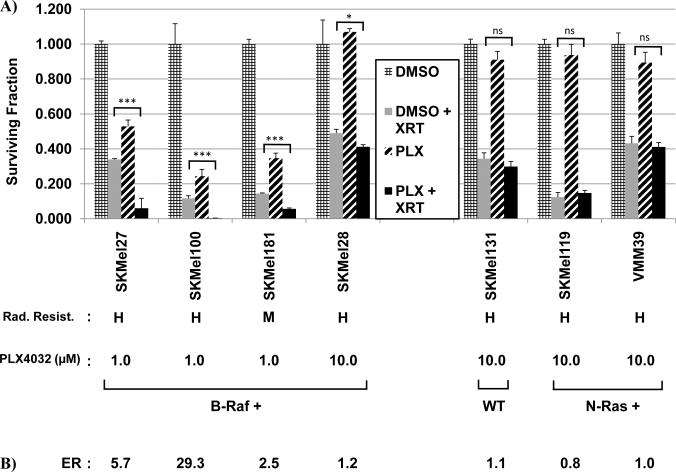
References
-
- Mouawad R, Sebert M, Michels J, et al. Treatment for metastatic malignant melanoma: Old drugs and new strategies. Crit Rev Oncol Hematol. 2009 - PubMed
-
- Guadagnolo BA, Zagars GK. Adjuvant radiation therapy for high-risk nodal metastases from cutaneous melanoma. Lancet Oncol. 2009;10:409–416. - PubMed
-
- Stevens G, McKay MJ. Dispelling the myths surrounding radiotherapy for treatment of cutaneous melanoma. Lancet Oncol. 2006;7:575–583. - PubMed
Publication types
MeSH terms
Substances
Grants and funding
LinkOut - more resources
Full Text Sources
Medical
Research Materials
Miscellaneous
