


Misrepresentation of neuroscience data might give rise to misleading conclusions in the media: the case of attention deficit hyperactivity disorder
- PMID: 21297951
- PMCID: PMC3031509
- DOI: 10.1371/journal.pone.0014618
Misrepresentation of neuroscience data might give rise to misleading conclusions in the media: the case of attention deficit hyperactivity disorder
Abstract
Background: There is often a huge gap between neurobiological facts and firm conclusions stated by the media. Data misrepresentation in the conclusions and summaries of neuroscience articles might contribute to this gap.
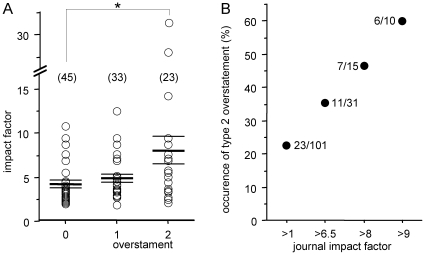
Methodology/principal findings: Using the case of attention deficit hyperactivity disorder (ADHD), we identified three types of misrepresentation. The first relies on prominent inconsistencies between results and claimed conclusions and was observed in two scientific reports dealing with ADHD. Only one out of the 61 media articles echoing both scientific reports adequately described the results and, thus questioned the claimed conclusion. The second type of misrepresentation consists in putting a firm conclusion in the summary while raw data that strongly limit the claim are only given in the results section. To quantify this misrepresentation we analyzed the summaries of all articles asserting that polymorphisms of the gene coding for the D4 dopaminergic receptor are associated with ADHD. Only 25 summaries out of 159 also mentioned that this association confers a small risk. This misrepresentation is also observed in most media articles reporting on ADHD and the D4 gene. The third misrepresentation consists in extrapolating basic and pre-clinical findings to new therapeutic prospects in inappropriate ways. Indeed, analysis of all ADHD-related studies in mice showed that 23% of the conclusions were overstated. The frequency of this overstatement was positively related with the impact factor of the journal.
Conclusion/significance: Data misrepresentations are frequent in the scientific literature dealing with ADHD and may contribute to the appearance of misleading conclusions in the media. In synergy with citation distortions and publication biases they influence social representations and bias the scientific evidence in favor of the view that ADHD is primarily caused by biological factors. We discuss the social consequences and the causes of data misrepresentations and suggest a few corrective actions.
Conflict of interest statement
Figures
References
-
- McKhann G. Research Must Pass an Ethical ‘Smell Test’. 2007. Available: http://www.dana.org/news/braininthenews/detail.aspx?id=9928.
-
- Dentzer S. Communicating medical news—pitfalls of health care journalism. N Engl J Med. 2009;360:1–3. - PubMed
-
- Woloshin S, Schwartz LM. Press releases: translating research into news. Jama. 2002;287:2856–2858. - PubMed
-
- Easterbrook PJ, Berlin JA, Gopalan R, Matthews DR. Publication bias in clinical research. Lancet. 1991;337:867–872. - PubMed
-
- Ioannidis JP. Contradicted and initially stronger effects in highly cited clinical research. Jama. 2005;294:218–228. - PubMed
Publication types
MeSH terms
LinkOut - more resources
Full Text Sources
Other Literature Sources
Medical
Miscellaneous
