


Psychosocial aspects of caregiving: perceptions of cancer patients and family caregivers
- PMID: 21298291
- PMCID: PMC4929054
- DOI: 10.1007/s00520-011-1092-1
Psychosocial aspects of caregiving: perceptions of cancer patients and family caregivers
Abstract
Purpose: The care of cancer patients involves collaboration among health care professionals, patients, and family caregivers. As health care has evolved, more complex and challenging care is provided in the home, usually with the support of family members or friends. The aim of the study was to examine perceived needs regarding the psychosocial tasks of caregiving as reported by patients and caregivers. We also evaluated the association of demographic and clinical variables with self-reported caregiving needs.
Methods: Convenience samples of 100 cancer patients and 100 family caregivers were recruited in outpatient medical and radiation oncology waiting areas-the patients and caregivers were not matched dyads. Both groups completed a survey about their perceptions of caregiving tasks, including how difficult the tasks were for them to do. Demographic information was also provided by participants.
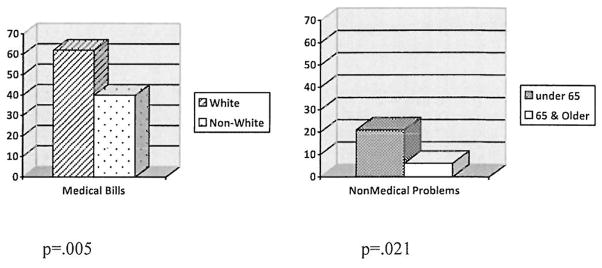
Results: Caregivers reported providing more help in dealing with feelings than patients endorsed needing. Caregivers were also more likely than patients to report the psychosocial aspects of caregiving were more difficult for them. Lastly, caregivers were more likely to report helping with logistical issues in comparison with patients expressing this need. Race, length of time since diagnosis, and age were associated with patients' expressed needs, while only number of hours spent providing care was associated with the caregivers' reporting of care activities.
Conclusions: Our results suggest that patients may underestimate how difficult caregivers perceive the psychosocial aspects of caregiving to be. Also, it seems that caregivers tend to take on the psychosocial aspects of caregiving, although patients do not tend to report this need. Caregiving needs were only minimally associated with demographic variables, as was participation in caregiving tasks.
Conflict of interest statement
Figures
References
-
- Jemal A, Siegal R, Ward E, Hao Y, Xu J, Thun M. Cancer statistics, 2009. CA Cancer J Clin. 2009;59:225–249. - PubMed
-
- Robison J, Fortinsky R, Kleppinger A, Shugrue N, Porter M. A broader view of family caregiving: Effects of caregiving and caregiver conditions on depressive symptoms, health, work and social isolation. J Gerontol B Psychol Sci Soc Sci. 2009;64:788–798. - PubMed
-
- US Department of Health and Human Services. Informal caregiving: Compassion in action. Washington, DC: 1998.
-
- National Alliance for Caregiving. [Accessed August 2010];Caregiving in the United States: Executive summary, National Alliance for Caregiving in association with the American Association of Retired Persons November 2009. 2010 http://www.caregiving.org/data.
-
- Yabroff KR, Kim Y. Time costs associated with informal caregiving for cancer survivors. Cancer. 2009;115:4362–4373. - PubMed
Publication types
MeSH terms
Grants and funding
LinkOut - more resources
Full Text Sources
Medical
Research Materials
