


Immediate and prolonged effects of alcohol exposure on the activity of the hypothalamic-pituitary-adrenal axis in adult and adolescent rats
- PMID: 21300146
- PMCID: PMC3098294
- DOI: 10.1016/j.bbi.2011.01.016
Immediate and prolonged effects of alcohol exposure on the activity of the hypothalamic-pituitary-adrenal axis in adult and adolescent rats
Abstract
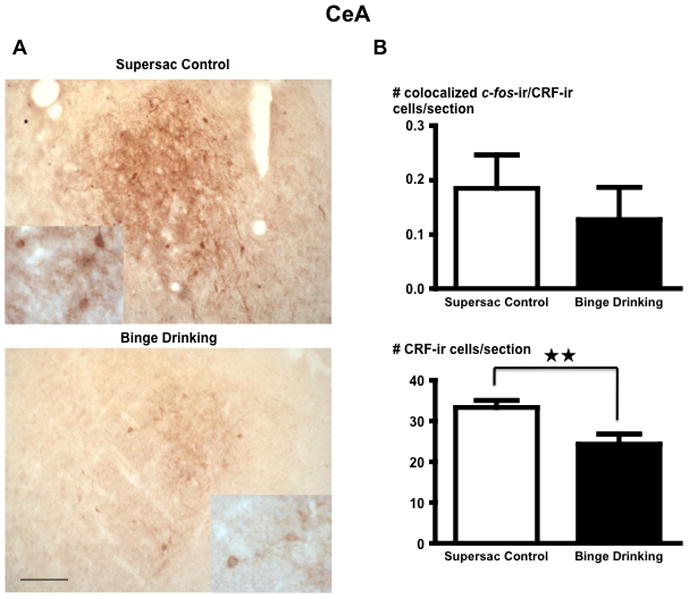
Alcohol stimulates the hypothalamic-pituitary-adrenal (HPA) axis. Part of this influence is likely exerted directly at the level of the corticotropin-releasing factor (CRF) gene, but intermediates may also play a role. Here we review the effect of alcohol on this axis, provide new data on the effects of binge drinking during adolescence, and argue for a role of catecholaminergic circuits. Indeed, acute injection of this drug activates brain stem adrenergic and noradrenergic circuits, and their lesion, or blockade of α1 adrenergic receptors significantly blunts alcohol-induced ACTH release. As alcohol can influence the HPA axis even once discontinued, and alcohol consumption in young people is associated with increased adult drug abuse (a phenomenon possibly mediated by the HPA axis), we determined whether alcohol consumption during adolescence modified this axis. The number of CRF-immunoreactive (ir) cells/section was significantly decreased in the central nucleus of the amygdala of adolescent self-administering binge-drinking animals, compared to controls. When another group of adolescent binge-drinking rats was administered alcohol in adulthood, the number of colocalized c-fos-ir and PNMT-ir cells/brain stem section in the C3 area was significantly decreased, compared to controls. As the HPA axis response to alcohol is blunted in adult rats exposed to alcohol vapors during adolescence, a phenomenon which was not observed in our model of self-administration, it is possible that the blood alcohol levels achieved in various models play a role in the long-term consequences of exposure to alcohol early in life. Collectively, these results suggest an important role of brain catecholamines in modulating the short- and long-term consequences of alcohol administration.
Copyright © 2011 Elsevier Inc. All rights reserved.
Figures



References
-
- Al-Damiuji S, White A. Central noradrenergic lesion impairs the adrenocorticotrophin response to release of endogenous catecholamines. J Neuroendocrinol. 1992;4:319–323. - PubMed
-
- Barron S, White A, Swartzwelder HS, Bell RL, Rodd ZA, Slawecki CJ, Ehlers CL, Levin ED, Rezvani AH, Spear LP. Adolescent vulnerabilities to chronic alcohol or nicotine exposure: Findings from rodent models. Alcoholism: Clin Exp Res. 2005;29:1720–1725. - PubMed
-
- Blessing WW, Lappi DA, Wiley RG. Destruction of locus coeruleus neuronal perikarya after injection of anti-dopamine-B-hydroxylase immunotoxin into the olfactory bulb of the rat. Neurosci Lett. 1998;243:85–88. - PubMed
-
- Brunell SC, Spear LP. Effect of stress on the voluntary intake of a sweetened ethanol solution in pair-housed adolescent and adult rats. Alcoholism: Clin Exp Res. 2005;29:1641–1653. - PubMed
Publication types
MeSH terms
Substances
Grants and funding
LinkOut - more resources
Full Text Sources
Research Materials
Miscellaneous
