


Unipolar hemiarthroplasty versus bipolar hemiarthroplasty in the most elderly patients with displaced femoral neck fractures: a randomised, controlled trial
- PMID: 21301830
- PMCID: PMC3193971
- DOI: 10.1007/s00264-011-1213-y
Unipolar hemiarthroplasty versus bipolar hemiarthroplasty in the most elderly patients with displaced femoral neck fractures: a randomised, controlled trial
Abstract
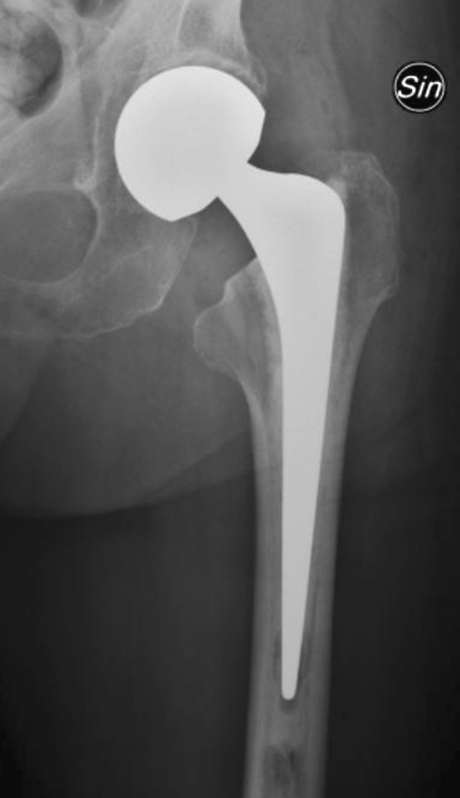
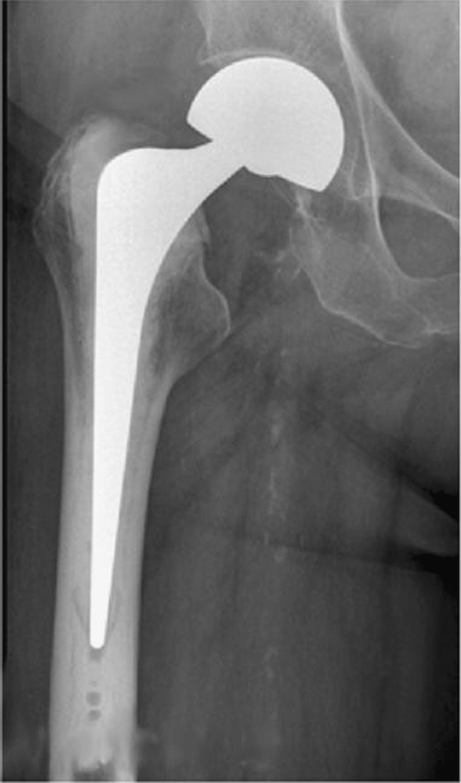
Purpose: Hemiarthroplasty (HA) is generally considered to be the treatment of choice in the most elderly patients with a displaced fracture of the femoral neck. However, there is inadequate evidence to support the choice between unipolar HA or bipolar HA. The primary aim of this study was to analyse the outcome regarding hip function and health-related quality of life (HRQoL) in patients randomised to either a unipolar or bipolar HA. The secondary aim was to analyse the degree of acetabular erosion and its influence upon outcome.
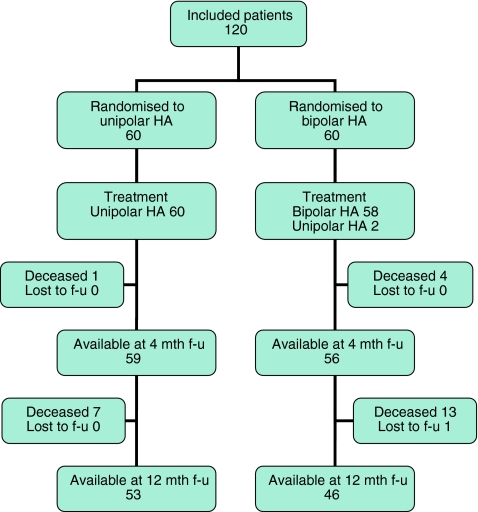
Methods: One hundred twenty patients with a mean age of 86 years and an acute displaced fracture of the femoral neck were randomly allocated to treatment by either unipolar or bipolar HA. Outcome measurements included hip function (Harris Hip Score, HHS), HRQoL (EQ-5D) and acetabular erosion. The patients were summoned at four and 12 months for follow-up.
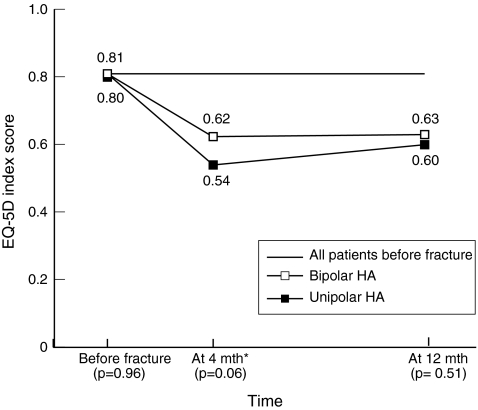
Results: There were no significant differences between the groups regarding complications. The HHS scores were equal at both follow-ups, but there was a trend towards better HRQoL in the bipolar HA group at four months, EQ-5D (index) score 0.62 vs 0.54 (p = 0.06). Twenty percent of the patients in the unipolar HA group displayed acetabular erosion at the 12-month follow-up compared to 5% in the bipolar HA group (p = 0.03), and there were trends towards worse hip function and HRQoL among patients with acetabular erosion compared to those without: HHS scores 70.4 and 79.3, respectively (p = 0.09), and EQ-5D (index) scores 0.48 and 0.63, respectively (p = 0.13).
Conclusion: Unipolar HA and bipolar HA appeared to produce equivalent clinical outcomes after one year, but the significantly higher incidence of acetabular erosion in the unipolar HA group may imply that bipolar HA should be the preferred treatment.
Figures
References
-
- Blomfeldt R (2006) Surgical treatment of patients with displaced femoral neck fractures. Aspects on outcome and selection criteria. Karolinska Institutet, Stockholm. http://diss.kib.ki.se/2006/91-7140-801-0/. Accessed 24 January 2011
-
- Garden RS. Low-angle fixation in fractures of the femoral neck. J Bone Joint Surg Br. 1961;43:647–663.
-
- Bhandari M, Devereaux PJ, Tornetta P, 3rd, Swiontkowski MF, Berry DJ, Haidukewych G, Schemitsch EH, Hanson BP, Koval K, Dirschl D, Leece P, Keel M, Petrisor B, Heetveld M, Guyatt GH. Operative management of displaced femoral neck fractures in elderly patients. An international survey. J Bone Joint Surg Am. 2005;87:2122–2130. doi: 10.2106/JBJS.E.00535. - DOI - PubMed
-
- Rogmark C, Carlsson A, Johnell O, Sernbo I. A prospective randomised trial of internal fixation versus arthroplasty for displaced fractures of the neck of the femur. Functional outcome for 450 patients at two years. J Bone Joint Surg Br. 2002;84:183–188. doi: 10.1302/0301-620X.84B2.11923. - DOI - PubMed
Publication types
MeSH terms
LinkOut - more resources
Full Text Sources
Medical
