


Complete genome sequence of Halorhabdus utahensis type strain (AX-2)
- PMID: 21304660
- PMCID: PMC3035240
- DOI: 10.4056/sigs.31864
Complete genome sequence of Halorhabdus utahensis type strain (AX-2)
Abstract
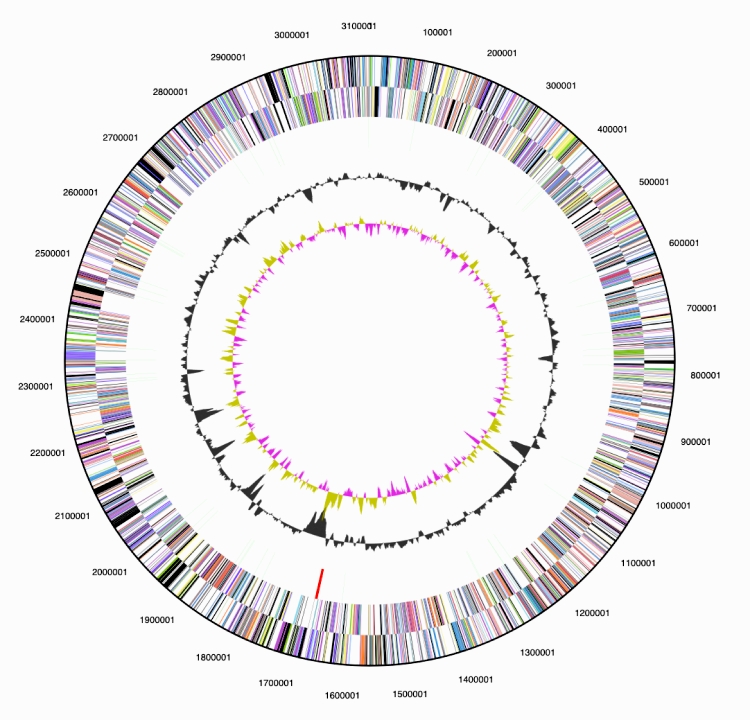
Halorhabdus utahensis Wainø et al. 2000 is the type species of the genus, which is of phylogenetic interest because of its location on one of the deepest branches within the very extensive euryarchaeal family Halobacteriaceae. H. utahensis is a free-living, motile, rod shaped to pleomorphic, Gram-negative archaeon, which was originally isolated from a sediment sample collected from the southern arm of Great Salt Lake, Utah, USA. When grown on appropriate media, H. utahensis can form polyhydroxybutyrate (PHB). Here we describe the features of this organism, together with the complete genome sequence, and annotation. This is the first complete genome sequence of the a member of halobacterial genus Halorhabdus, and the 3,116,795 bp long single replicon genome with its 3027 protein-coding and 48 RNA genes is part of the Genomic Encyclopedia of Bacteria and Archaea project.
Keywords: Halobacteriaceae; aerobic; euryarchaeon; free-living; halophile; non-pathogenic.
Figures
References
-
- Wainø M, Tindall BJ, Ingvorsen K. Halorhabdus utahensis gen. nov., sp. nov., an aerobic, extremely halophilic member of the Archaea from Great Salt Lake, Utah. Int J Syst Evol Microbiol 2000; 50:183-190 - PubMed
-
- Antunes A, Taborda M, Huber R, Moissl C, Nobre MF, da Costa MS. Halorhabdus tiamatea sp. nov., a non-pigmented, extremely halophilic archaeon from a deep-sea, hypersaline anoxic basin of the Red Sea, and emended description of the genus Halorhabdus. Int J Syst Evol Microbiol 2008; 58:215-220 10.1099/ijs.0.65316-0 - DOI - PubMed
-
- Castresana J. Selection of conserved blocks from multiple alignments for their use in phylogenetic analysis. Mol Biol Evol 2000; 17:540-552 - PubMed
LinkOut - more resources
Full Text Sources
Molecular Biology Databases
