


Non-compliance with growth hormone treatment in children is common and impairs linear growth
- PMID: 21305004
- PMCID: PMC3031542
- DOI: 10.1371/journal.pone.0016223
Non-compliance with growth hormone treatment in children is common and impairs linear growth
Abstract
Background: GH therapy requires daily injections over many years and compliance can be difficult to sustain. As growth hormone (GH) is expensive, non-compliance is likely to lead to suboptimal growth, at considerable cost. Thus, we aimed to assess the compliance rate of children and adolescents with GH treatment in New Zealand.
Methods: This was a national survey of GH compliance, in which all children receiving government-funded GH for a four-month interval were included. Compliance was defined as ≥ 85% adherence (no more than one missed dose a week on average) to prescribed treatment. Compliance was determined based on two parameters: either the number of GH vials requested (GHreq) by the family or the number of empty GH vials returned (GHret). Data are presented as mean ± SEM.
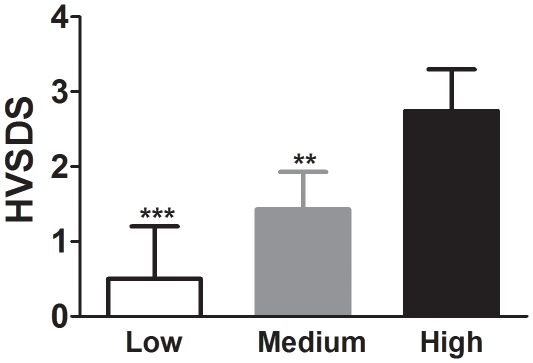
Findings: 177 patients were receiving GH in the study period, aged 12.1 ± 0.6 years. The rate of returned vials, but not number of vials requested, was positively associated with HVSDS (p < 0.05), such that patients with good compliance had significantly greater linear growth over the study period (p<0.05). GHret was therefore used for subsequent analyses. 66% of patients were non-compliant, and this outcome was not affected by sex, age or clinical diagnosis. However, Maori ethnicity was associated with a lower rate of compliance.
Interpretation: An objective assessment of compliance such as returned vials is much more reliable than compliance based on parental or patient based information. Non-compliance with GH treatment is common, and associated with reduced linear growth. Non-compliance should be considered in all patients with apparently suboptimal response to GH treatment.
Conflict of interest statement
Figures
References
-
- Donovan JL. Patient decision making: the missing ingredient in compliance research. Int J Technol Assess Health Care. 1995;11:443–455. - PubMed
-
- Main KM, Jorgensen JT, Hertel NT, Jensen S, Jakobsen L. Automatic needle insertion diminishes pain during growth hormone injection. Acta Paediatr. 1995;84:331–334. - PubMed
-
- Haverkamp F, Johansson L, Dumas H, Langham S, Tauber M, et al. Observations of nonadherence to recombinant human growth hormone therapy in clinical practice. Clin Ther. 2008;30:307–316. - PubMed
-
- Cromer BA, Tarnowski KJ. Noncompliance in adolescents: a review. J Dev Behav Pediatr. 1989;10:207–215. - PubMed
-
- Allen DB. Growth hormone therapy for short stature: is the benefit worth the burden? Pediatrics. 2006;118:343–348. - PubMed
Publication types
MeSH terms
Substances
LinkOut - more resources
Full Text Sources
Other Literature Sources
