


Characterizing sudden death and dead-in-bed syndrome in Type 1 diabetes: analysis from two childhood-onset Type 1 diabetes registries
- PMID: 21309837
- PMCID: PMC3045678
- DOI: 10.1111/j.1464-5491.2010.03154.x
Characterizing sudden death and dead-in-bed syndrome in Type 1 diabetes: analysis from two childhood-onset Type 1 diabetes registries
Abstract
Aims: Type 1 diabetes mellitus increases the risk for sudden unexplained death, generating concern that diabetes processes and/or treatments underlie these deaths. Young (< 50 years) and otherwise healthy patients who are found dead in bed have been classified as experiencing 'dead-in-bed' syndrome.
Methods: We thus identified all unwitnessed deaths in two related registries (the Children's Hospital of Pittsburgh and Allegheny County) yielding 1319 persons with childhood-onset (age < 18 years) Type 1 diabetes diagnosed between 1965 and 1979. Cause of death was determined by a Mortality Classification Committee (MCC) of at least two physician epidemiologists, based on the death certificate and additional records surrounding the death.
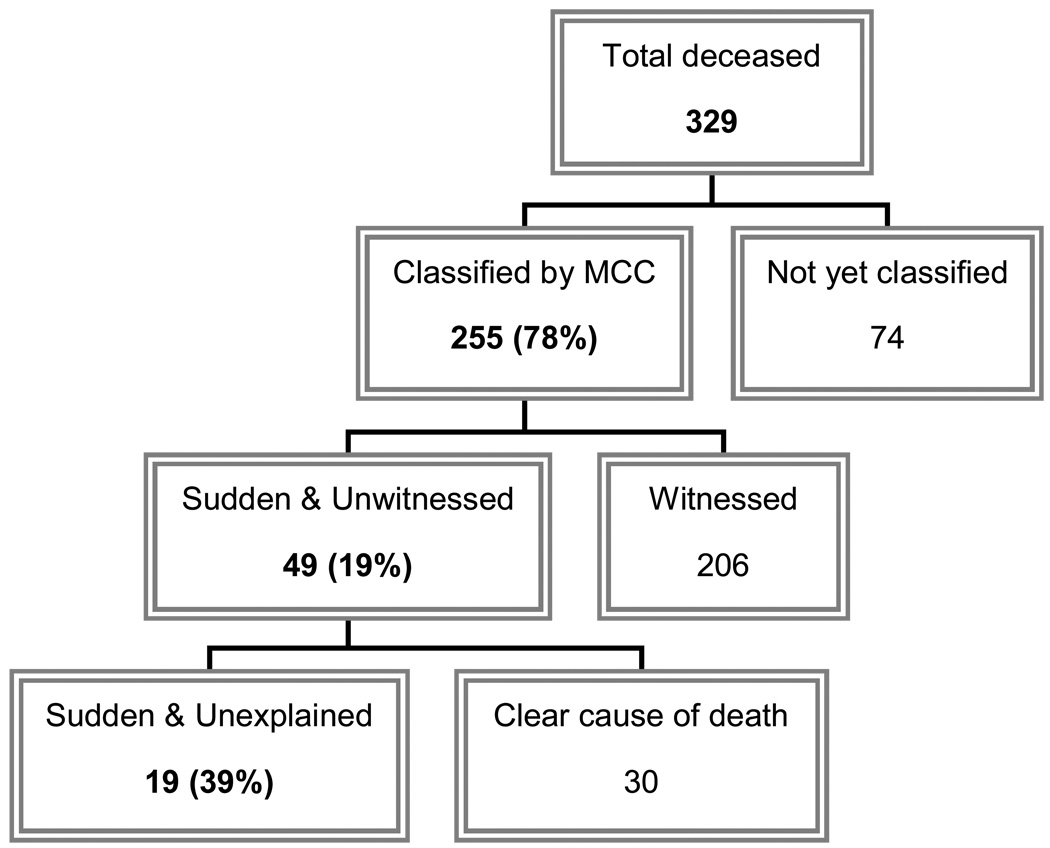
Results: Of the 329 participants who had died, the Mortality Classification Committee has so far reviewed and assigned a final cause of death to 255 (78%). Nineteen (8%) of these were sudden unexplained deaths (13 male) and seven met dead-in-bed criteria. The Mortality Classification Committee adjudicated cause of death in the seven dead-in-bed persons as: diabetic coma (n =4), unknown (n=2) and cardiomyopathy (n=1, found on autopsy). The three dead-in-bed individuals who participated in a clinical study had higher HbA(1c) , lower BMI and higher daily insulin dose compared with both those dying from other causes and those surviving.
Conclusions: Sudden unexplained death in Type 1 diabetes seems to be increased 10-fold and associated with male sex, while dead-in-bed individuals have a high HbA(1c) and insulin dose and low BMI. Although sample size is too small for definitive conclusions, these results suggest specific sex and metabolic factors predispose to sudden unexplained death and dead-in-bed death.
© 2011 The Authors. Diabetic Medicine © 2011 Diabetes UK.
Figures
References
-
- Tattersall RB, Gill GV. Unexplained deaths of type 1 diabetic patients. Diabet Med. 1991;8:49–58. - PubMed
-
- Dahlquist G, Kallen B. Mortality in childhood-onset type 1 diabetes: a population-based study. Diabetes Care. 2005;28:2384–2387. - PubMed
-
- Borch-Johnsen K, Helweg-Larsen K. Sudden death and human insulin: is there a link? Diabet Med. 1993;10:255–259. - PubMed
-
- Sartor G, Dahlquist G. Short-term mortality in childhood onset insulin-dependent diabetes mellitus: a high frequency of unexpected deaths in bed. Diabet Med. 1995;12:607–611. - PubMed
-
- Thordarson H, Sovik O. Dead in bed syndrome in young diabetic patients in Norway. Diabet Med. 1995;12:782–787. - PubMed
Publication types
MeSH terms
Grants and funding
LinkOut - more resources
Full Text Sources
Other Literature Sources
Medical
Miscellaneous
