Role of ghrelin in food reward: impact of ghrelin on sucrose self-administration and mesolimbic dopamine and acetylcholine receptor gene expression
- PMID: 21309956
- PMCID: PMC3298643
- DOI: 10.1111/j.1369-1600.2010.00294.x
Role of ghrelin in food reward: impact of ghrelin on sucrose self-administration and mesolimbic dopamine and acetylcholine receptor gene expression
Abstract
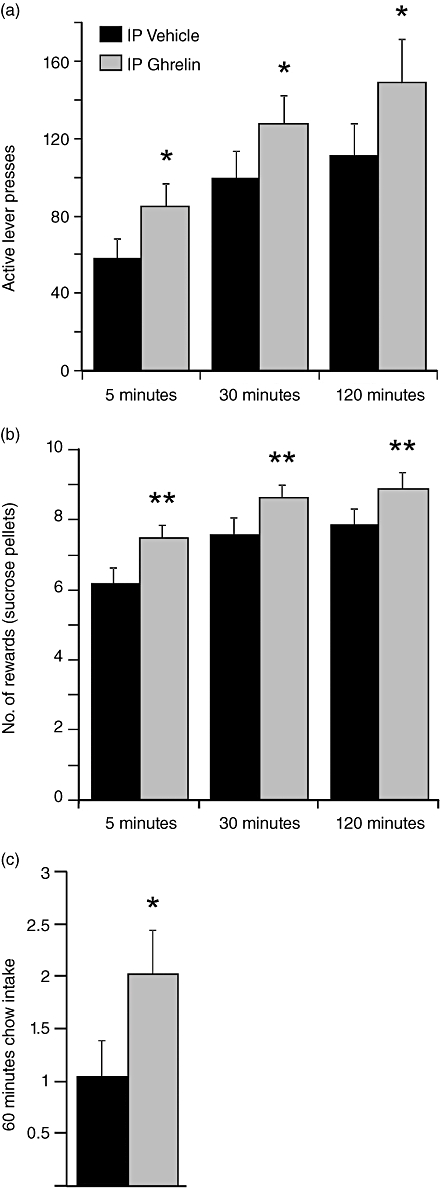
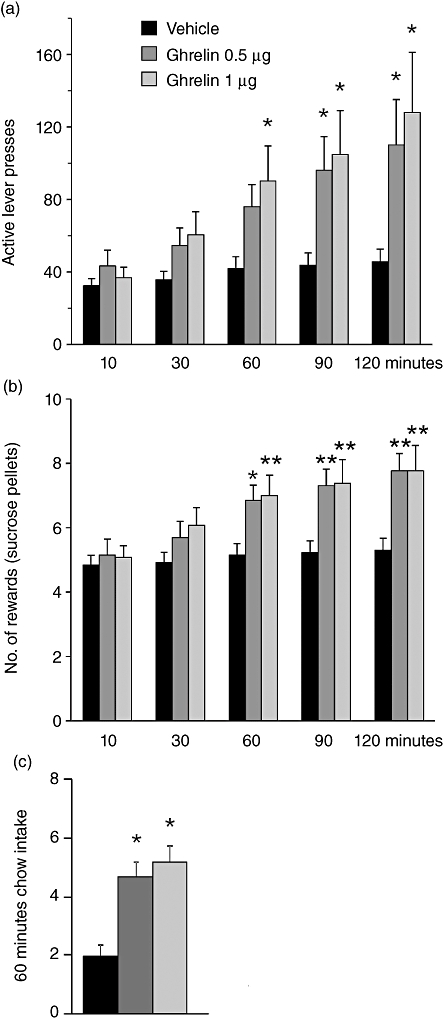
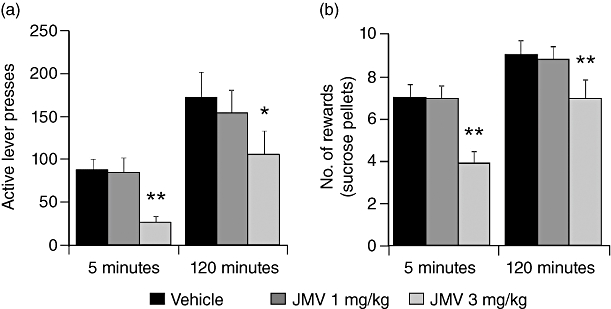
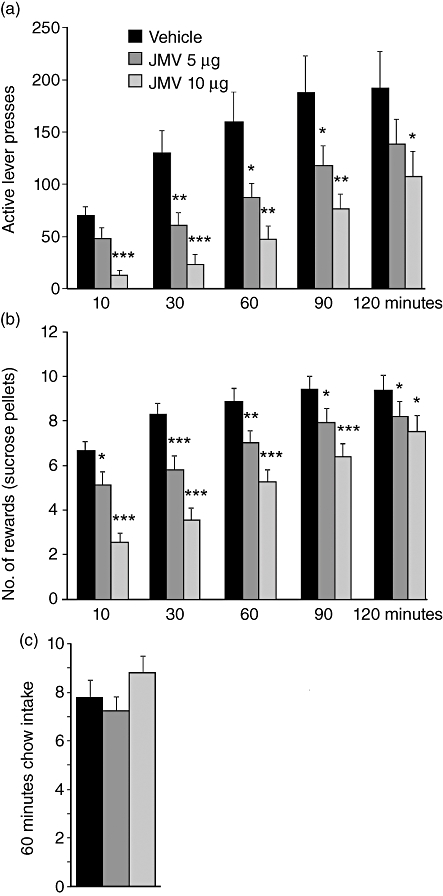
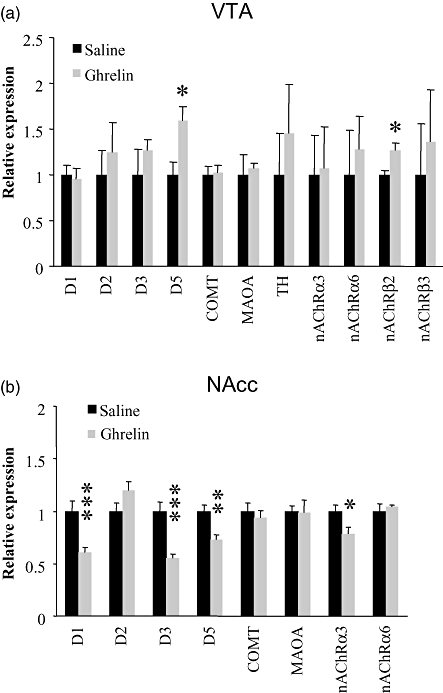
The decision to eat is strongly influenced by non-homeostatic factors such as food palatability. Indeed, the rewarding and motivational value of food can override homeostatic signals, leading to increased consumption and hence, obesity. Ghrelin, a gut-derived orexigenic hormone, has a prominent role in homeostatic feeding. Recently, however, it has emerged as a potent modulator of the mesolimbic dopaminergic reward pathway, suggesting a role for ghrelin in food reward. Here, we sought to determine whether ghrelin and its receptors are important for reinforcing motivation for natural sugar reward by examining the role of ghrelin receptor (GHS-R1A) stimulation and blockade for sucrose progressive ratio operant conditioning, a procedure used to measure motivational drive to obtain a reward. Peripherally and centrally administered ghrelin significantly increased operant responding and therefore, incentive motivation for sucrose. Utilizing the GHS-R1A antagonist JMV2959, we demonstrated that blockade of GHS-R1A signaling significantly decreased operant responding for sucrose. We further investigated ghrelin's effects on key mesolimbic reward nodes, the ventral tegmental area (VTA) and nucleus accumbens (NAcc), by evaluating the effects of chronic central ghrelin treatment on the expression of genes encoding major reward neurotransmitter receptors, namely dopamine and acetylcholine. Ghrelin treatment was associated with an increased dopamine receptor D5 and acetylcholine receptor nAChRβ2 gene expression in the VTA and decreased expression of D1, D3, D5 and nAChRα3 in the NAcc. Our data indicate that ghrelin plays an important role in motivation and reinforcement for sucrose and impacts on the expression of dopamine and acetylcholine encoding genes in the mesolimbic reward circuitry. These findings suggest that ghrelin antagonists have therapeutic potential for the treatment of obesity and to suppress the overconsumption of sweet food.
© 2011 The Authors, Addiction Biology © 2011 Society for the Study of Addiction.
Figures
References
-
- Abizaid A, Liu ZW, Andrews ZB, Shanabrough M, Borok E, Elsworth JD, Roth RH, Sleeman MW, Picciotto MR, Tschop MH, Gao XB, Horvath TL. Ghrelin modulates the activity and synaptic input organization of midbrain dopamine neurons while promoting appetite. J Clin Invest. 2006;116:3229–3239. - PMC - PubMed
-
- Alsio J, Olszewski PK, Norback AH, Gunnarsson ZE, Levine AS, Pickering C, Schioth HB. Dopamine D1 receptor gene expression decreases in the nucleus accumbens upon long-term exposure to palatable food and differs depending on diet-induced obesity phenotype in rats. Neuroscience. 2010;171:779–787. - PubMed
-
- Bailey ART, Von Englehardt N, Leng G, Smith RG, Dickson SL. Growth hormone secretagogue activation of the arcuate nucleus and brainstem occurs via a non-noradrenergic pathway. J Neuroendocrinol. 2000;12:191–197. - PubMed
-
- Banks WA, Tschop M, Robinson SM, Heiman ML. Extent and direction of ghrelin transport across the blood–brain barrier is determined by its unique primary structure. J Pharmacol Exp Ther. 2002;302:822–827. - PubMed
Publication types
MeSH terms
Substances
LinkOut - more resources
Full Text Sources