


Dronabinol for the treatment of cannabis dependence: a randomized, double-blind, placebo-controlled trial
- PMID: 21310551
- PMCID: PMC3154755
- DOI: 10.1016/j.drugalcdep.2010.12.010
Dronabinol for the treatment of cannabis dependence: a randomized, double-blind, placebo-controlled trial
Abstract
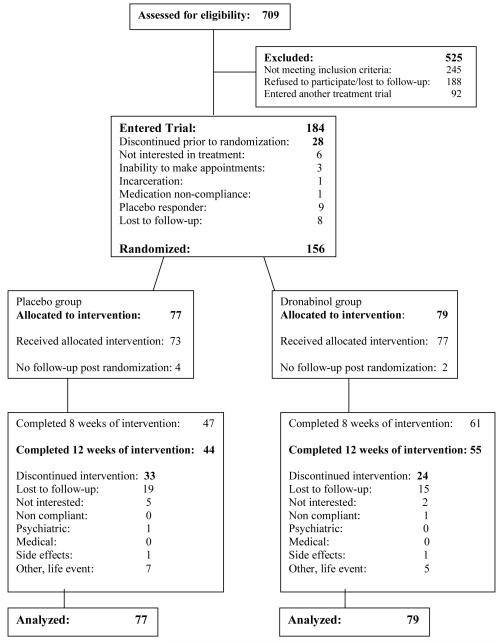
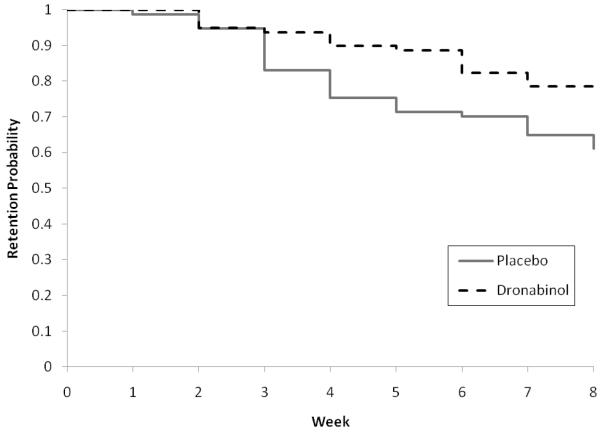
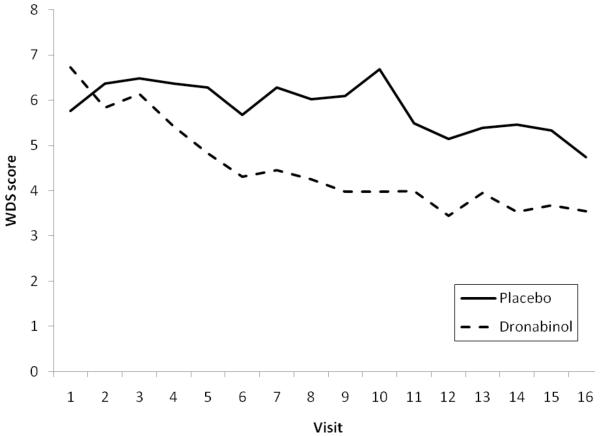
Cannabis dependence is a substantial public health problem. Behavioral treatments have shown promise, but there are no effective medications for cannabis dependence. The purpose of this study was to evaluate the safety and efficacy of dronabinol, a synthetic form of delta-9-tetrahydrocannabinol, a naturally occurring pharmacologically active component of marijuana, in treating cannabis dependence. 156 cannabis-dependent adults were enrolled in a randomized, double-blind, placebo-controlled, 12-week trial. After a 1-week placebo lead-in phase, participants were randomized to receive dronabinol 20mg twice a day or placebo. Doses were maintained until the end of week 8 and then tapered off over 2 weeks. All participants received weekly motivational enhancement and relapse prevention therapy. Marijuana use was assessed using the timeline follow back method. There was no significant difference between treatment groups in the proportion of participants who achieved 2 weeks of abstinence at the end of the maintenance phase (dronabinol: 17.7%; placebo: 15.6%). Although both groups showed a reduction in marijuana use over time, there were no differences between the groups. Treatment retention was significantly higher at the end of the maintenance phase on dronabinol (77%), compared to placebo (61%) (P=.02), and withdrawal symptoms were significantly lower on dronabinol than placebo (P=.02). This is the first trial using an agonist substitution strategy for treatment of cannabis dependence. Dronabinol showed promise, it was well-tolerated, and improved treatment retention and withdrawal symptoms. Future trials might test higher doses, combinations of dronabinol with other medications with complementary mechanisms, or with more potent behavioral interventions.
Copyright © 2011 Elsevier Ireland Ltd. All rights reserved.
Figures
References
-
- American Psychiatric Association (APA) Diagnostic and Statistical Manual of Mental Disorders. 4th Edition American Psychiatric Association; Washington, DC: 1994.
-
- Anton RF, O’Malley SS, Ciraulo DA, Cisler RA, Couper D, Donovan DM, Gastfriend DR, Hosking JD, Johnson BA, LoCastro JS, Longabaugh R, Mason BJ, Mattson ME, Miller WR, Pettinati HM, Randall CL, Swift R, Weiss RD, Williams LD, Zweben A. Combined pharmacotherapies and behavioral interventions for alcohol dependence: the COMBINE study: a randomized controlled trial. JAMA. 2006;295:2003–2017. - PubMed
-
- Budney AJ, Radonovich KJ, Higgins ST, Wong CJ. Adults seeking treatment for marijuana dependence: a comparison with cocaine-dependent treatment seekers. Exp. Clin. Psychopharmacol. 1998;6:419–426. - PubMed
-
- Budney AJ, Novy PL, Hughes JR. Marijuana withdrawal among adults seeking treatment for marijuana dependence. Addiction. 1999;94:1311–1322. - PubMed
-
- Budney AJ, Moore BA, Rocha HL, Higgins ST. Clinical trial of abstinence-based vouchers and cognitive-behavioral therapy for cannabis dependence. J. Consult. Clin. Psychol. 2006;74:307–316. - PubMed
Publication types
MeSH terms
Substances
Grants and funding
LinkOut - more resources
Full Text Sources
Medical
