


Mouse granzyme K has pro-inflammatory potential
- PMID: 21311565
- PMCID: PMC3131959
- DOI: 10.1038/cdd.2011.5
Mouse granzyme K has pro-inflammatory potential
Abstract
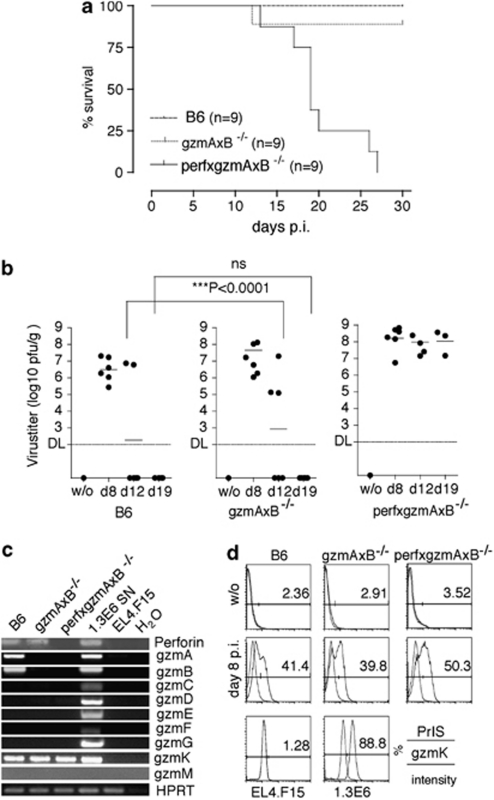
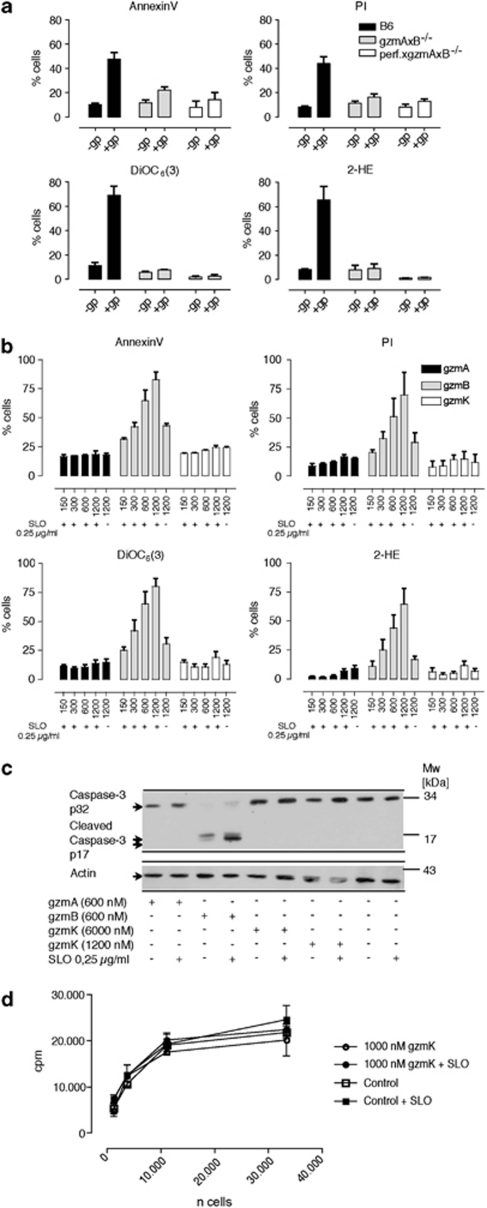
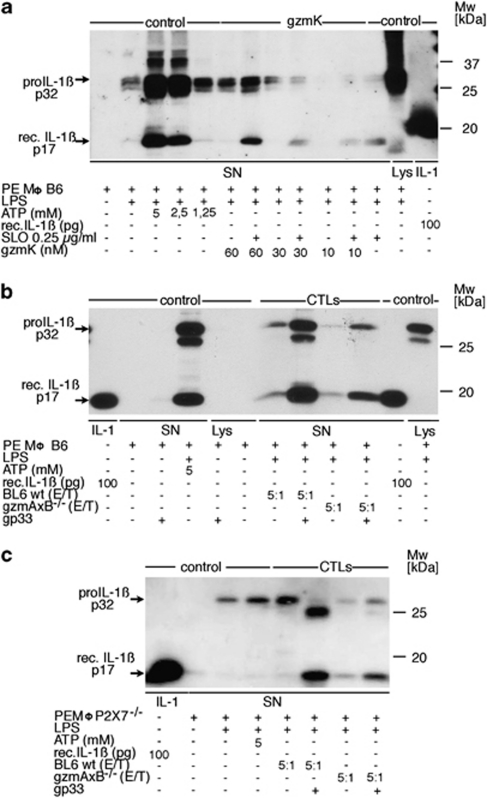
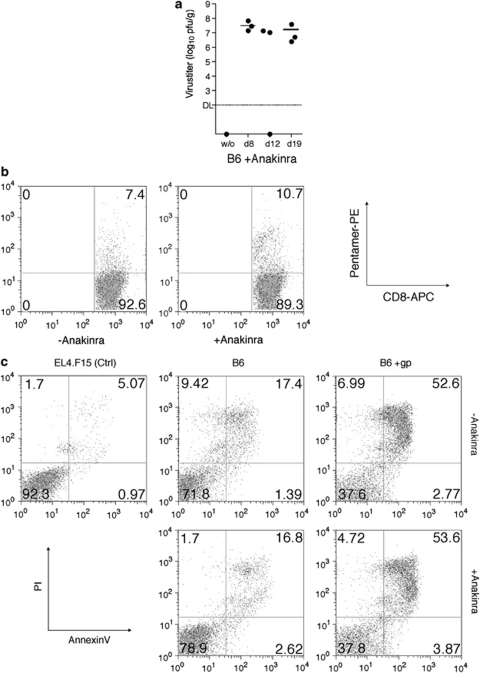
Granzymes (gzms) are key components of T-killer (Tc) cells believed to mediate pro-apoptotic activities. Recent evidence suggests that gzms also possess non-cytotoxic activities that contribute to host defense. In this study, we show that Tc cells from lymphocytic choriomeningitis virus (LCMV)-infected wild-type (wt) and gzm A/B-deficient mice express similar levels of gzmK protein, with both mouse strains efficiently controlling infection. GzmK, in recombinant form or secreted by ex vivo-derived LCMV-immune gzmAxB(-/-) Tc cells, lacks pro-apoptotic activity. Instead, gzmK induces primary mouse macrophages to process and secrete interleukin-1β, independent of the ATP receptor P2X(7). Together with the finding that IL-1Ra (Anakinra) treatment inhibits virus elimination but not generation of cytotoxic Tc cells in wt mice, the data suggest that Tc cells control LCMV through non-cytotoxic processes that involve gzmK.
Figures
References
-
- Barry M, Bleackley RC. Cytotoxic T lymphocytes: all roads lead to death. Nat Rev Immunol. 2002;2:401–409. - PubMed
-
- Grossman WJ, Revell PA, Lu ZH, Johnson H, Bredemeyer AJ, Ley TJ. The orphan granzymes of humans and mice. Curr Opin Immunol. 2003;15:544–552. - PubMed
-
- Kramer M, Simon MM. Are proteinases functional molecules of T cells. Immunol Today. 1987;8:140–143. - PubMed
Publication types
MeSH terms
Substances
Grants and funding
LinkOut - more resources
Full Text Sources
Other Literature Sources
Molecular Biology Databases
