


Effects of a month-long napping regimen in older individuals
- PMID: 21314644
- PMCID: PMC3074345
- DOI: 10.1111/j.1532-5415.2010.03264.x
Effects of a month-long napping regimen in older individuals
Abstract
Objectives: To examine the effects of a month-long nap regimen using one of two durations (45 minutes or 2 hours) on nighttime sleep and waking function in a group of healthy older participants and to assess the degree to which healthy older individuals are willing and able to adhere to such napping regimens.
Design: Three laboratory sessions, with 2-week at-home recording interspersed, using a between-participants approach.
Setting: Laboratory of Human Chronobiology at Weill Cornell Medical College and participants' homes.
Participants: Twenty-two healthy men and women aged 50 to 88 (mean 70).
Measurements: Polysomnography (sleep electroencephalography), actigraphy, sleep diaries, neurobehavioral performance, sleep latency tests.
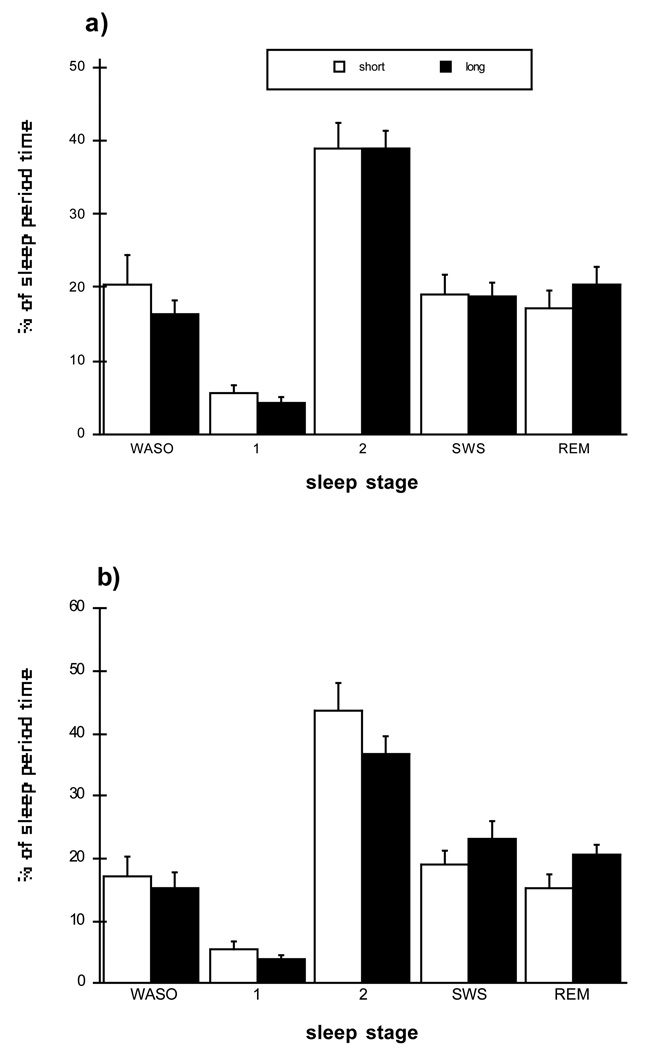
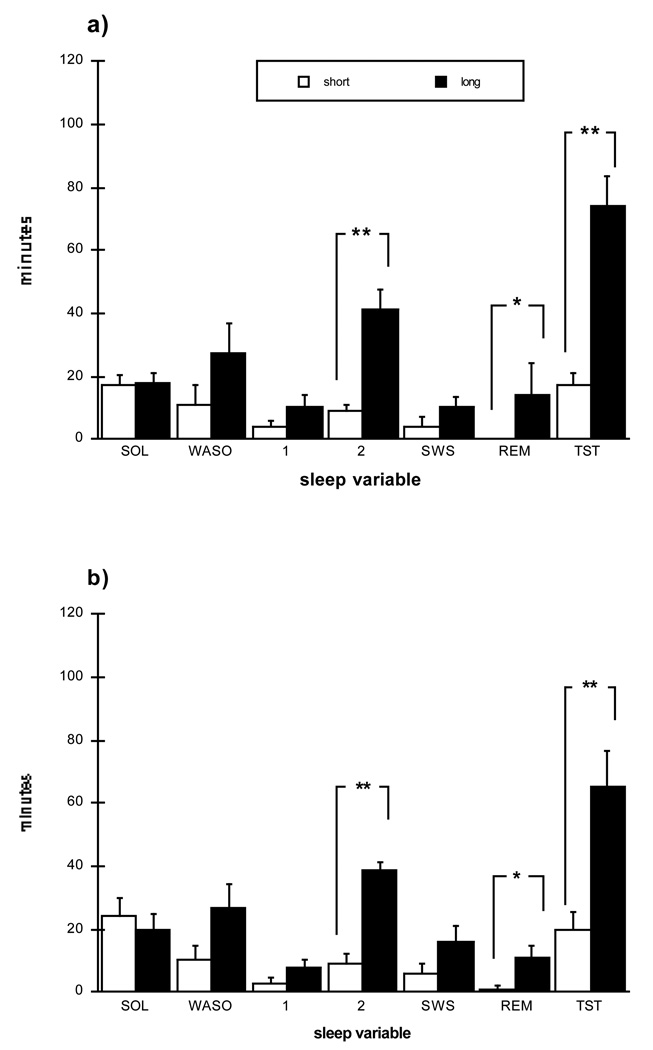
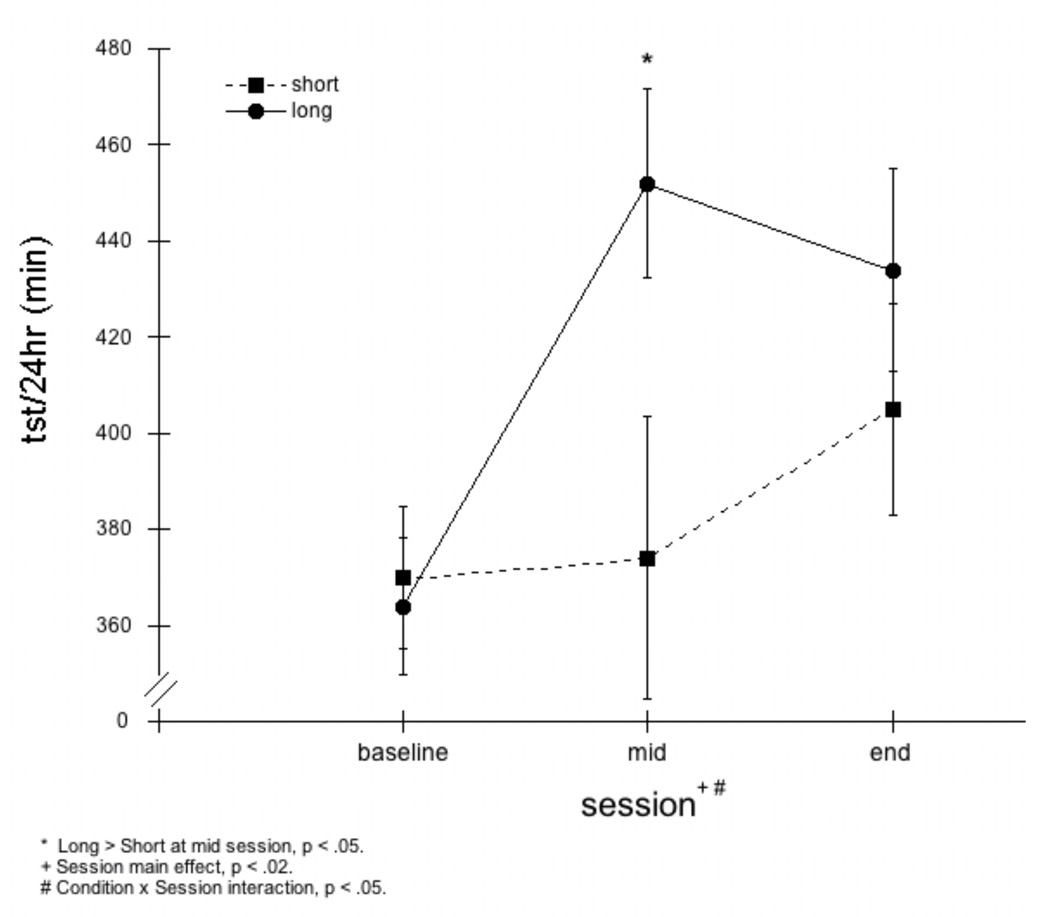
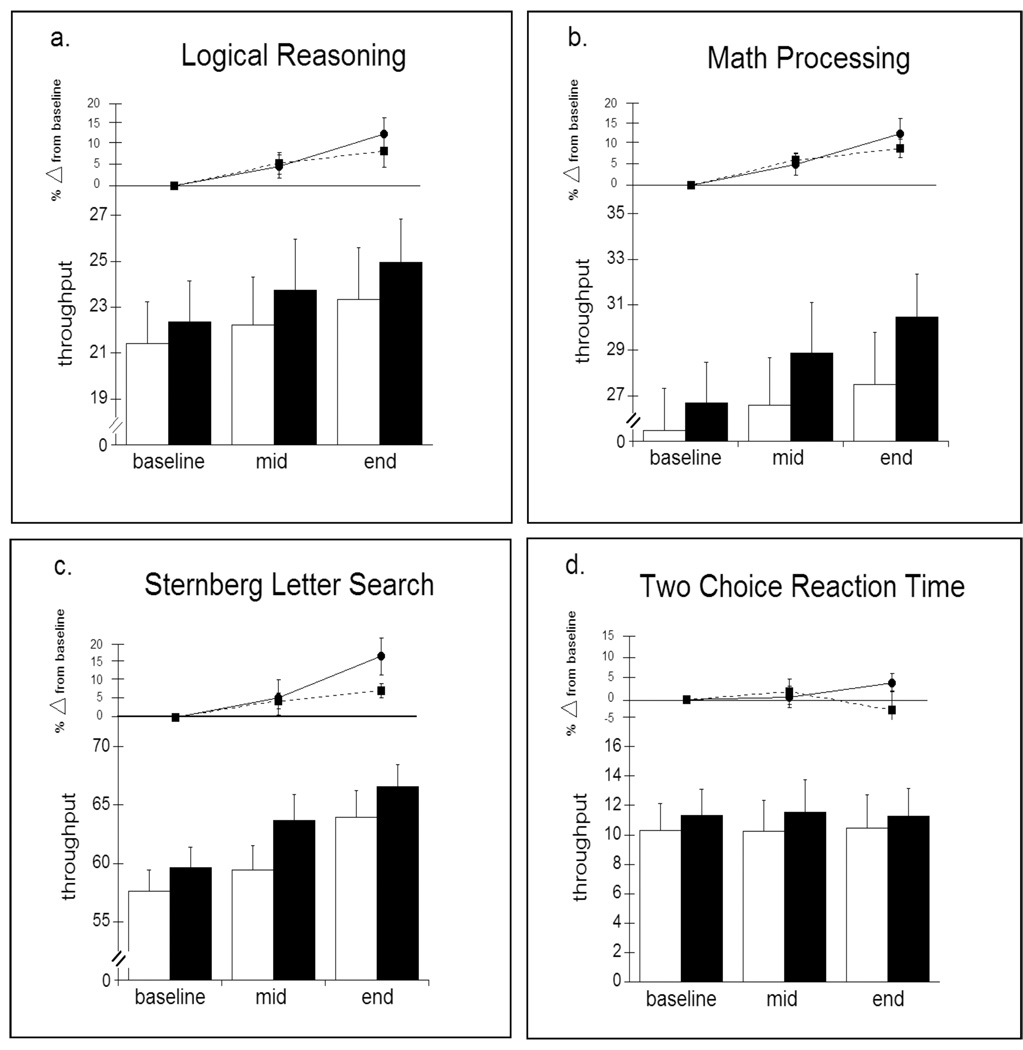
Results: With the exception of adherence to the protocol, there were few differences between short and long nap conditions. Napping had no negative effect on subsequent nighttime sleep quality or duration, resulting in a significant increase in 24-hour sleep amounts. Such increased sleep was associated with enhanced cognitive performance but had no effect on simple reaction time. Participants were generally able to adhere better to the 45-minute than the 2-hour nap regimen.
Conclusion: A month-long, daily nap regimen may enhance waking function without negatively affecting nighttime sleep. Using 2-hour naps in such a regimen is unlikely to meet with acceptable adherence; a regimen of daily 1-hour naps may be more desirable for effectiveness and adherence.
© 2011, Copyright the Authors. Journal compilation © 2011, The American Geriatrics Society.
Figures
References
-
- Buysse DJ, Reynolds CF, Monk TH, Hoch CC, Yeager AL, Kupfer DJ. Quantification of subjective sleep quality in healthy elderly men and women using the Pittsburgh Sleep Quality Index (PSQI) Sleep. 1991 Aug;14(4):331–338. - PubMed
-
- Foley DJ, Monjan AA, Brown SL, Simonsick EM, Wallace RB, Blazer DG. Sleep complaints among elderly persons: an epidemiologic study of three communities. Sleep. 1995 Jul;18(6):425–432. - PubMed
-
- Campbell SS, Dawson D, Anderson MW. Alleviation of sleep maintenance insomnia with timed exposure to bright light. J American Geriatric Society. 1993;41:829–836. - PubMed
-
- Webb WB. Sleep in older persons: sleep structures of 50- to 60-year-old men and women. J Gerontol. 1982 Sep;37(5):581–586. - PubMed
-
- Dijk DJ, Duffy JF. Circadian regulation of human sleep and age-related changes in its timing, consolidation and EEG characteristics. Ann. Med. 1999 Apr;31(2):130–140. - PubMed
Publication types
MeSH terms
Grants and funding
LinkOut - more resources
Full Text Sources
Research Materials
