


Expression of K2P5.1 potassium channels on CD4+ T lymphocytes correlates with disease activity in rheumatoid arthritis patients
- PMID: 21314928
- PMCID: PMC3241365
- DOI: 10.1186/ar3245
Expression of K2P5.1 potassium channels on CD4+ T lymphocytes correlates with disease activity in rheumatoid arthritis patients
Abstract
Introduction: CD4+ T cells express K(2P)5.1 (TWIK-related acid-sensitive potassium channel 2 (TASK2); KCNK5), a member of the two-pore domain potassium channel family, which has been shown to influence T cell effector functions. Recently, it was shown that K(2P)5.1 is upregulated upon (autoimmune) T cell stimulation. The aim of this study was to correlate expression levels of K(2P)5.1 on T cells from patients with rheumatoid arthritis (RA) to disease activity in these patients.
Methods: Expression levels of K(2P)5.1 were measured by RT-PCR in the peripheral blood of 58 patients with RA and correlated with disease activity parameters (C-reactive protein levels, erythrocyte sedimentation rates, disease activity score (DAS28) scores). Twenty patients undergoing therapy change were followed-up for six months. Additionally, synovial fluid and synovial biopsies were investigated for T lymphocytes expressing K(2P)5.1.
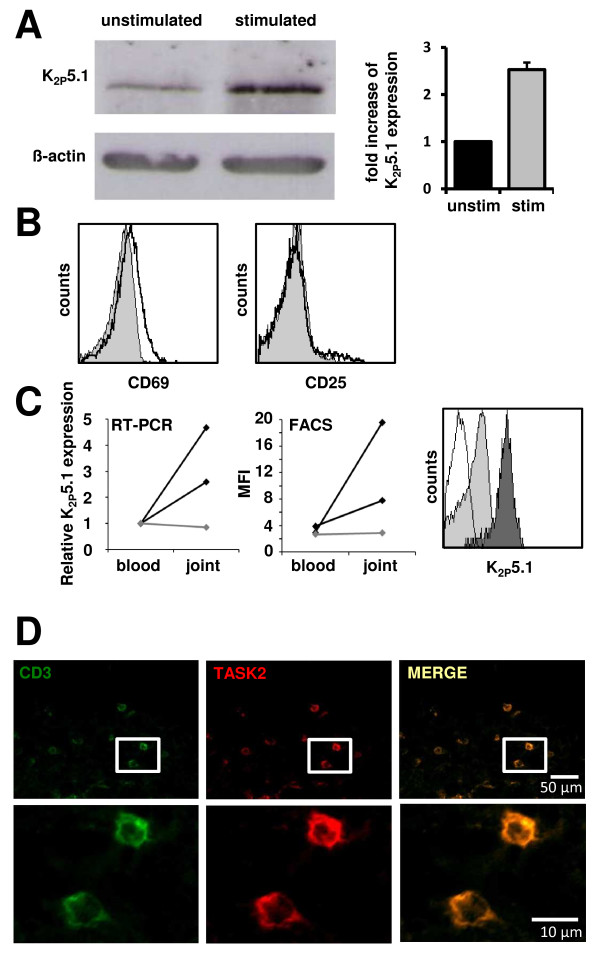
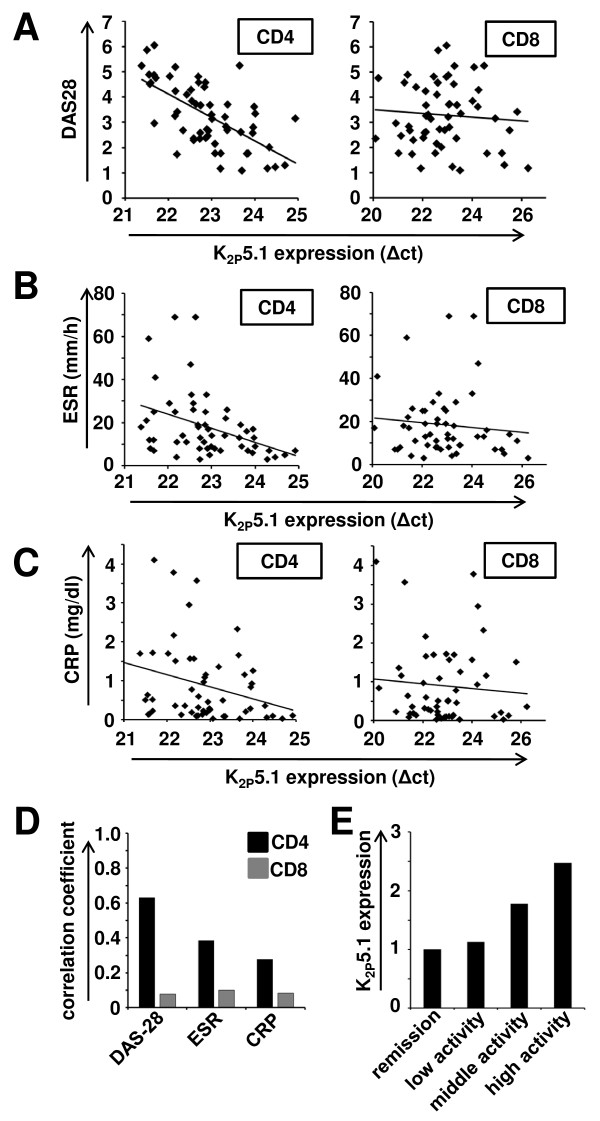
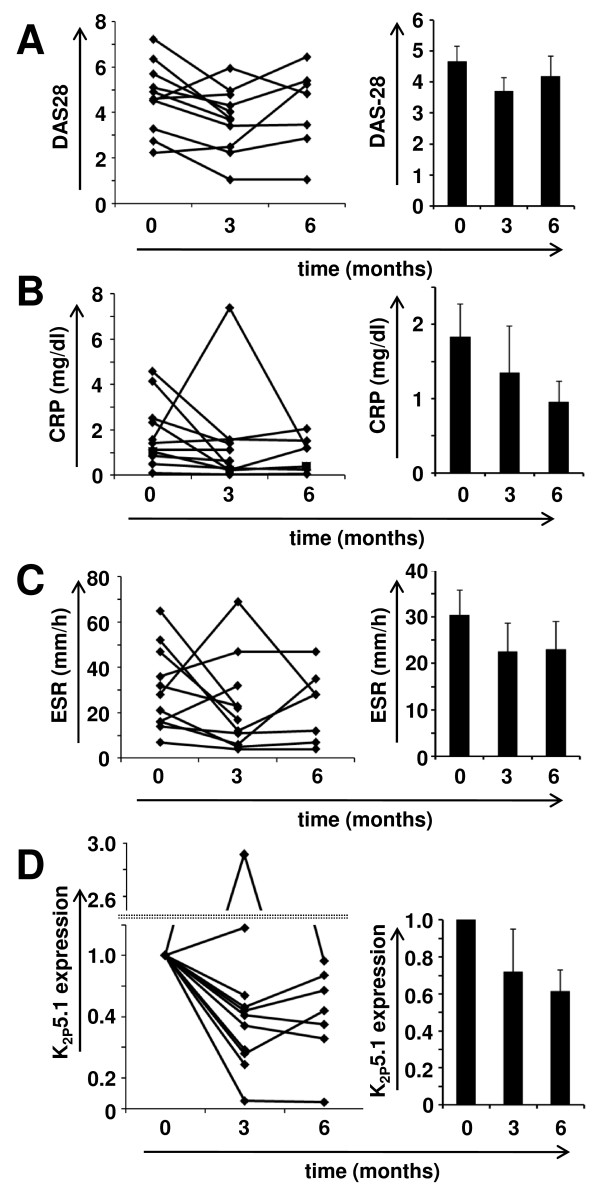
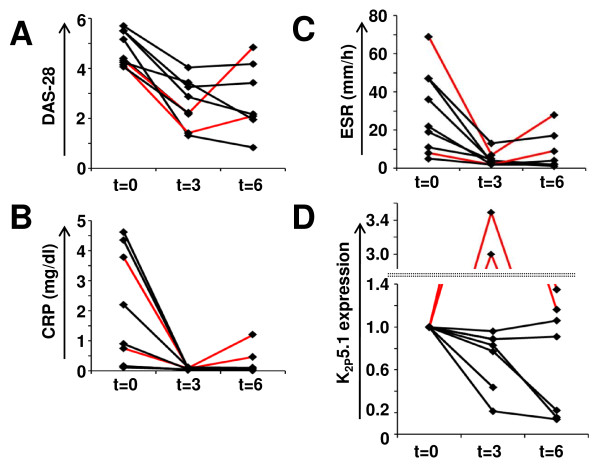
Results: K(2P)5.1 expression levels in CD4+ T cells show a strong correlation to DAS28 scores in RA patients. Similar correlations were found for serological inflammatory parameters (erythrocyte sedimentation rate, C-reactive protein). In addition, K(2P)5.1 expression levels of synovial fluid-derived T cells are higher compared to peripheral blood T cells. Prospective data in individual patients show a parallel behaviour of K(2P)5.1 expression to disease activity parameters during a longitudinal follow-up for six months.
Conclusions: Disease activity in RA patients correlates strongly with K(2P)5.1 expression levels in CD4+ T lymphocytes in the peripheral blood in cross-sectional as well as in longitudinal observations. Further studies are needed to investigate the exact pathophysiological mechanisms and to evaluate the possible use of K(2P)5.1 as a potential biomarker for disease activity and differential diagnosis.
Figures
References
-
- Wells G, Becker JC, Teng J, Dougados M, Schiff M, Smolen J, Aletaha D, van Riel PL. Validation of the 28-joint Disease Activity Score (DAS28) and European League Against Rheumatism response criteria based on C-reactive protein against disease progression in patients with rheumatoid arthritis, and comparison with the DAS28 based on erythrocyte sedimentation rate. Ann Rheum Dis. 2009;68:954–960. doi: 10.1136/ard.2007.084459. - DOI - PMC - PubMed
-
- Bittner S, Meuth SG, Gobel K, Melzer N, Herrmann AM, Simon OJ, Weishaupt A, Budde T, Bayliss DA, Bendszus M, Wiendl H. TASK1 modulates inflammation and neurodegeneration in autoimmune inflammation of the central nervous system. Brain. 2009;132:2501–2516. doi: 10.1093/brain/awp163. - DOI - PMC - PubMed
Publication types
MeSH terms
Substances
LinkOut - more resources
Full Text Sources
Medical
Molecular Biology Databases
Research Materials
