


The hidden energetics of ligand binding and activation in a glutamate receptor
- PMID: 21317895
- PMCID: PMC3075596
- DOI: 10.1038/nsmb.2010
The hidden energetics of ligand binding and activation in a glutamate receptor
Abstract
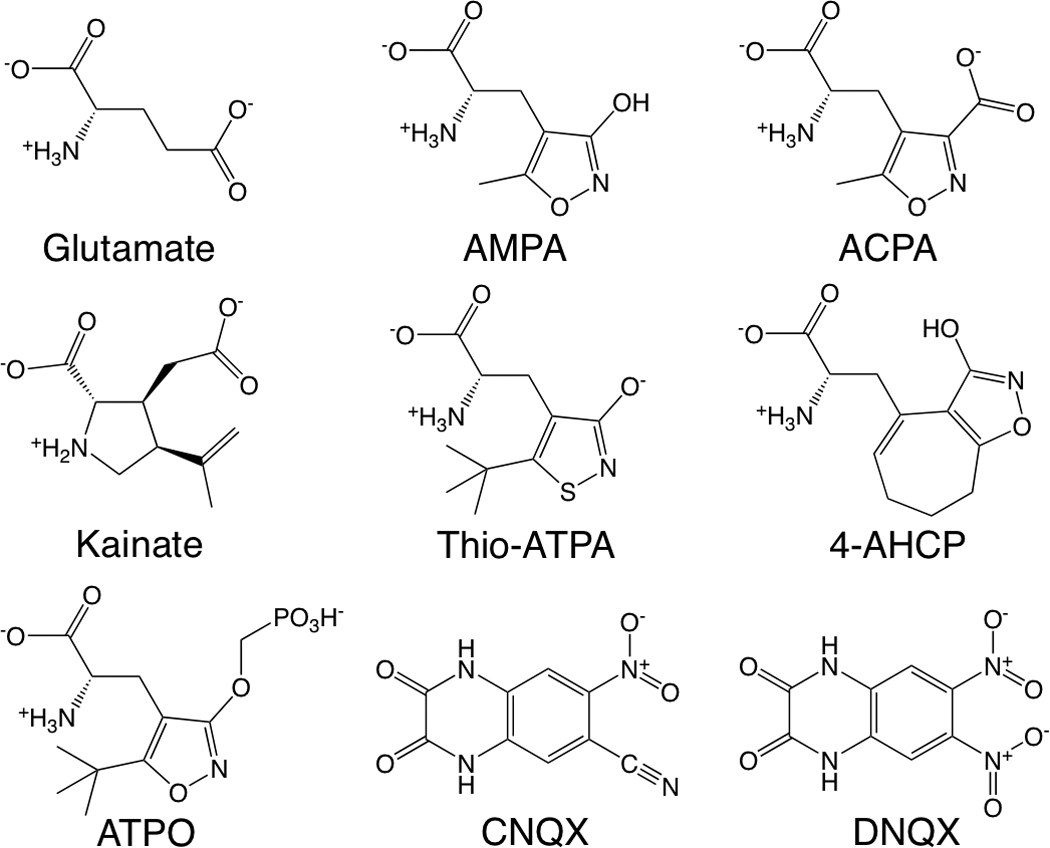
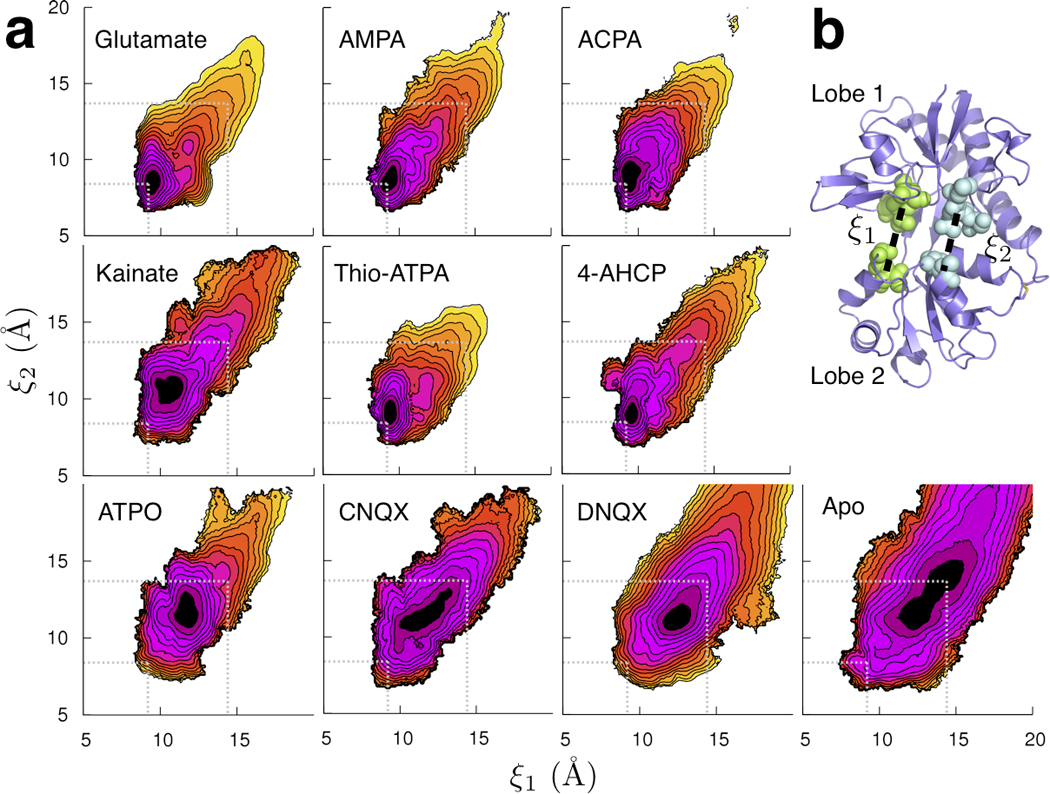
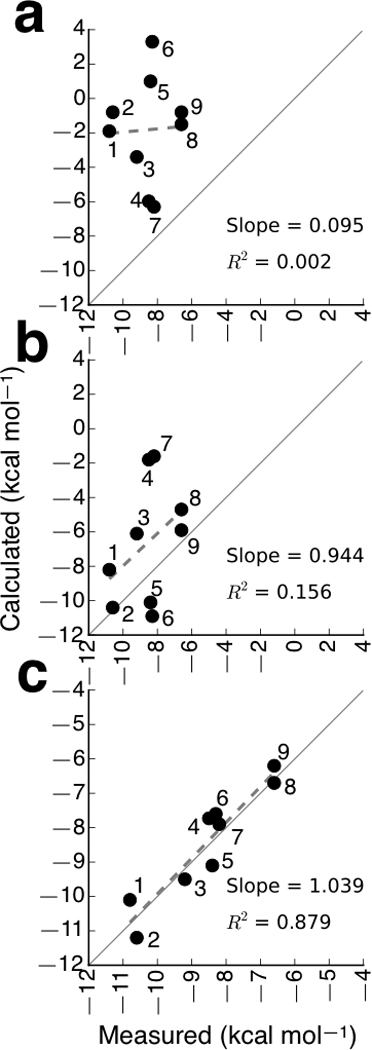
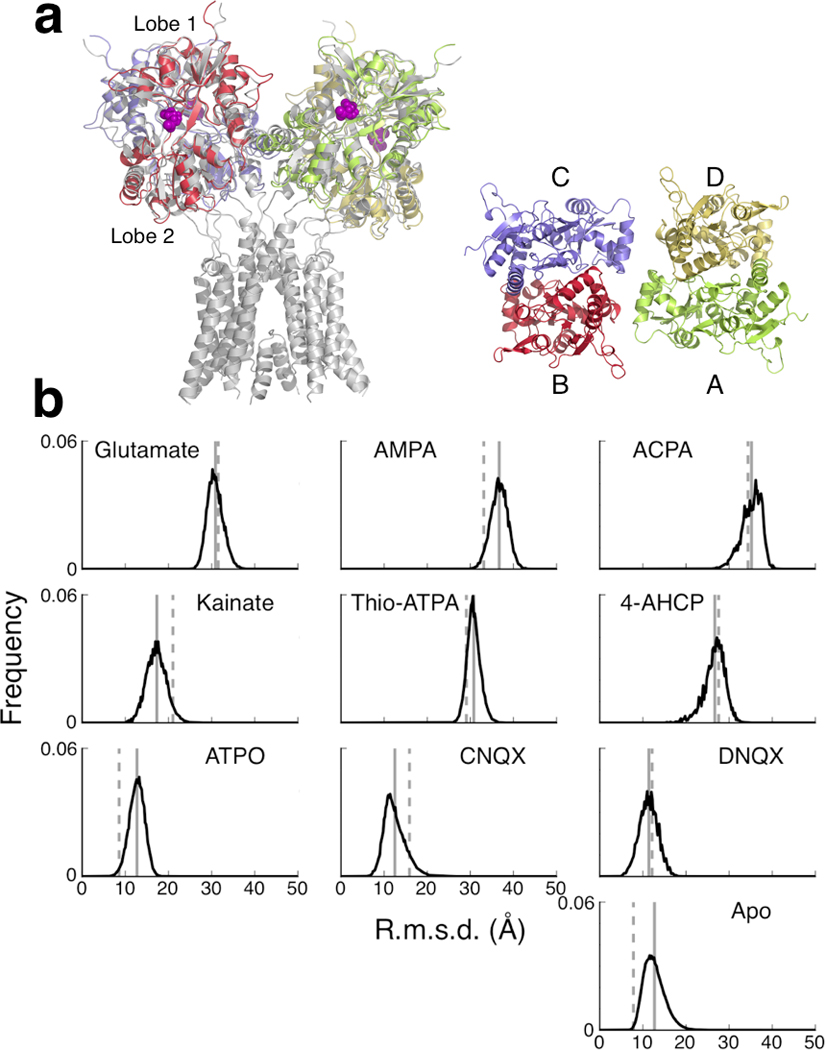
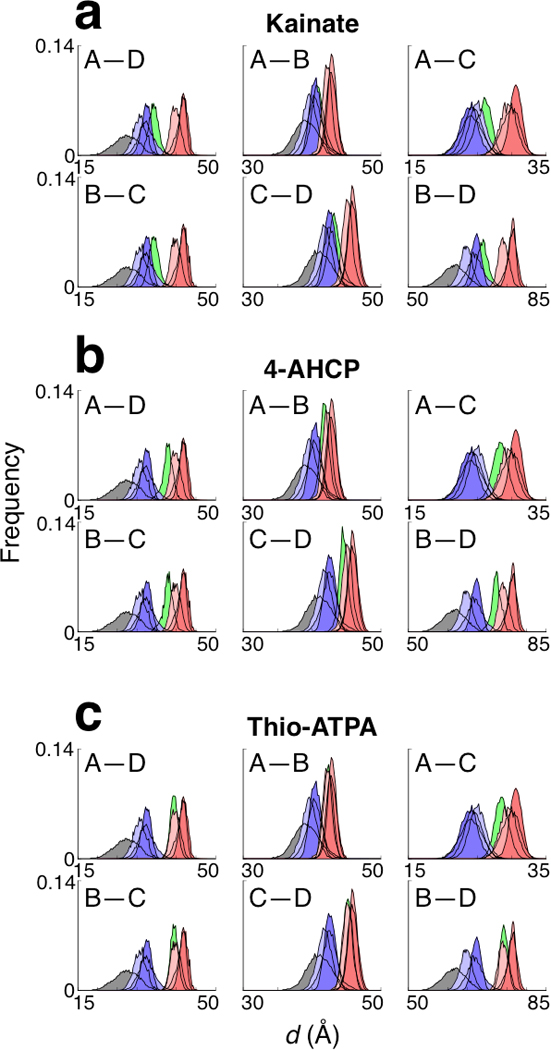
Ionotropic glutamate receptors (iGluRs) are ligand-gated ion channels that mediate most excitatory synaptic transmission in the central nervous system. The free energy of neurotransmitter binding to the ligand-binding domains (LBDs) of iGluRs is converted into useful work to drive receptor activation. We have computed the principal thermodynamic contributions from ligand docking and ligand-induced closure of LBDs for nine ligands of GluA2 using all-atom molecular dynamics free energy simulations. We have validated the results by comparison with experimentally measured apparent affinities to the isolated LBD. Features in the free energy landscapes that govern closure of LBDs are key determinants of binding free energies. An analysis of accessible LBD conformations transposed into the context of an intact GluA2 receptor revealed that the relative displacement of specific diagonal subunits in the tetrameric structure may be key to the action of partial agonists.
Figures
Comment in
-
Glutamate receptor ion channels: where do all the calories go?Nat Struct Mol Biol. 2011 Mar;18(3):253-4. doi: 10.1038/nsmb0311-253. Nat Struct Mol Biol. 2011. PMID: 21372852 No abstract available.
References
-
- Mayer ML. Glutamate receptors at atomic resolution. Nature. 2006;440:456–462. - PubMed
-
- Armstrong N, Gouaux E. Mechanisms for activation and antagonism of an AMPA-sensitive glutamate receptor: crystal structures of the GluR2 ligand binding core. Neuron. 2000;28:165–181. - PubMed
-
- Inanobe A, Furukawa H, Gouaux E. Mechanism of partial agonist action at the NR1 subunit of NMDA receptors. Neuron. 2005;47:71–84. - PubMed
Publication types
MeSH terms
Substances
Grants and funding
LinkOut - more resources
Full Text Sources
