


HPV-DNA integration and carcinogenesis: putative roles for inflammation and oxidative stress
- PMID: 21318095
- PMCID: PMC3037184
- DOI: 10.2217/fvl.10.73
HPV-DNA integration and carcinogenesis: putative roles for inflammation and oxidative stress
Abstract
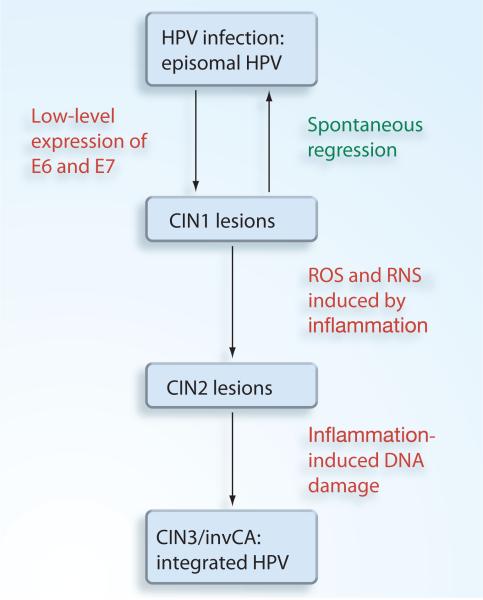
HPV-DNA integration into cellular chromatin is usually a necessary event in the pathogenesis of HPV-related cancer; however, the mechanism of integration has not been clearly defined. Breaks must be created in both the host DNA and in the circular viral episome for integration to occur, and studies have shown that viral integration is indeed increased by the induction of DNA double strand breaks. Inflammation generates reactive oxygen species, which in turn have the potential to create such DNA strand breaks. It is plausible that these breaks enable a greater frequency of HPV-DNA integration, and in this way contribute to carcinogenesis. Consistent with this idea, co-infections with certain sexually transmitted diseases cause cervical inflammation, and have also been identified as cofactors in the progression to cervical cancer. This article examines the idea that inflammation facilitates HPV-DNA integration into cellular chromatin through the generation of reactive oxygen species, thereby contributing to carcinogenesis.
Figures
References
-
- Ault KA. Human papillomavirus vaccines and the potential for cross-protection between related HPV types. Gynecol. Oncol. 2007;107(2 Suppl. 1):S31–S33. - PubMed
-
- Guccione E, Pim D, Banks L. HPV-18 E6*I modulates HPV-18 full-length E6 functions in a cell cycle dependent manner. Int. J. Cancer. 2004;110(6):928–933. - PubMed
-
- Weaver BA. Epidemiology and natural history of genital human papillomavirus infection. J. Am. Osteopath. Assoc. 2006;106(Suppl. 1):S2–S8. - PubMed
Grants and funding
LinkOut - more resources
Full Text Sources
Other Literature Sources