


Review
doi: 10.1155/2011/464701.
Epub 2011 Jan 23.
Middle cerebral artery occlusion model in rodents: methods and potential pitfalls
Affiliations
- PMID: 21331357
- PMCID: PMC3035178
- DOI: 10.1155/2011/464701
Item in Clipboard
Review
Middle cerebral artery occlusion model in rodents: methods and potential pitfalls
J Biomed Biotechnol.
2011.
Abstract
A variety of animal models have been developed for modeling ischemic stroke. The middle cerebral artery occlusion (MCAO) model has been utilized extensively, especially in rodents. While the MCAO model provides stroke researchers with an excellent platform to investigate the disease, controversial or even paradoxical results are occasionally seen in the literature utilizing this model. Various factors exert important effects on the outcome in this stroke model, including the age and sex of the animal examined. This paper discusses emerging information on the effects of age and sex on ischemic outcomes after MCAO, with an emphasis on mouse models of stroke.
Figures
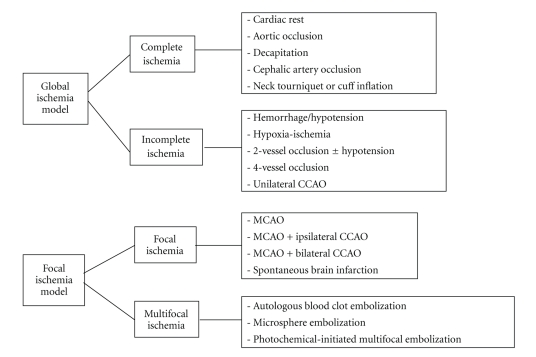
Major types of animal models of ischemic stroke.
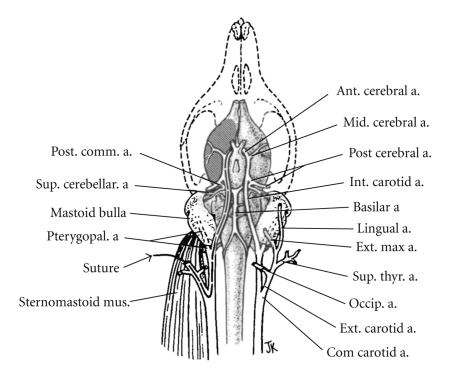
Diagram of cerebrovascular anatomy and MCAO in rats. Reprinted with permission from Longa, EZ et al., Stroke 1989 20: 84–91. a., artery; Com.: common; Ext.: external; Int.: internal.
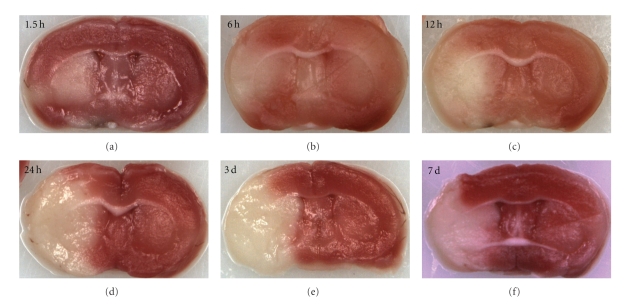
Evolution of infarct in mouse brain after 90-minute MCAO.
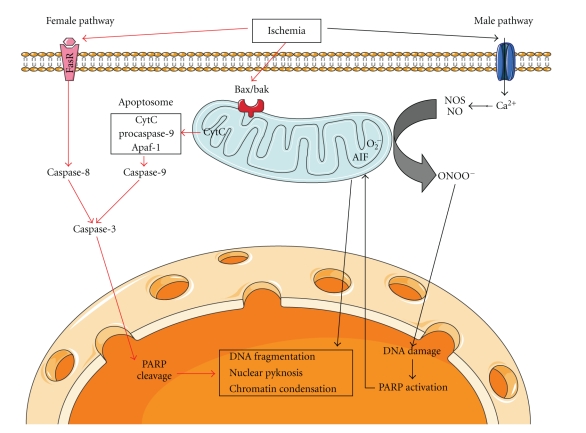
Mechanisms of PARP-AIF and cytochrome C-caspase-mediated cell death pathways predominant, respectively, in male and female brains after ischemia. The figure was produced using Servier Medical Art.
References
-
- Rosamond W, Flegal K, Furie K, et al. Heart disease and stroke statistics—2008 update: a report from the American heart association statistics committee and stroke statistics subcommittee. Circulation. 2008;117(4):e25–e46. - PubMed
-
- Traystman RJ. Animal models of focal and global cerebral ischemia. ILAR Journal. 2003;44(2):85–95. - PubMed
-
- Megyesi JF, Vollrath B, Cook DA, Findlay JM. In vivo animal models of cerebral vasospasm: a review. Neurosurgery. 2000;46(2):448–461. - PubMed
-
- Ashwal S, Pearce WJ. Animal models of neonatal stroke. Current Opinion in Pediatrics. 2001;13(6):506–516. - PubMed
Publication types
MeSH terms
Grants and funding
LinkOut - more resources
Full Text Sources
