


The effects of hempseed meal intake and linoleic acid on Drosophila models of neurodegenerative diseases and hypercholesterolemia
- PMID: 21331775
- PMCID: PMC3933972
- DOI: 10.1007/s10059-011-0042-6
The effects of hempseed meal intake and linoleic acid on Drosophila models of neurodegenerative diseases and hypercholesterolemia
Abstract
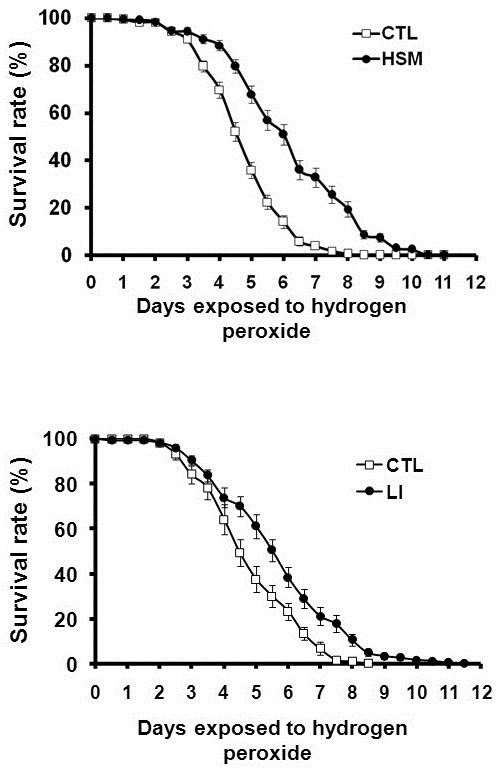
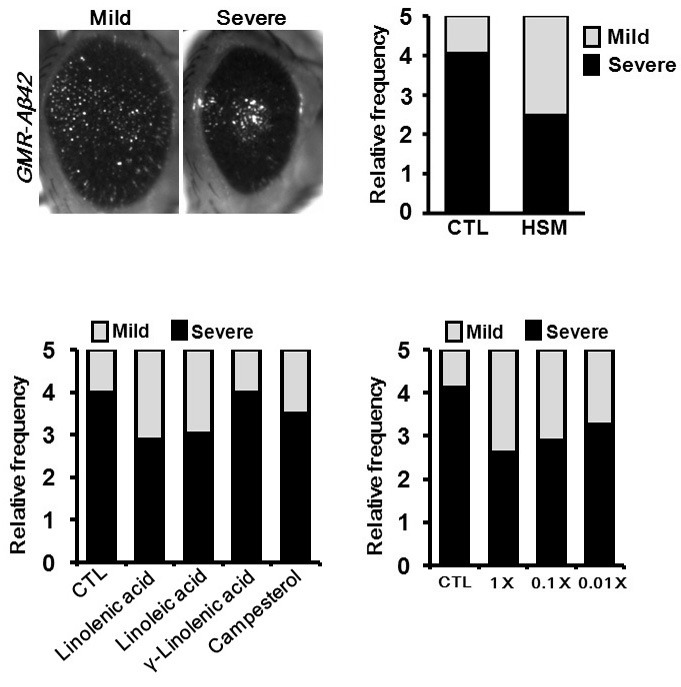
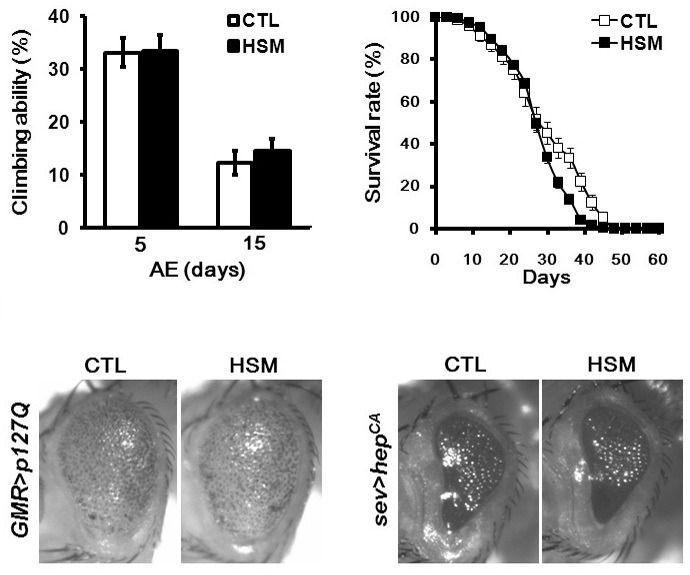
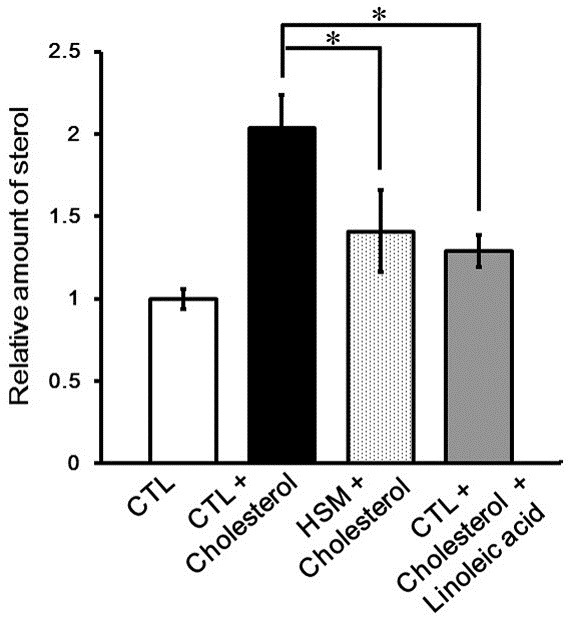
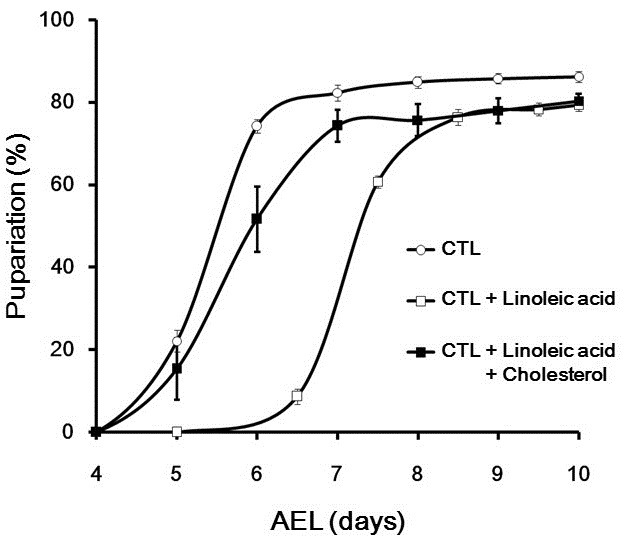
Hempseed is rich in polyunsaturated fatty acids (PUFAs), which have potential as therapeutic compounds for the treatment of neurodegenerative and cardiovascular disease. However, the effect of hempseed meal (HSM) intake on the animal models of these diseases has yet to be elucidated. In this study, we assessed the effects of the intake of HSM and PUFAs on oxidative stress, cytotoxicity and neurological phenotypes, and cholesterol uptake, using Drosophila models. HSM intake was shown to reduce H(2)O(2) toxicity markedly, indicating that HSM exerts a profound antioxidant effect. Meanwhile, intake of HSM, as well as linoleic or linolenic acids (major PUFA components of HSM) was shown to ameliorate Aβ42-induced eye degeneration, thus suggesting that these compounds exert a protective effect against Aβ42 cytotoxicity. On the contrary, locomotion and longevity in the Parkinson's disease model and eye degeneration in the Huntington's disease model were unaffected by HSM feeding. Additionally, intake of HSM or linoleic acid was shown to reduce cholesterol uptake significantly. Moreover, linoleic acid intake has been shown to delay pupariation, and cholesterol feeding rescued the linoleic acid-induced larval growth delay, thereby indicating that linoleic acid acts antagonistically with cholesterol during larval growth. In conclusion, our results indicate that HSM and linoleic acid exert inhibitory effects on both Aβ42 cytotoxicity and cholesterol uptake, and are potential candidates for the treatment of Alzheimer's disease and cardiovascular disease.
Figures
References
-
- Al-Khalifa A., Maddaford T.G., Chahine M.N. Effect of dietary hempseed intake on cardiac ischemia-reperfusion injury. American journal of physiology. Am. J. Physiol. Regul. Integr. Comp. Physiol. (2007);292:1198–1203. - PubMed
-
- Alvaro A., Rosales R., Masana L., Vallvé J.C. Polyunsaturated fatty acids down-regulate in vitro expression of the key intestinal cholesterol absorption protein NPC1L1: no effect of monounsaturated nor saturated fatty acids. J. Nutr. Biochem. (2010);21:518–525. - PubMed
-
- Bouzidi N., Mekki K., Boukaddoum A., Dida N., Kaddous A., Bouchenak M. Effects of omega-3 polyunsaturated fatty-acid supplementation on redox status in chronic renal failure patients with dyslipidemia. J. Ren. Nutr. (2010);5:321–328. - PubMed
-
- Callaway J.C. Hempseed as a nutritional resource: an overview. Euphytica. (2004);140:65–72.
-
- Callaway J., Schwab U., Harvima I., Halonen P., Mykkänen O., Hyvönen P., Järvinen T. Efficacy of dietary hempseed oil in patients with atopic dermatitis. J. Dermatolog. Treat. (2005);16:87–94. - PubMed
Publication types
MeSH terms
Substances
LinkOut - more resources
Full Text Sources
Medical
Molecular Biology Databases
