


Establishing assay cutoffs for HLA antibody screening of apheresis donors
- PMID: 21332726
- PMCID: PMC3108003
- DOI: 10.1111/j.1537-2995.2010.03048.x
Establishing assay cutoffs for HLA antibody screening of apheresis donors
Abstract
Background: Transfusion-related acute lung injury (TRALI) is the leading cause of transfusion-related deaths. Donor HLA antibodies have been implicated in TRALI cases. Blood centers are implementing TRALI risk reduction strategies based on HLA antibody screening of some subpopulations of ever-pregnant apheresis platelet (PLT) donors. However, if screening assay cutoffs are too sensitive, donation loss may adversely impact blood availability.
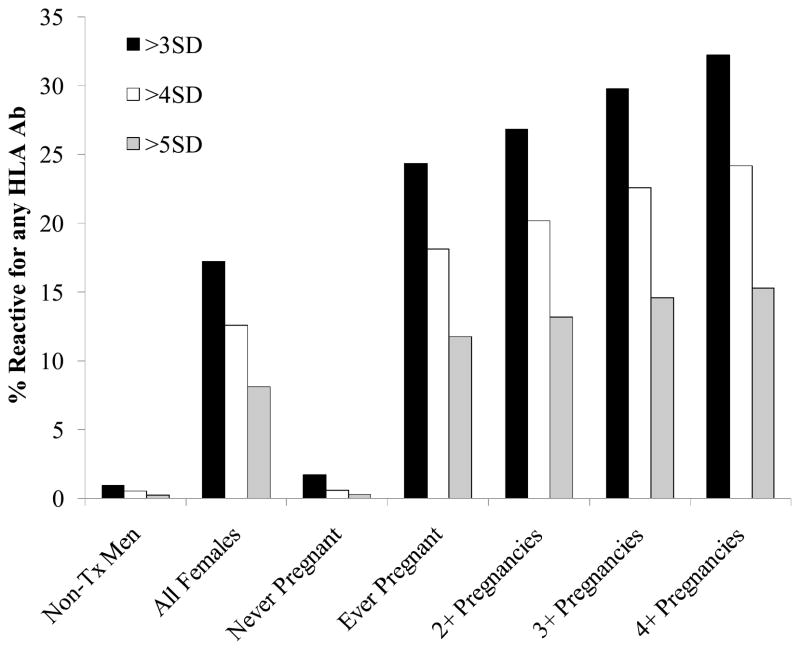
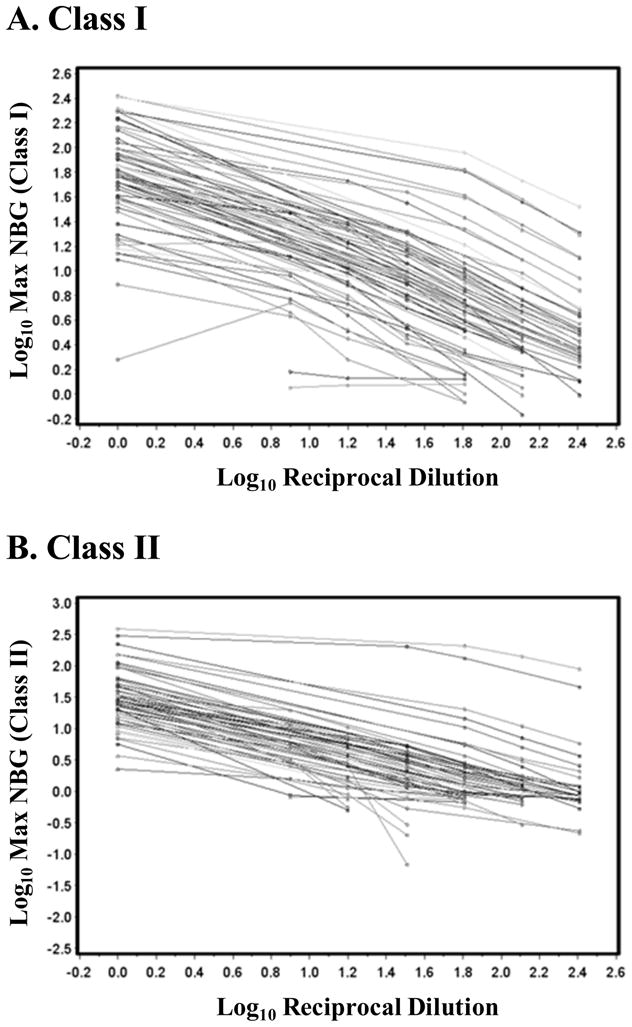
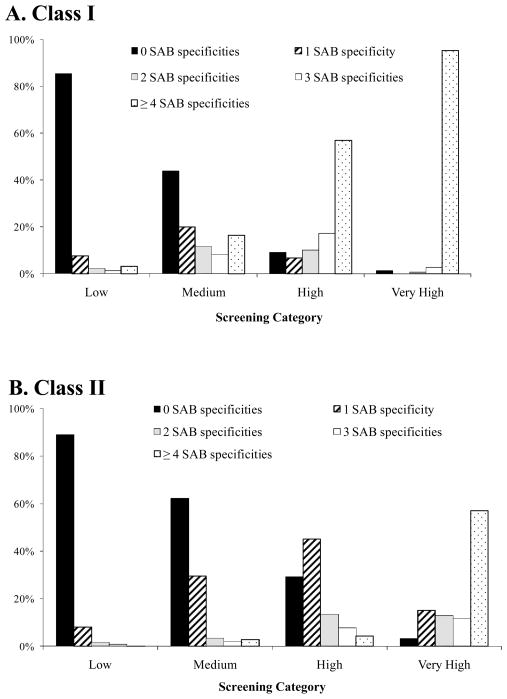
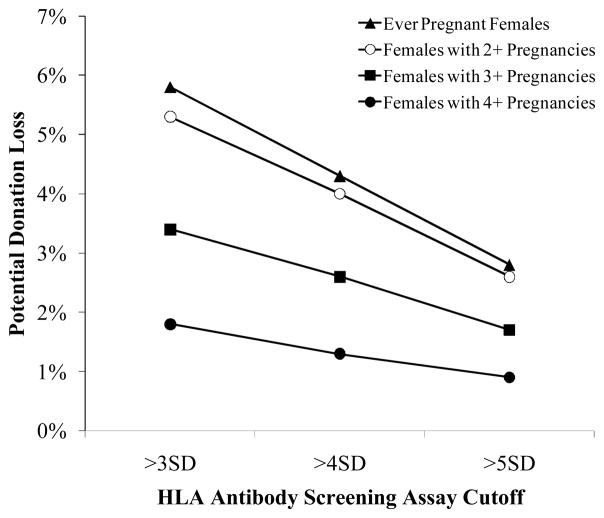
Study design and methods: Pregnancy history and HLA antibody screening and single-antigen bead data from blood donors in the Retrovirus Epidemiology Donor Study-II Leukocyte Antibody Prevalence Study were evaluated for correlations between assay screening values, HLA antibody titer, and number of HLA antigen specificities. The probabilities of matching a cognate antigen in a recipient were calculated and examined in association with total number of specificities observed and screening values. The relative impact of imposing various screening assay cutoffs or pregnancy stratification was examined in relation to detection of HLA antibody-reactive donations and loss of donors and donations.
Results: We provide evidence that higher HLA antibody screening assay values are associated with maintaining higher screening signals upon dilution and an increased breadth of specificities compared with lower screening values; the latter correlated with an increased risk of a cognate antigen match in potential recipients. Depending on the TRALI risk reduction strategy used, the potential loss of donations ranged between 0.9 and 6.0%.
Conclusion: This analysis should enable blood centers to decide upon a TRALI risk reduction strategy for apheresis PLTs that is consistent with how much donation loss the blood center can tolerate.
© 2011 American Association of Blood Banks.
Conflict of interest statement
The authors report no conflict of interest.
Figures
Comment in
-
The mystery of transfusion-related acute lung injury.Transfusion. 2011 Oct;51(10):2054-7. doi: 10.1111/j.1537-2995.2011.03275.x. Transfusion. 2011. PMID: 21985040 Free PMC article. No abstract available.
References
-
- FDA US Food and Drug Administration, US Department of Health and Human Services. Fatalities Reported to FDA Following Blood Collection and Transfusion: Annual Summary for Fiscal Year 2009. 2009. Dec,
-
- Strong DM, Lipton KS. AABB Association Bulletin #06–07. 2006. Nov 3,
-
- Popovsky MA, Moore SB. Diagnostic and pathogenetic considerations in transfusion-related acute lung injury. Transfusion. 1985 Nov;25(6):573–7. - PubMed
-
- Middelburg RA, van SD, Briet E, van der Bom JG. The role of donor antibodies in the pathogenesis of transfusion-related acute lung injury: a systematic review. Transfusion. 2008 Oct;48(10):2167–76. - PubMed
-
- Bux J, Sachs UJ. The pathogenesis of transfusion-related acute lung injury (TRALI) Br J Haematol. 2007 Mar;136(6):788–99. - PubMed
Publication types
MeSH terms
Substances
Grants and funding
LinkOut - more resources
Full Text Sources
Medical
Research Materials
