


Benzene, the exposome and future investigations of leukemia etiology
- PMID: 21333640
- PMCID: PMC3461963
- DOI: 10.1016/j.cbi.2011.02.010
Benzene, the exposome and future investigations of leukemia etiology
Abstract
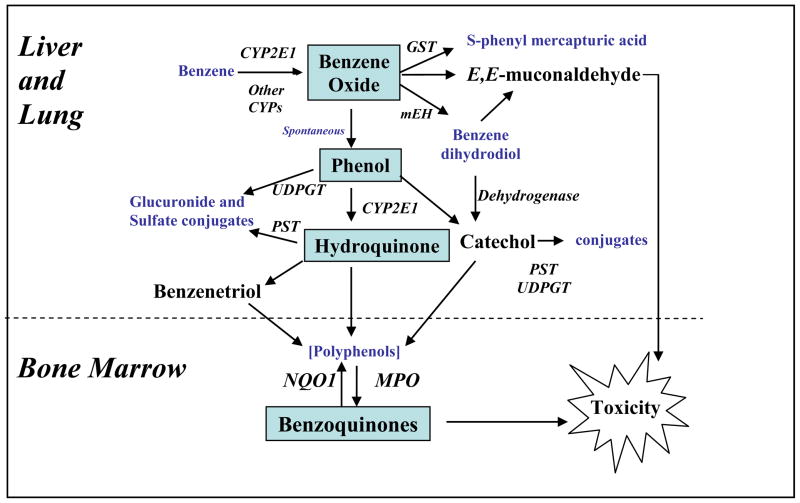
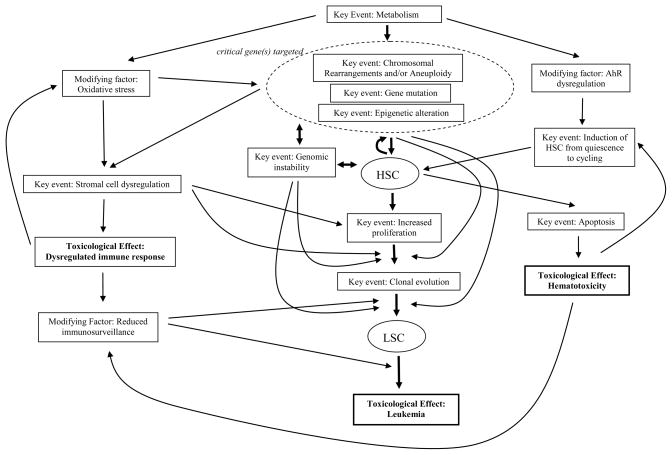
Benzene exposure is associated with acute myeloid leukemia (AML), myelodysplastic syndromes (MDS), and probably lymphoma and childhood leukemia. Biological plausibility for a causal role of benzene in these diseases comes from its toxicity to hematopoietic stem cells (HSC) or progenitor cells, from which all leukemias and related disorders arise. The effect of this toxicity is manifest as lowered blood counts (hematotoxicity), even in individuals occupationally exposed to low levels of benzene. Benzene can induce AML/MDS via several well-characterized pathways associated with these diseases. Through its metabolites, benzene induces multiple alterations that likely contribute to the leukemogenic process, and appears to operate via multiple modes of action. To improve mechanistic understanding and for risk assessment purposes, it may be possible to measure several of the key events in these modes of action in an in vitro model of the bone marrow stem cell niche. Even though benzene is leukemogenic at relatively low occupational levels of exposure, it seems unlikely that it is a major cause of leukemia in the general population exposed to benzene in the ppb range. Other established non-genetic causes of AML, e.g. smoking, ionizing radiation and cancer chemotherapy, also only explain about 20% of AML incidence, leaving ∼80% unexplained. The question arises as to how to find the causes of the majority of de novo AMLs that remain unexplained. We propose that we should attempt to characterize the 'exposome' of human leukemia by using unbiased laboratory-based methods to find the unknown 'environmental' factors that contribute to leukemia etiology.
Copyright © 2011 Elsevier Ireland Ltd. All rights reserved.
Figures
References
-
- Eden T. Aetiology of childhood leukaemia. Cancer treatment reviews. 2010;36(4):286–297. - PubMed
-
- Meek ME, Klaunig JE. Proposed mode of action of benzene-induced leukemia: Interpreting available data and identifying critical data gaps for risk assessment. Chem Biol Interact. 2010;184(1–2):279–285. - PubMed
Publication types
MeSH terms
Substances
Grants and funding
LinkOut - more resources
Full Text Sources
Medical
Research Materials
Miscellaneous
