


Mechanism of anti-angiogenic property of gold nanoparticles: role of nanoparticle size and surface charge
- PMID: 21333757
- PMCID: PMC3138823
- DOI: 10.1016/j.nano.2011.01.011
Mechanism of anti-angiogenic property of gold nanoparticles: role of nanoparticle size and surface charge
Abstract
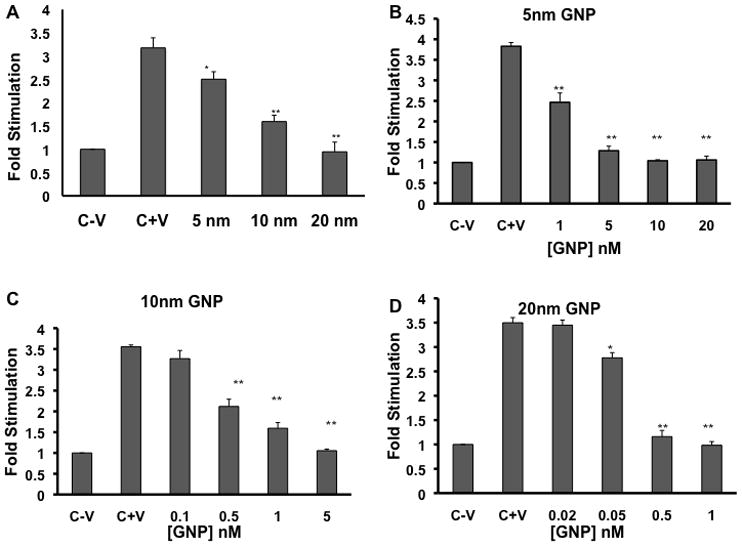
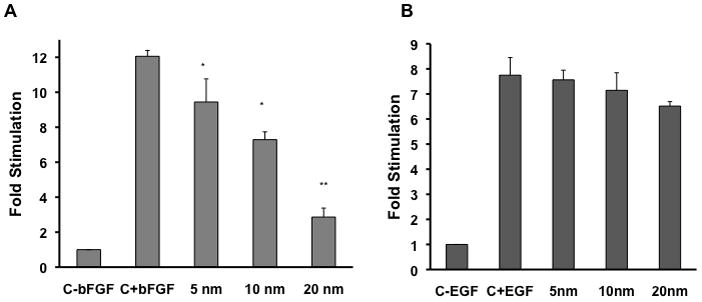
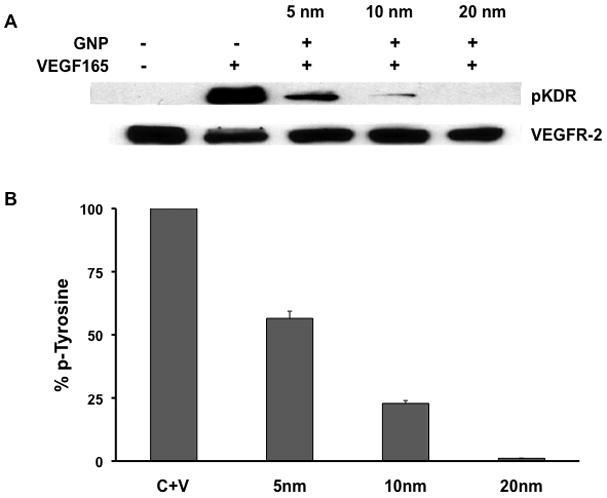
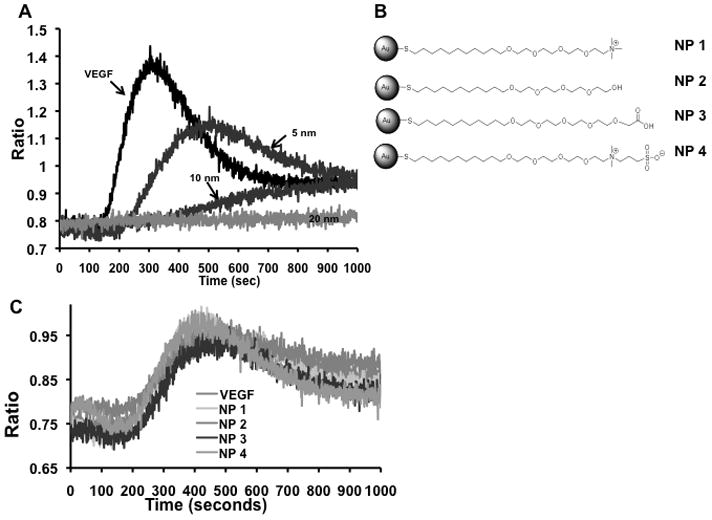
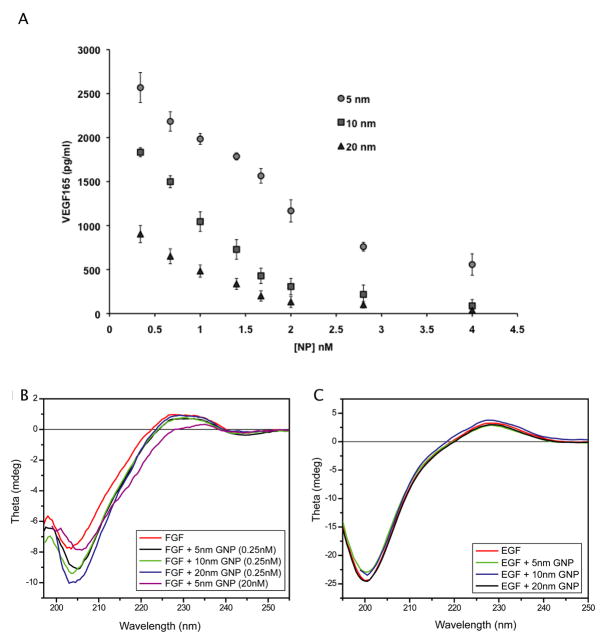
Discovering therapeutic inorganic nanoparticles (NPs) is evolving as an important area of research in the emerging field of nanomedicine. Recently, we reported the anti-angiogenic property of gold nanoparticles (GNPs): It inhibits the function of pro-angiogenic heparin-binding growth factors (HB-GFs), such as vascular endothelial growth factor 165 (VEGF165) and basic fibroblast growth factor (bFGF), etc. However, the mechanism through which GNPs imparts such an effect remains to be investigated. Using GNPs of different sizes and surface charges, we demonstrate here that a naked GNP surface is required and core size plays an important role to inhibit the function of HB-GFs and subsequent intracellular signaling events. We also demonstrate that the inhibitory effect of GNPs is due to the change in HB-GFs conformation/configuration (denaturation) by the NPs, whereas the conformations of non-HB-GFs remain unaffected. We believe that this significant study will help structure-based design of therapeutic NPs to inhibit the functions of disease-causing proteins.
Copyright © 2011 Elsevier Inc. All rights reserved.
Figures
References
Publication types
MeSH terms
Substances
Grants and funding
LinkOut - more resources
Full Text Sources
Other Literature Sources
