


Attention-modulating effects of cognitive enhancers
- PMID: 21334367
- PMCID: PMC3114188
- DOI: 10.1016/j.pbb.2011.02.008
Attention-modulating effects of cognitive enhancers
Abstract
Attention can be readily measured in experimental animal models. Animal models of attention have been used to better understand the neural systems involved in attention, how attention is impaired, and how therapeutic treatments can ameliorate attentional deficits. This review focuses on the ways in which animal models are used to better understand the neuronal mechanism of attention and how to develop new therapeutic treatments for attentional impairment. Several behavioral test methods have been developed for experimental animal studies of attention, including a 5-choice serial reaction time task (5-CSRTT), a signal detection task (SDT), and a novel object recognition (NOR) test. These tasks can be used together with genetic, lesion, pharmacological and behavioral models of attentional impairment to test the efficacy of novel therapeutic treatments. The most prominent genetic model is the spontaneously hypertensive rat (SHR). Well-characterized lesion models include frontal cortical or hippocampal lesions. Pharmacological models include challenge with the NMDA glutamate antagonist dizocilpine (MK-801), the nicotinic cholinergic antagonist mecamylamine and the muscarinic cholinergic antagonist scopolamine. Behavioral models include distracting stimuli and attenuated target stimuli. Important validation of these behavioral tests and models of attentional impairments for developing effective treatments for attentional dysfunction is the fact that stimulant treatments effective for attention deficit hyperactivity disorder (ADHD), such as methylphenidate (Ritalin®), are effective in the experimental animal models. Newer lines of treatment including nicotinic agonists, α4β2 nicotinic receptor desensitizers, and histamine H₃ antagonists, have also been found to be effective in improving attention in these animal models. Good carryover has also been seen for the attentional improvement caused by nicotine in experimental animal models and in human populations. Animal models of attention can be effectively used for the development of new treatments of attentional impairment in ADHD and other syndromes in which have attentional impairments occur, such as Alzheimer's disease and schizophrenia.
Copyright © 2011 Elsevier Inc. All rights reserved.
Figures
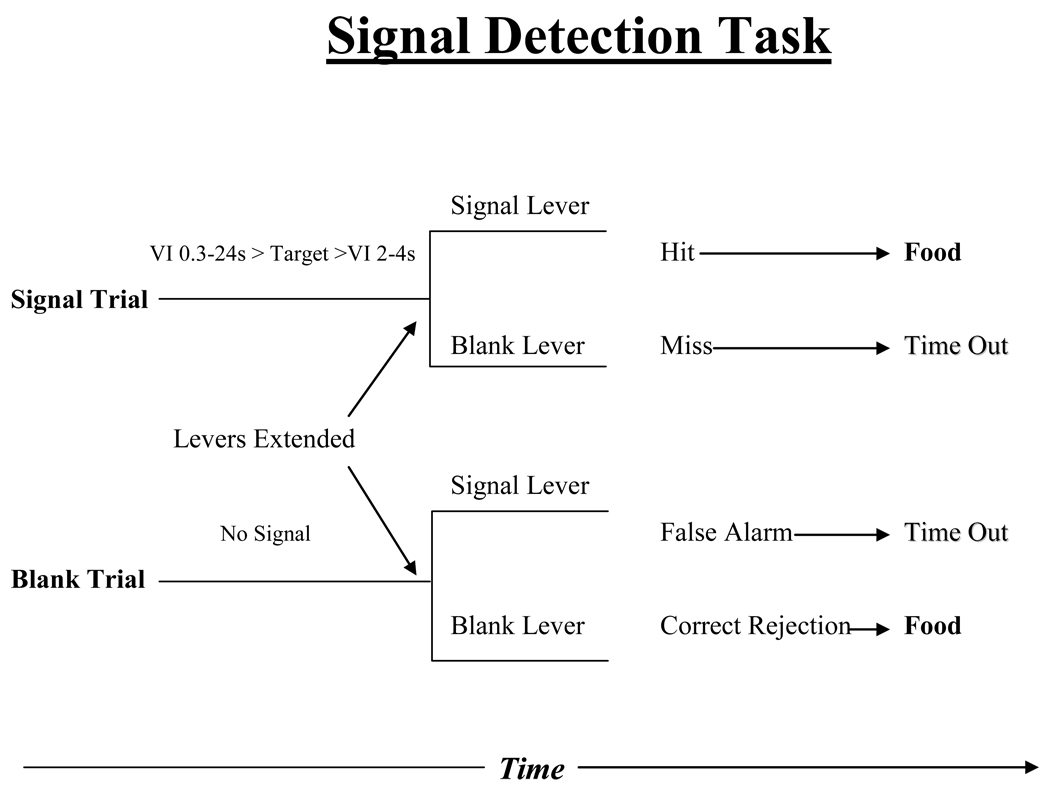
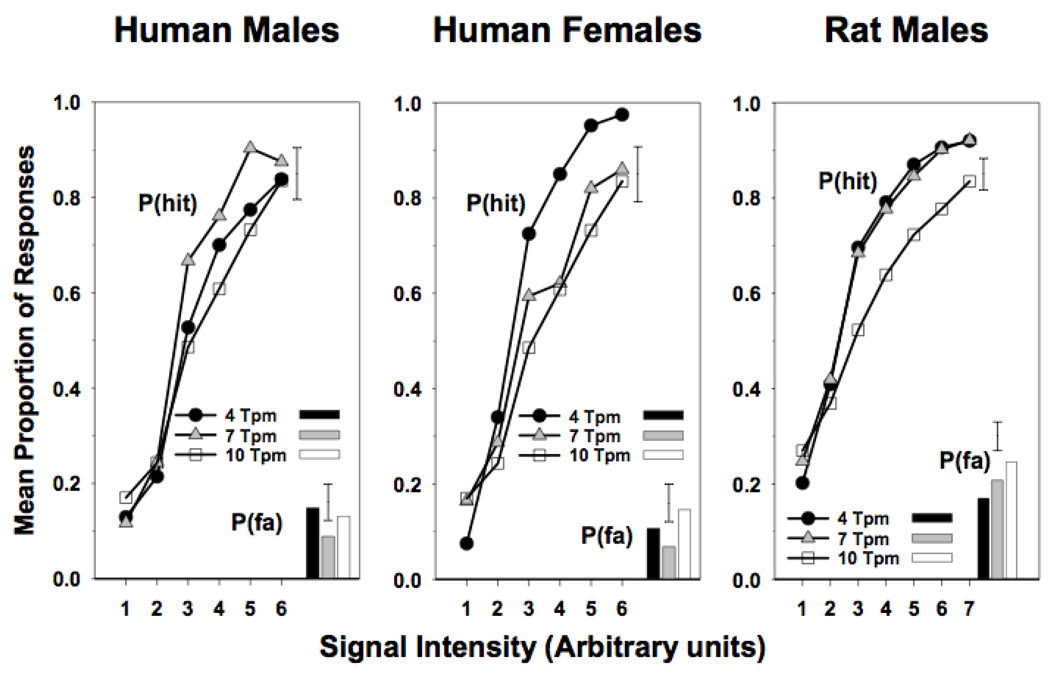
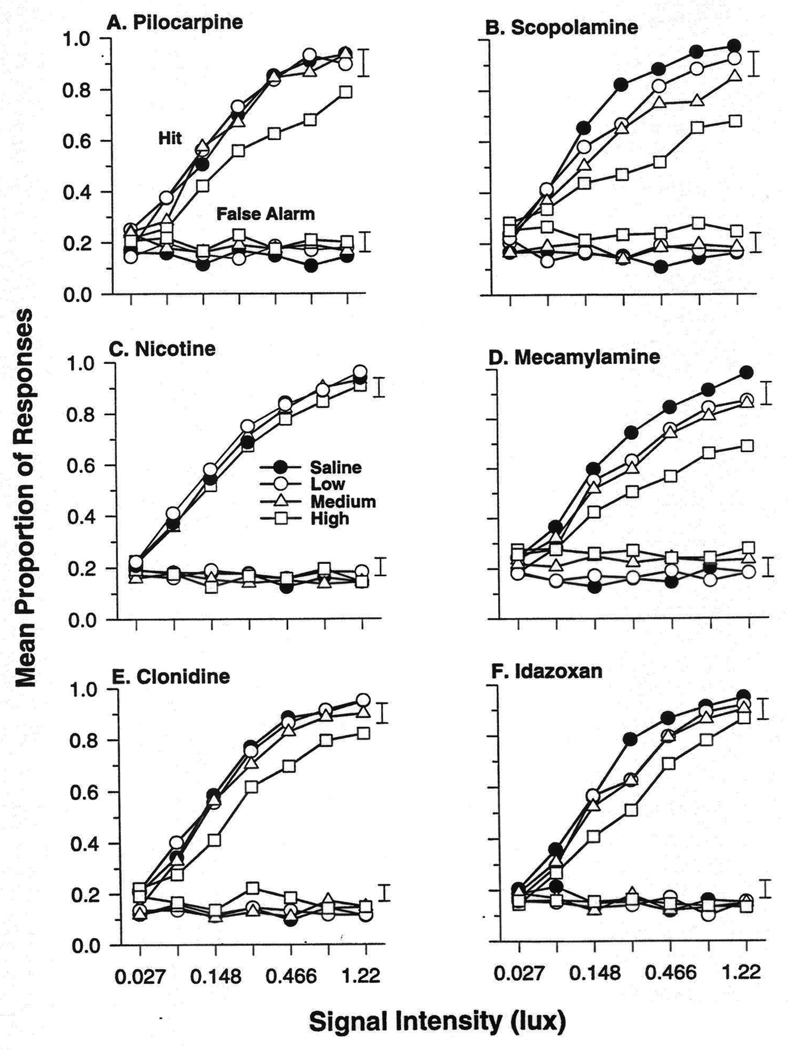
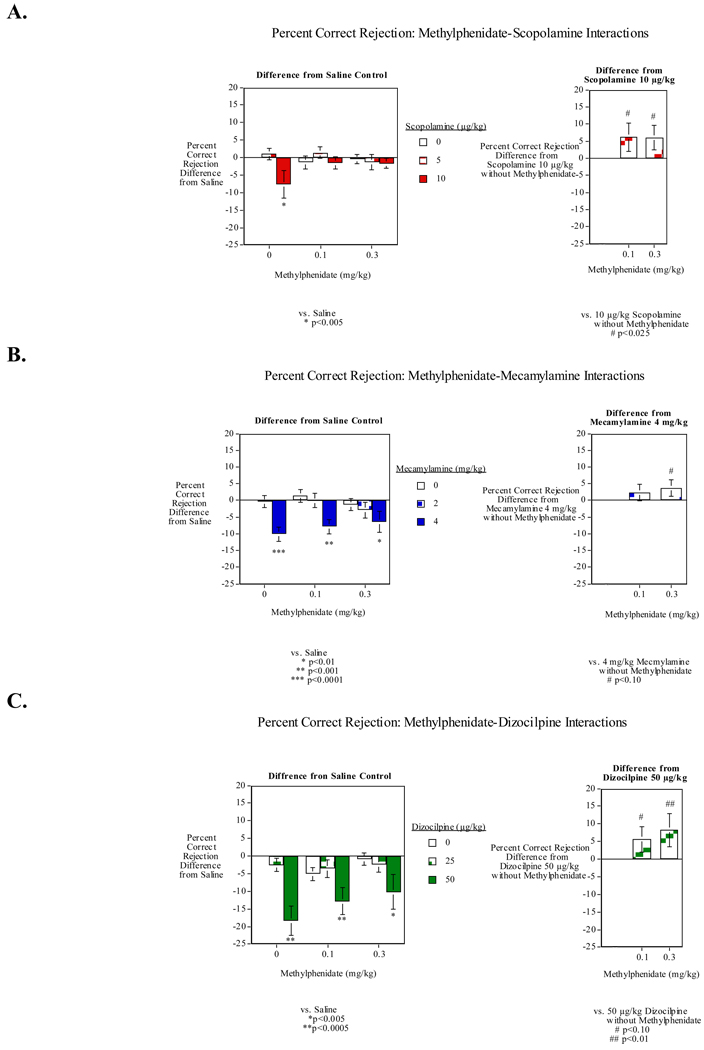
The muscarinic cholinergic antagonist scopolamine;
The nicotinic antagonist mecamylamine; and
The NMDA glutamate antagonist dizocilpine: percent correct rejection (mean±sem)
References
-
- Adriani W, Caprioli A, Granstrem O, Carli M, Laviola G. The spontaneously hypertensive-rat as an animal model of ADHD: evidence for impulsive and non-impulsive subpopulations. Neurosci Biobehav Rev. 2003;27:639–651. - PubMed
-
- Aspide R, Fresiello A, de Filippis G, Carnevale UA, Sadile AG. Non-selective attention in a rat model of hyperactivity and attention deficit: subchronic methylphenydate and nitric oxide synthesis inhibitor treatment. Neurosci Biobehav Rev. 2000;24:59–71. - PubMed
-
- Bartus RT. On neurodegenerative diseases, models, and treatment strategies: lessons learned and lessons forgotten a generation following the cholinergic hypothesis. Exp Neurol. 2000;163:495. - PubMed
-
- Bartus RT, Dean RL, Flicker C. Cholinergic psychopharmacology: An integration of human and animal research on memory. In: Meltzer HY, editor. Psychopharmacology: The Third Generation of Progress. New York: Raven Press; 1987. pp. 219–232.
-
- Berger DF, Sagvolden T. Sex differences in operant discrimination behaviour in an animal model of attention-deficit hyperactivity disorder. Behavioural Brain Research. 1998;94:73–82. - PubMed
Publication types
MeSH terms
Substances
Grants and funding
LinkOut - more resources
Full Text Sources
