


A participatory return-to-work intervention for temporary agency workers and unemployed workers sick-listed due to musculoskeletal disorders: results of a randomized controlled trial
- PMID: 21336673
- PMCID: PMC3173632
- DOI: 10.1007/s10926-011-9291-7
A participatory return-to-work intervention for temporary agency workers and unemployed workers sick-listed due to musculoskeletal disorders: results of a randomized controlled trial
Abstract
Introduction: Within the labour force workers without an employment contract represent a vulnerable group. In most cases, when sick-listed, these workers have no workplace/employer to return to. Therefore, the aim of this study was to evaluate the effectiveness on return-to-work of a participatory return-to-work program compared to usual care for unemployed workers and temporary agency workers, sick-listed due to musculoskeletal disorders.
Methods: The workers, sick-listed for 2-8 weeks due to musculoskeletal disorders, were randomly allocated to the participatory return-to-work program (n = 79) or to usual care (n = 84). The new program is a stepwise procedure aimed at making a consensus-based return-to-work plan, with the possibility of a temporary (therapeutic) workplace. Outcomes were measured at baseline, 3, 6, 9 and 12 months. The primary outcome measure was time to sustainable first return-to-work. Secondary outcome measures were duration of sickness benefit, functional status, pain intensity, and perceived health.
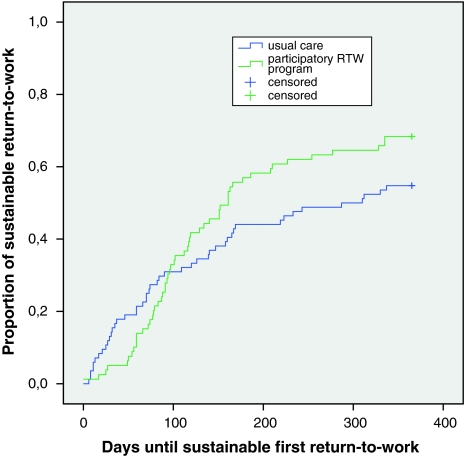
Results: The median duration until sustainable first return-to-work was 161 days in the intervention group, compared to 299 days in the usual care group. The new return-to-work program resulted in a non-significant delay in RTW during the first 90 days, followed by a significant advantage in RTW rate after 90 days (hazard ratio of 2.24 [95% confidence interval 1.28-3.94] P = 0.005). No significant differences were found for the measured secondary outcomes.
Conclusions: The newly developed participatory return-to-work program seems to be a promising intervention to facilitate work resumption and reduce work disability among temporary agency workers and unemployed workers, sick-listed due to musculoskeletal disorders.
Figures

References
-
- Department of Health . Choosing health: making healthier choices easier (Public Health White Paper) London: DH; 2004.
Publication types
MeSH terms
Grants and funding
LinkOut - more resources
Full Text Sources
