Review
. 2011 Mar;240(3):477-85.
doi: 10.1002/dvdy.22504. Epub 2010 Dec 7.

Patterning and plasticity in development of the respiratory lineage

Review

Patterning and plasticity in development of the respiratory lineage

Eric T Domyan et al. Dev Dyn. 2011 Mar.

Abstract

The mammalian respiratory lineage, consisting of the trachea and lung, originates from the ventral foregut in an early embryo. Reciprocal signaling interactions between the foregut epithelium and its associated mesenchyme guide development of the respiratory endoderm, from a naive sheet of cells to multiple cell types that line a functional organ. This review synthesizes current understanding of the early events in respiratory system development, focusing on three main topics: (1) specification of the respiratory system as a distinct organ of the endoderm, (2) patterning and differentiation of the nascent respiratory epithelium along its proximal-distal axis, and (3) plasticity of the respiratory cells during the process of development. This review also highlights areas in need of further study, including determining how early endoderm cells rapidly switch their responses to the same signaling cues during development, and how the general proximal-distal pattern of the lung is converted to fine-scale organization of multiple cell types along this axis.


Figures

Figure 1
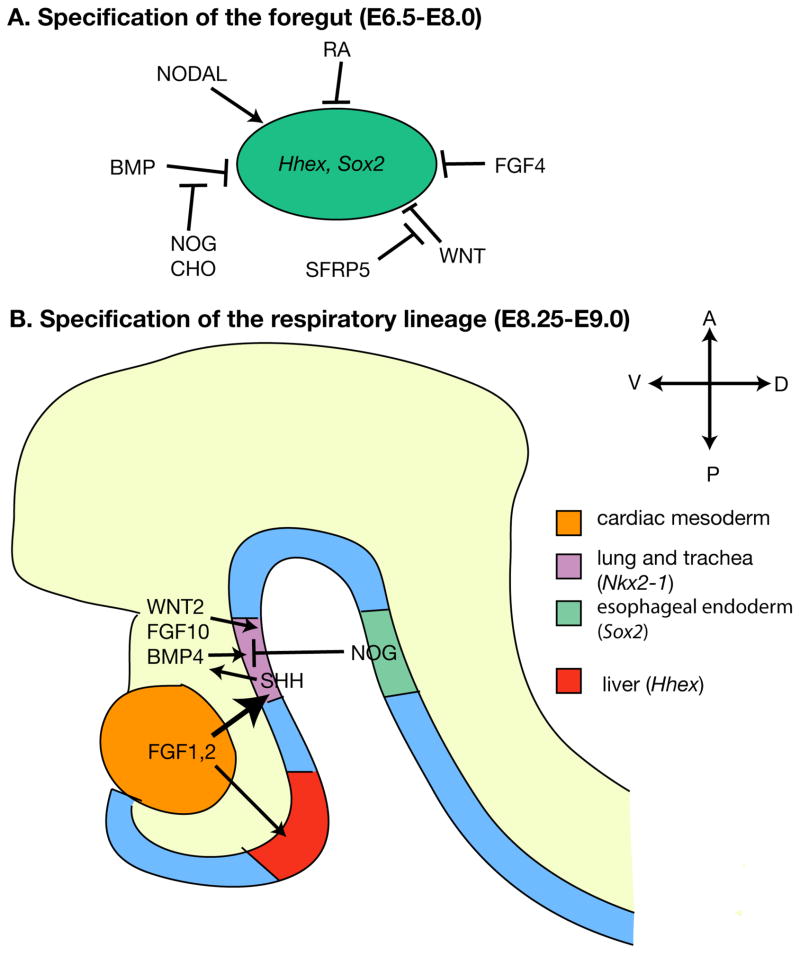
Figure 1. Signaling interactions during step-wise specification of the respiratory lineage
Schematic depictions of key secreted ligands and transcription factors involved in specifying the respiratory progenitors. (A) During gastrulation, signals secreted from the adjacent mesoderm and ectoderm specify the foregut endoderm, which expresses marker genes Hhex and Sox2. (B) As the gut tube folds, multiple signals interact to induce trachea and lung fate in the ventral endoderm. NOG = Noggin, CHO = Chordin
Figure 2
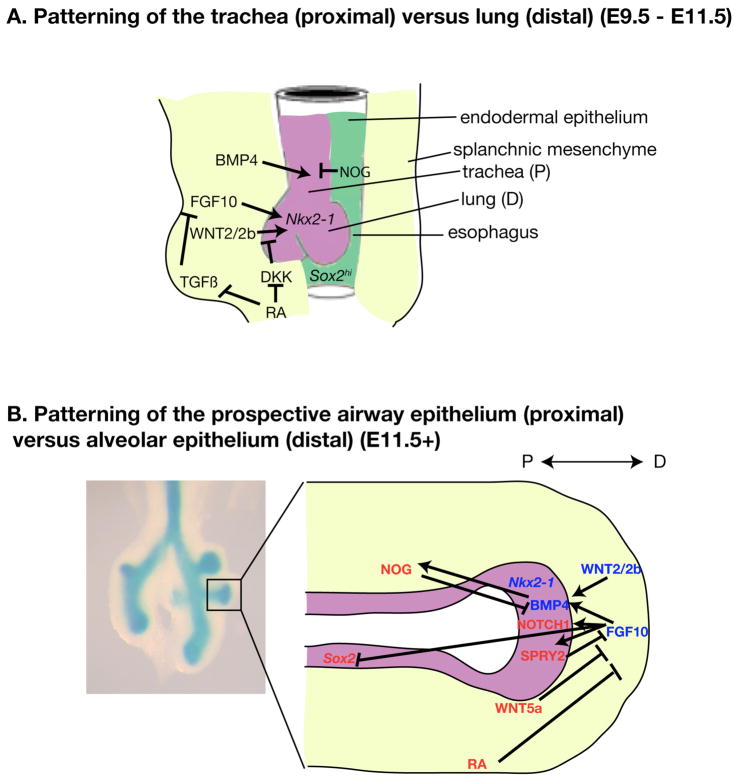
Figure 2. Signaling interactions during P-D patterning of the respiratory epithelium
Schematic depictions of key secreted ligands and transcription factors involved in patterning the developing respiratory system. (A) During lung budding, multiple ligands are secreted from epithelium and the surrounding mesenchyme to distinguish the trachea and nascent lung buds. (Modified from Que et al., 2006). (B) During lung branching morphogenesis, multiple secreted ligands and transcription factors interact to distinguish the airway epithelium versus alveolar epithelium. Left panel is a wholemount image of lung at E11.5. Boxed area is illustrated in the right panel, with the epithelium depicted in blue. Signals that promote distal fate are labeled in blue. Signals that promote proximal fate are labeled in red.
Figure 3
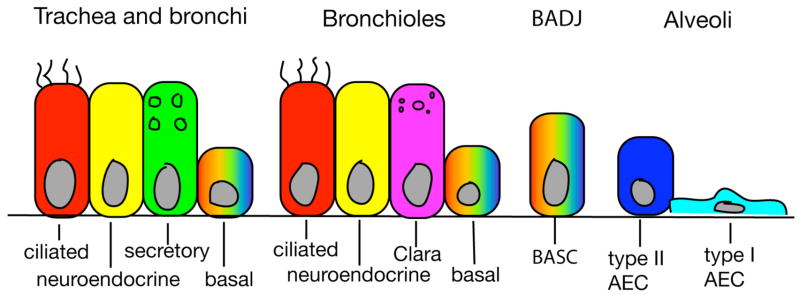
Figure 3. Differentiated cell types within the respiratory epithelium
Schematic depiction of relative locations of the various cell types in the mature lung. Notch signaling regulates the fate decision between secretory and non-secretory cell fates, while TGFβ specifically promotes the differentiation program of Clara cells. The location of putative multipotent stem cells (basal cells and BASCs) are indicated with rainbow shading. BADJ – bronchioalveolar duct junction. BASC – bronchioalveolar stem cell.

References

    1. Abler LL, Mansour SL, Sun X. Conditional gene inactivation reveals roles for Fgf10 and Fgfr2 in establishing a normal pattern of epithelial branching in the mouse lung. Dev Dyn. 2009;238:1999–2013. - PMC - PubMed
    1. Arman E, Haffner-Krausz R, Gorivodsky M, Lonai P. Fgfr2 is required for limb outgrowth and lung-branching morphogenesis. Proc Natl Acad Sci U S A. 1999;96:11895–11899. - PMC - PubMed
    1. Bayha E, Jorgensen MC, Serup P, Grapin-Botton A. Retinoic acid signaling organizes endodermal organ specification along the entire antero-posterior axis. PLoS One. 2009;4:e5845. - PMC - PubMed
    1. Bellusci S, Grindley J, Emoto H, Itoh N, Hogan BL. Fibroblast growth factor 10 (FGF10) and branching morphogenesis in the embryonic mouse lung. Development. 1997;124:4867–4878. - PubMed
    1. Ben-Tabou de-Leon S, Davidson EH. Experimentally based sea urchin gene regulatory network and the causal explanation of developmental phenomenology. Wiley Interdiscip Rev Syst Biol Med. 2009;1:237–246. - PMC - PubMed

LinkOut - more resources