


Normal modes of prion proteins: from native to infectious particle
- PMID: 21338080
- PMCID: PMC3070235
- DOI: 10.1021/bi1010514
Normal modes of prion proteins: from native to infectious particle
Abstract
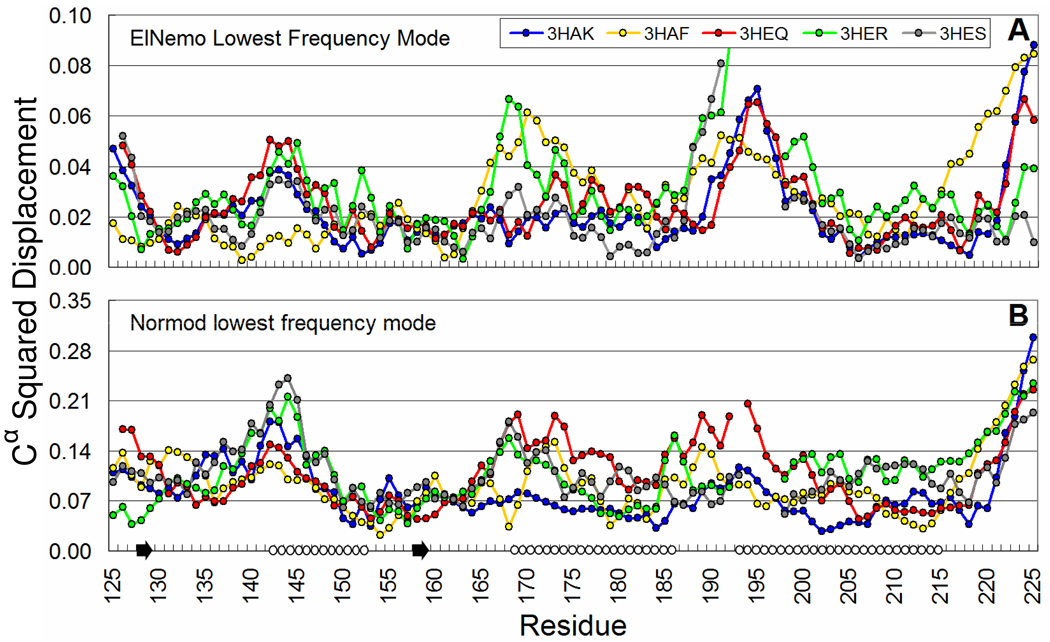
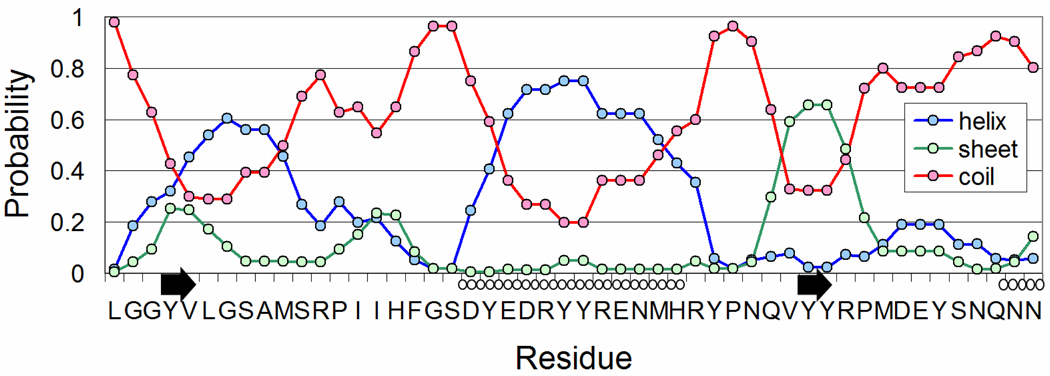
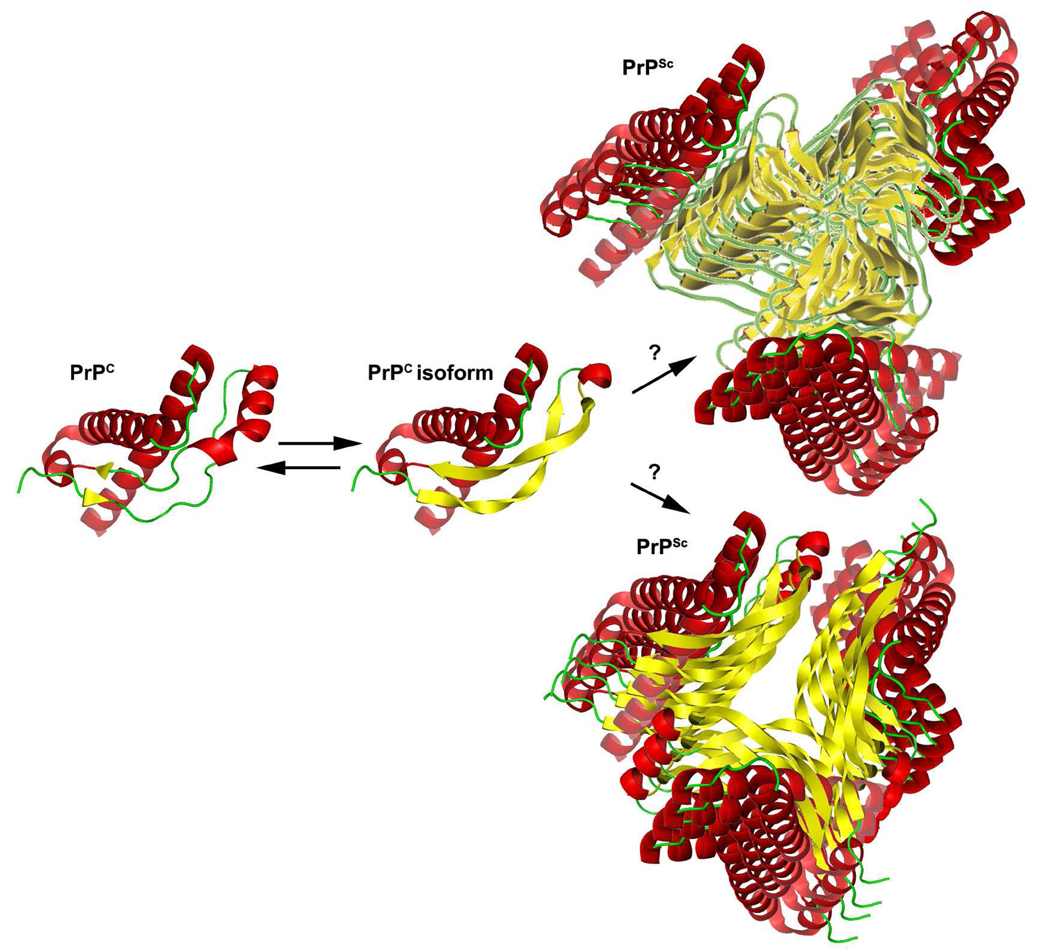
Prion proteins (PrP) are the infectious agent in transmissible spongiform encephalopathies (i.e., mad cow disease). To be infectious, prion proteins must undergo a conformational change involving a decrease in α-helical content along with an increase in β-strand content. This conformational change was evaluated by means of elastic normal modes. Elastic normal modes show a diminution of two α-helices by one and two residues, as well as an extension of two β-strands by three residues each, which could instigate the conformational change. The conformational change occurs in a region that is compatible with immunological studies, and it is observed more frequently in mutant prions that are prone to conversion than in wild-type prions because of differences in their starting structures, which are amplified through normal modes. These findings are valuable for our comprehension of the conversion mechanism associated with the conformational change in prion proteins.
Figures

References
-
- Prusiner SB. Novel proteinaceous infectious particles cause scrapie. Science. 1982;216:136–144. - PubMed
-
- Prusiner SB, McKinley MP, Bowman KA, Bolton DC, Bendheim PE, Groth DF, Glenner GG. Scrapie prions aggregate to form amyloid-like birefringent rods. Cell. 1983;35:349–358. - PubMed
-
- Jackson GS, Clarke AR. Mammalian prion proteins. Curr Opin Struct Biol. 2000;10:69–74. - PubMed
-
- Belay ED. Transmissible spongiform encephalopathies in humans. Annu Rev Microbiol. 1999;53:283–314. - PubMed
Publication types
MeSH terms
Substances
Grants and funding
LinkOut - more resources
Full Text Sources
Research Materials
