


α7-cholinergic receptor mediates vagal induction of splenic norepinephrine
- PMID: 21339364
- PMCID: PMC3083451
- DOI: 10.4049/jimmunol.1003722
α7-cholinergic receptor mediates vagal induction of splenic norepinephrine
Abstract
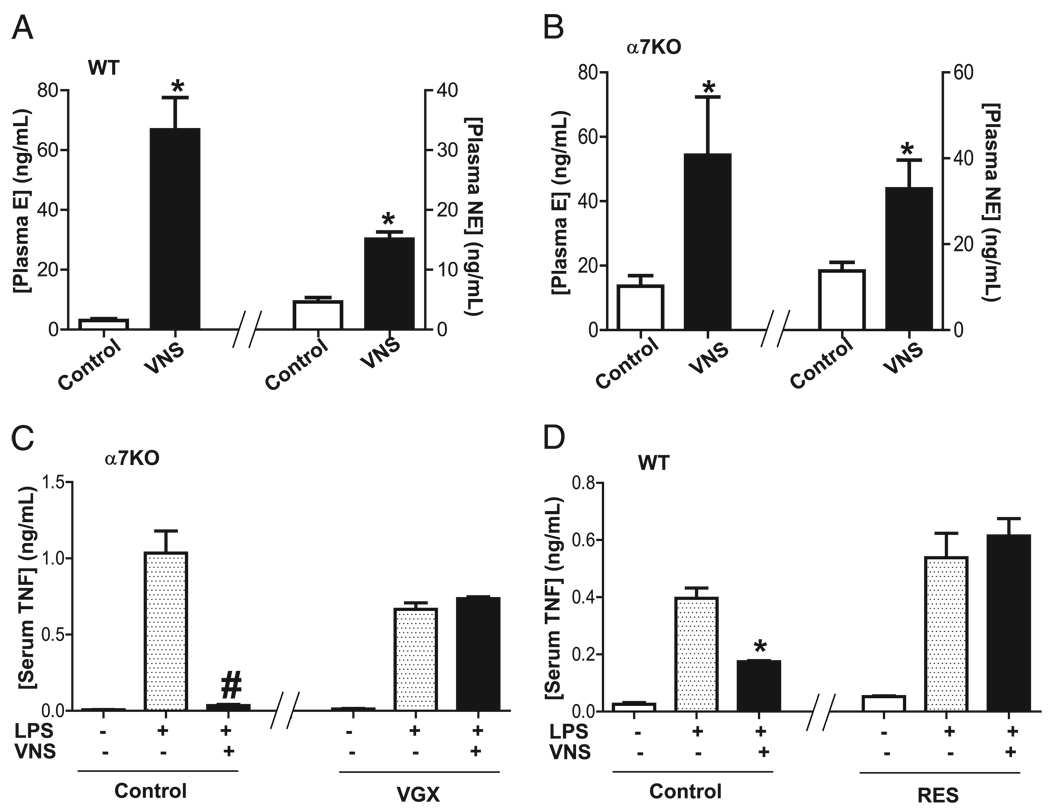
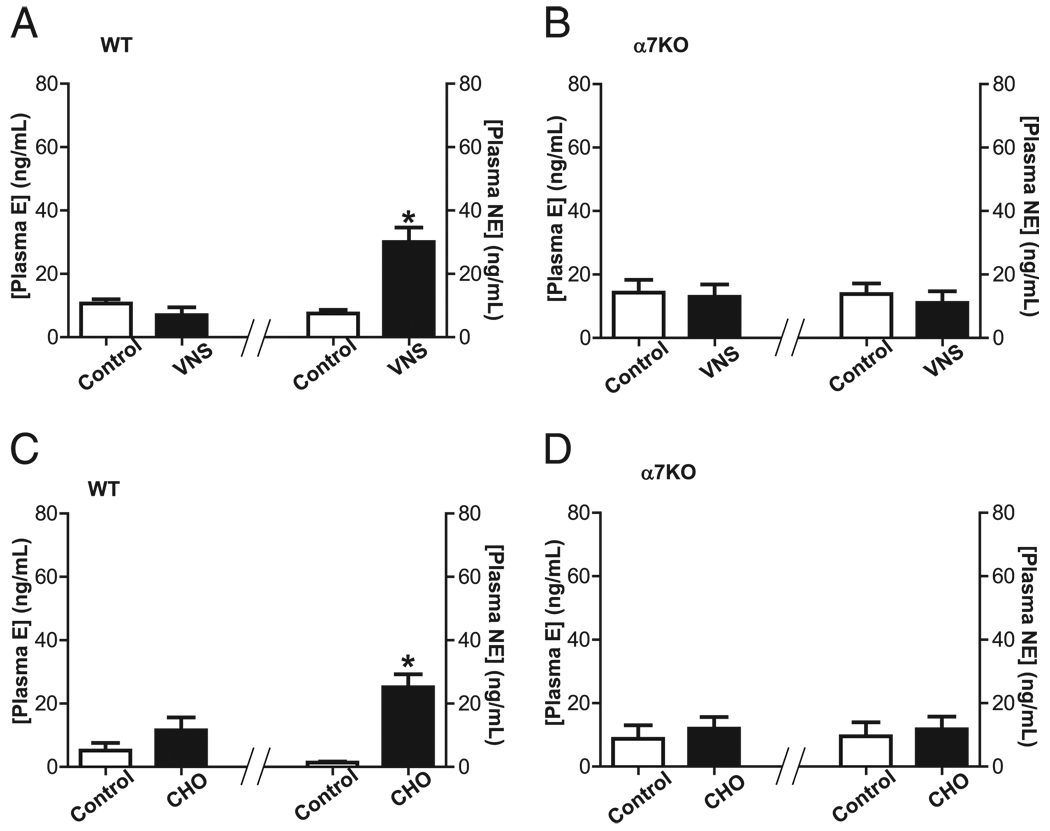
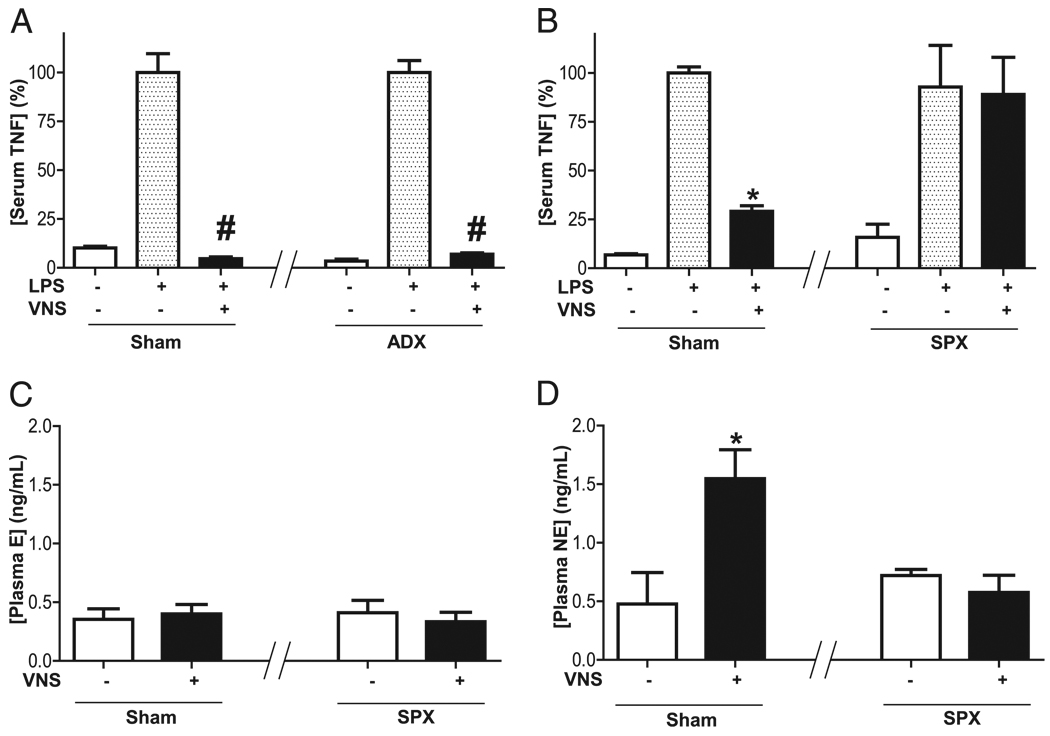
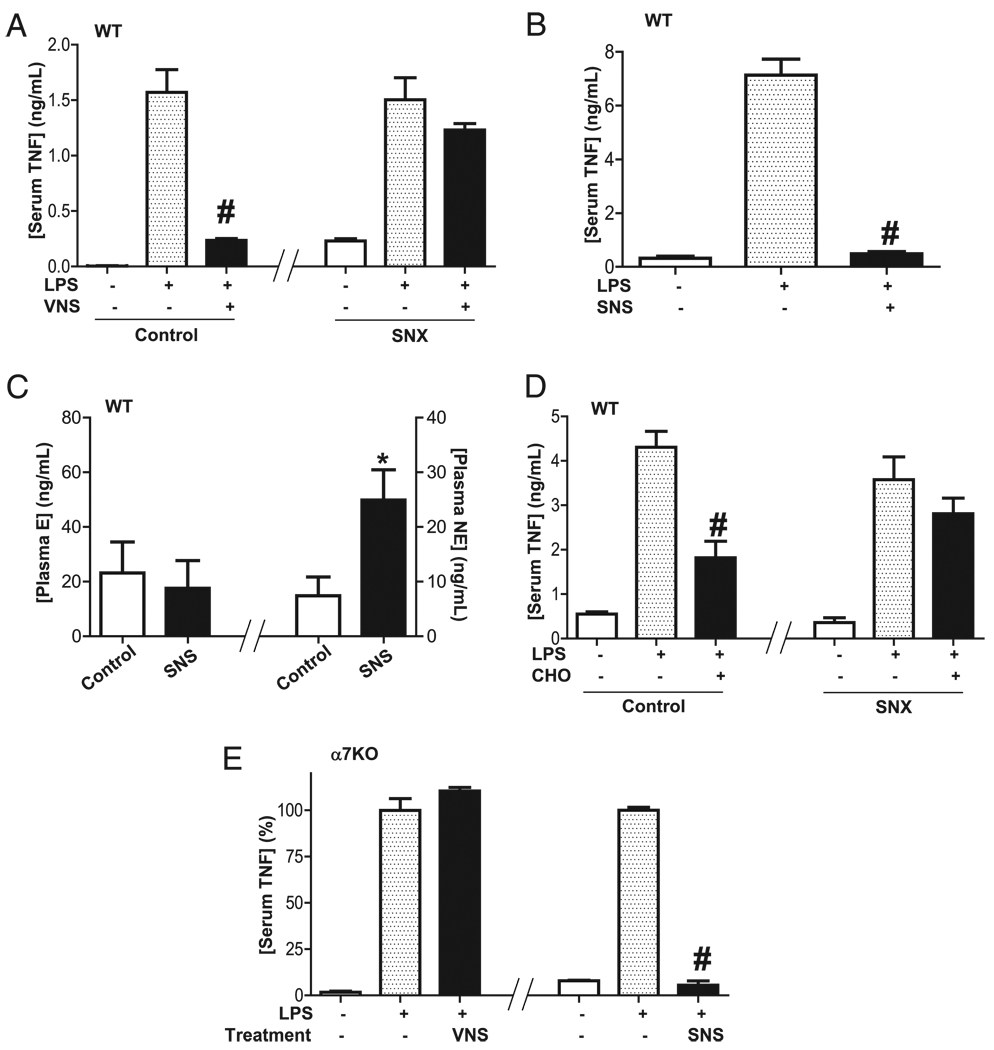
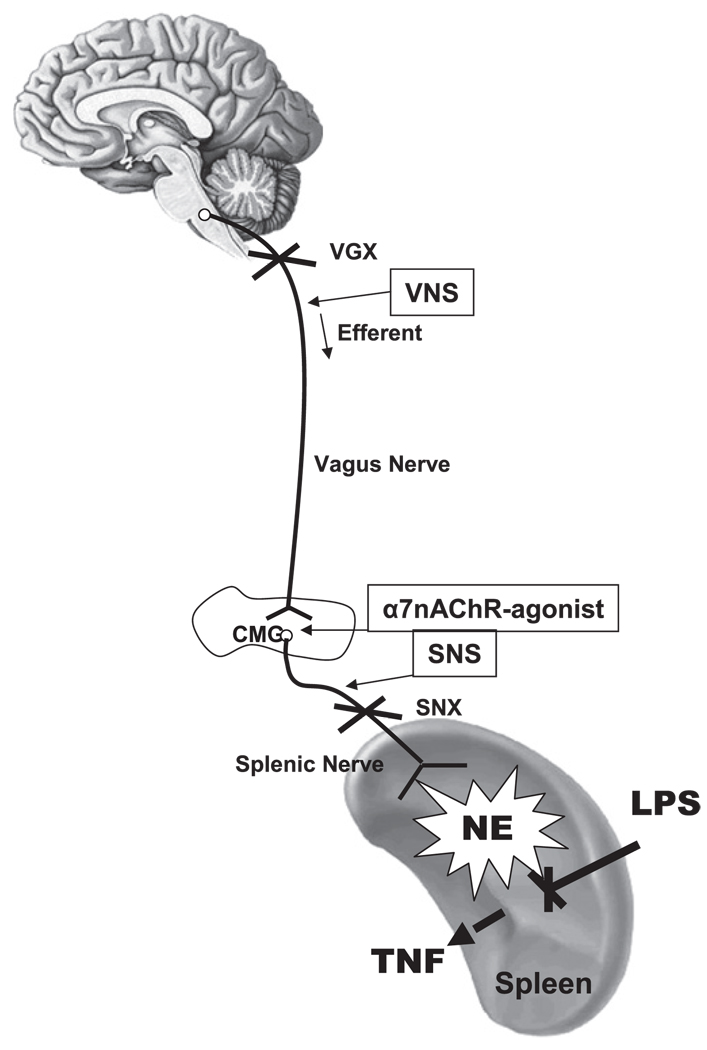
Classically, sympathetic and parasympathetic systems act in opposition to maintain the physiological homeostasis. In this article, we report that both systems work together to restrain systemic inflammation in life-threatening conditions such as sepsis. This study indicates that vagus nerve and cholinergic agonists activate the sympathetic noradrenergic splenic nerve to control systemic inflammation. Unlike adrenalectomy, splenectomy and splenic neurectomy prevent the anti-inflammatory potential of both the vagus nerve and cholinergic agonists, and abrogate their potential to induce splenic and plasma norepinephrine. Splenic nerve stimulation mimics vagal and cholinergic induction of norepinephrine and re-establishes neuromodulation in α7 nicotinic acetylcholine receptor (α7nAChR)-deficient animals. Thus, vagus nerve and cholinergic agonists inhibit systemic inflammation by activating the noradrenergic splenic nerve via the α7nAChR nicotinic receptors. α7nAChR represents a unique molecular link between the parasympathetic and sympathetic system to control inflammation.
Conflict of interest statement
The authors have no financial conflicts of interest.
Figures
References
-
- Nathan C. Points of control in inflammation. Nature. 2002;420:846–852. - PubMed
-
- Ulloa L, Tracey KJ. The “cytokine profile”: a code for sepsis. Trends Mol. Med. 2005;11:56–63. - PubMed
-
- Tracey KJ, Cerami A. Tumor necrosis factor: a pleiotropic cytokine and therapeutic target. Annu. Rev. Med. 1994;45:491–503. - PubMed
Publication types
MeSH terms
Substances
Grants and funding
LinkOut - more resources
Full Text Sources
Other Literature Sources
Molecular Biology Databases
