


Serial intervals and the temporal distribution of secondary infections within households of 2009 pandemic influenza A (H1N1): implications for influenza control recommendations
- PMID: 21342883
- PMCID: PMC3106264
- DOI: 10.1093/cid/ciq028
Serial intervals and the temporal distribution of secondary infections within households of 2009 pandemic influenza A (H1N1): implications for influenza control recommendations
Abstract
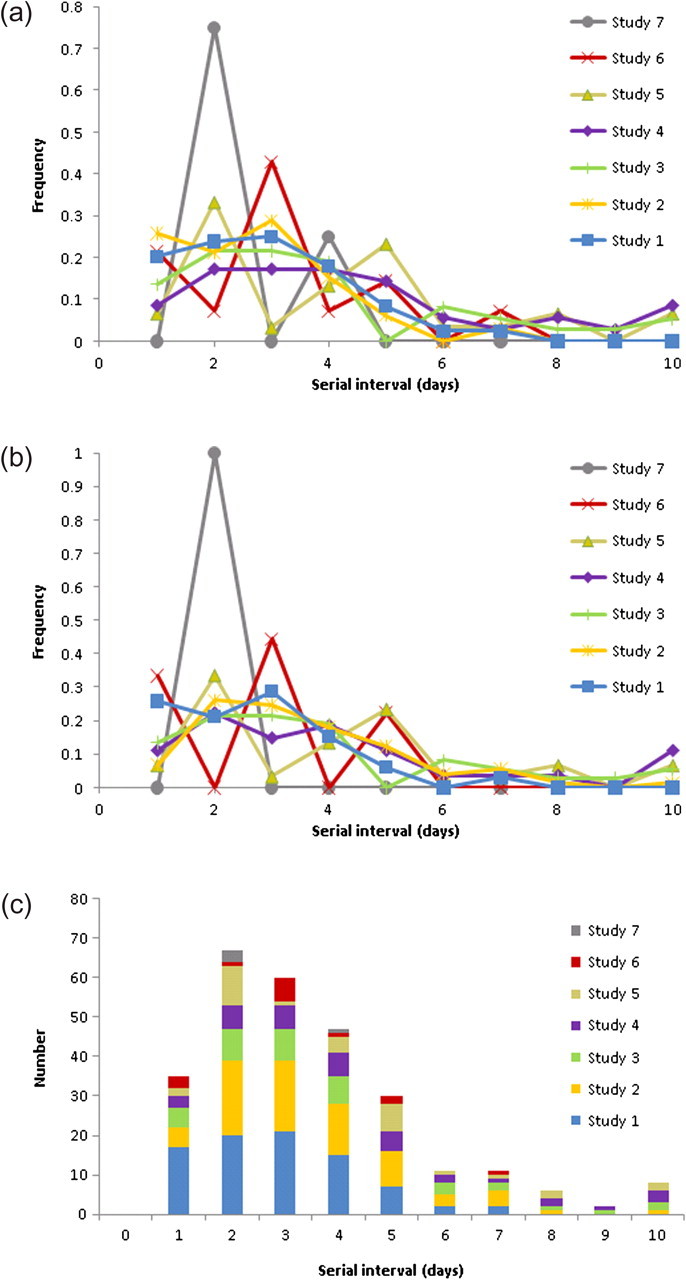
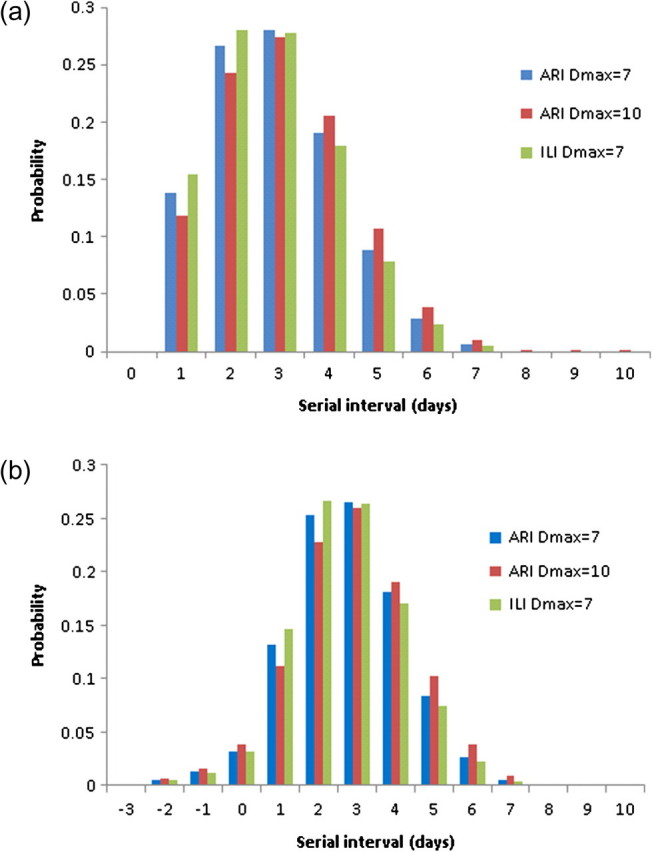
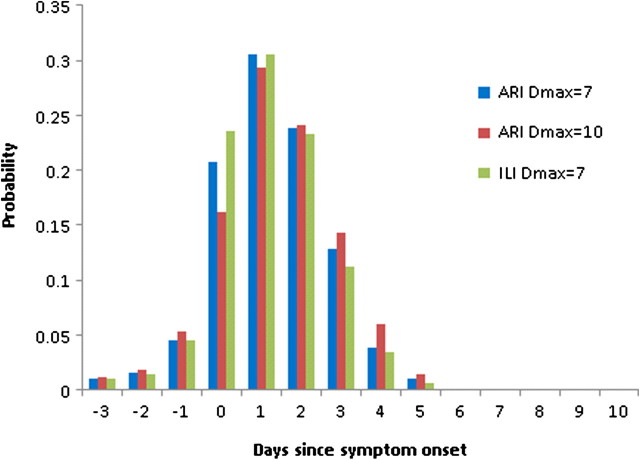
A critical issue during the 2009 influenza A (H1N1) pandemic was determining the appropriate duration of time individuals with influenza-like illness (ILI) should remain isolated to reduce onward transmission while limiting societal disruption. Ideally this is based on knowledge of the relative infectiousness of ill individuals at each point during the course of the infection. Data on 261 clinically apparent pH1N1 infector-infectee pairs in households, from 7 epidemiological studies conducted in the United States early in 2009, were analyzed to estimate the distribution of times from symptom onset in an infector to symptom onset in the household contacts they infect (mean, 2.9 days, not correcting for tertiary transmission). Only 5% of transmission events were estimated to take place >3 days after the onset of clinical symptoms among those ill with pH1N1 virus. These results will inform future recommendations on duration of isolation of individuals with ILI.
Figures
References
-
- Ginsberg M, Hopkins J, Maroufi A, et al. Swine influenza A (H1N1) infection in two children–-Southern California, March–April 2009. MMWR. 2009;58:400–402. - PubMed
-
- Novel Swine-Origin Influenza A (H1N1) Virus Investigation Team, Dawood F, Jain S, et al. Emergence of a novel swine-origin influenza A (H1N1) virus in humans. New Engl J Med. 2009;360:2605–2615. - PubMed
-
- World Health Organization. Global alert and response: influenza A(H1N1) - update 16. 2009 http://www.who.int/csr/don/2009_05_05a/en/index.html. Accessed 2 November 2010.
-
- Centers for Disease Control and Prevention (CDC) Interim CDC guidance for nonpharmaceutical community mitigation in response to human infections with swine influenza (H1N1) virus. 2009 http://www.thebody.com/content/news/art51596.html. Accessed 2 November 2010.
-
- Centers for Disease Control and Prevention (CDC) CDC recommendations for the amount of time persons with influenza-like illness should be away from others. 2009 http://www.cdc.gov/H1N1flu/guidance/exclusion.htm. Accessed 2 November 2010.
Publication types
MeSH terms
Grants and funding
LinkOut - more resources
Full Text Sources
Medical
