


Intentional weight loss and changes in symptoms of depression: a systematic review and meta-analysis
- PMID: 21343903
- PMCID: PMC3139753
- DOI: 10.1038/ijo.2011.2
Intentional weight loss and changes in symptoms of depression: a systematic review and meta-analysis
Abstract
Objective: Obesity is related to increased risk of several health complications, including depression. Many studies have reported improvements in mood with weight loss, but results have been equivocal. The present meta-analysis examined changes in symptoms of depression that were reported in trials of weight loss interventions. Between-groups comparisons of different weight loss methods (for example, lifestyle modification, diet-alone and pharmacotherapy) were examined, as were within-group changes for each treatment type.
Method: MEDLINE was searched for articles published between 1950 and January 2009. Several obesity-related terms were intersected with terms related to depression. Results were filtered to return only studies of human subjects, published in English. Of 5971 articles, 394 were randomized controlled trials. Articles were excluded if they did not report mean changes in weight or symptoms of depression, included children or persons with psychiatric disorders (other than depression), or provided insufficient data for analysis. Thirty-one studies (n=7937) were included. Two authors independently extracted a description of each study treatment, sample characteristics, assessment methods and changes in weight and symptoms of depression. Treatments were categorized as lifestyle modification, non-dieting, dietary counseling, diet-alone, exercise-alone, pharmacotherapy, placebo or control interventions.
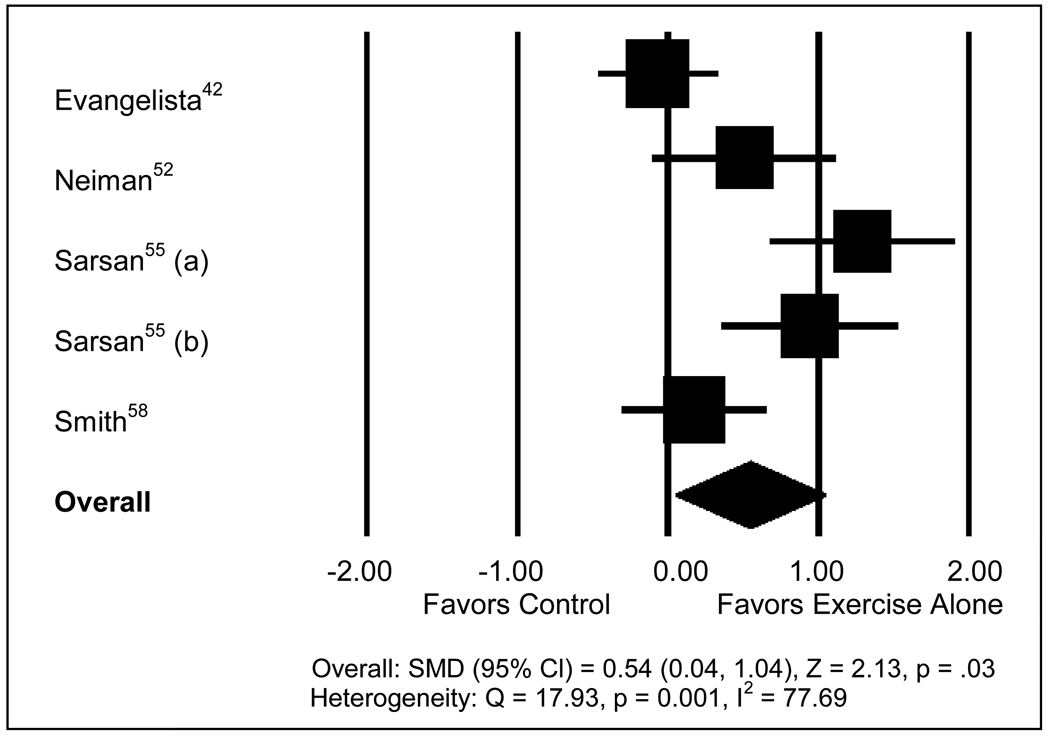
Results: Random effects models found that lifestyle modification was superior to control and non-dieting interventions for reducing symptoms of depression, and marginally better than dietary counseling and exercise-alone programs. Exercise-alone programs were superior to controls. No differences were found for comparisons of pharmacologic agents and placebos. Within-group analyses found significant reductions in symptoms of depression for nearly all active interventions. A meta-regression found no relationship between changes in weight and changes in symptoms of depression in lifestyle modification interventions.
Conclusions: On average, obese individuals in weight loss trials experienced reductions in symptoms of depression. Future studies should examine incidence and resolution of clinically significant depressive disorders with weight loss interventions.
Conflict of interest statement
Conflicts of Interest
Fabricatore has served as a consultant for Pfizer, Merck, and Ethicon-Endosurgery, and has received research support (including funding for this study) from Merck. Although he is now employed by Nutrisystem, Inc., Fabricatore was employed full-time at the University of Pennsylvania (where he retains an adjunct appointment) at the time the study was completed. Wadden serves on the Advisory Boards of Novo Nordisk and Orexigen and has received research support from Orexigen and Pfizer. Nguyen is employed by Merck and Heymsfield was employed by Merck at the time the work was completed. Faith has served as a consultant to, and has received research support from, Merck. The other authors have no potential conflicts to declare.
Figures


References
-
- Flegal KM, Carroll MD, Ogden CL, Curtin LR. Prevalence and trends in obesity among US adults, 1999–2008. JAMA. 2010;303:235–241. - PubMed
-
- National Institutes of Health. Clinical guidelines on the identification, evaluation, and treatment of overweight and obesity in adults--The Evidence Report. Obes Res. 1998;6 suppl 2:51S–209S. - PubMed
-
- Flegal KM, Graubard BI, Williamson DF, Gail MH. Impact of smoking and preexisting illness on estimates of the fractions of deaths associated with underweight, overweight, and obesity in the US population. Am J Epidemiol. 2007;166:975–982. - PubMed
-
- Petry NM, Barry D, Pietrzak RH, Wagner JA. Overweight and obesity are associated with psychiatric disorders: results from the National Epidemiologic Survey on Alcohol and Related Conditions. Psychosom Med. 2008;70:288–297. - PubMed
