


A multi-component cognitive-behavioral intervention for sleep disturbance in veterans with PTSD: a pilot study
- PMID: 21344046
- PMCID: PMC3041620
A multi-component cognitive-behavioral intervention for sleep disturbance in veterans with PTSD: a pilot study
Abstract
Study objectives: A significant portion of US military personnel are returning from deployment with trauma-related sleep disturbance, and disrupted sleep has been proposed as a mechanism for the development of medical conditions in those with posttraumatic stress disorder (PTSD). Although individuals with PTSD may realize improved sleep with either PTSD treatment or CBT for insomnia, many continue to experience residual sleep difficulties. Newly developed interventions designed to address nightmares are effective to this end, but often do not fully remove all aspects of PTSD-related sleep difficulties when used in isolation. A combined intervention involving both a nightmare-specific intervention and CBT for insomnia may lead to more marked reductions in PTSD-related sleep disturbances.
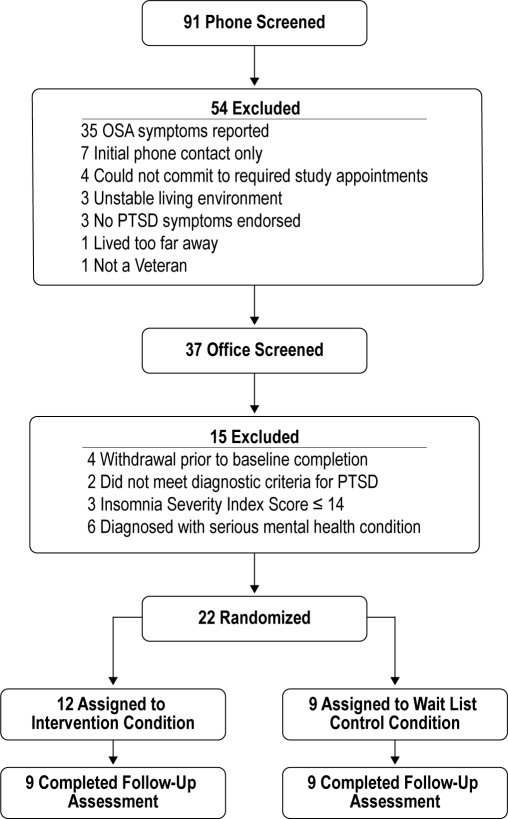
Methods: Twenty-two veterans meeting criteria for PTSD were enrolled in the study. A combined intervention comprised of CBT for insomnia and imagery rehearsal therapy was evaluated against a usual care comparison group.
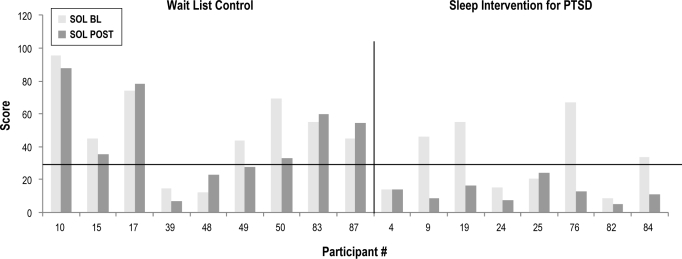
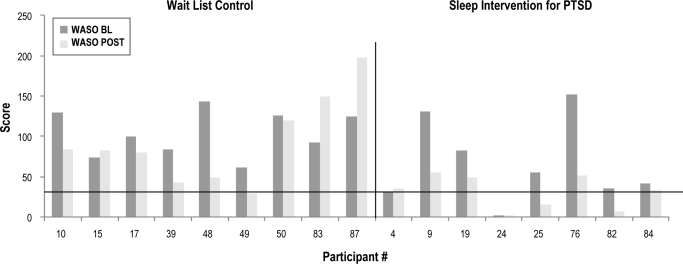
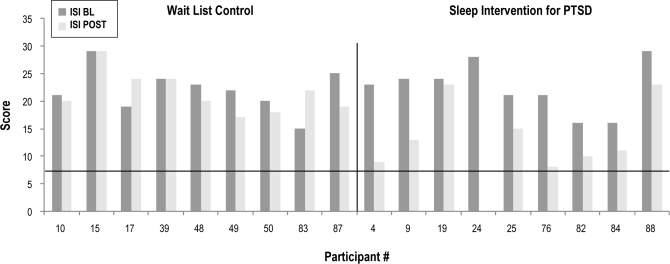
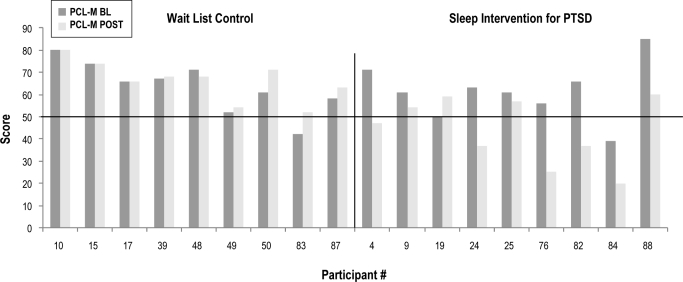
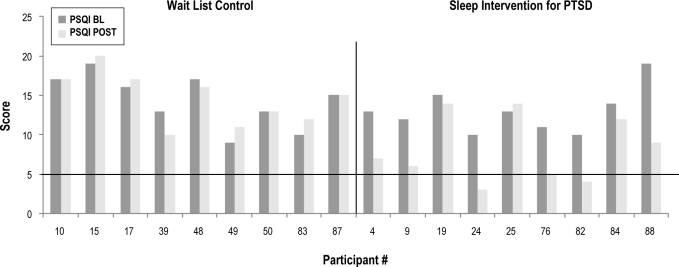
Results: Intent-to-treat analyses revealed medium to large treatment effect sizes for all sleep diary outcomes, and very large treatment effects for insomnia severity, sleep quality, and PTSD symptoms.
Conclusions: Findings demonstrate that an intervention targeting trauma-specific sleep disturbance produces large short-term effects, including substantial reductions in PTSD symptoms and insomnia severity. Future research should focus on the optimal approach to the treatment of comorbid PTSD and sleep disturbance in terms of sequencing, and should assure that sleep-focused interventions are available and acceptable to our younger veterans, who were more likely to drop out of treatment.
Keywords: PTSD; cognitive-behavioral therapy for insomnia; exposure; imagery rehearsal therapy; insomnia; nightmare rescripting; nightmares; sleep quality.
Figures
References
-
- Seal KH, Maguen S, Cohen B, et al. VA mental health services utilization in Iraq and Afghanistan veterans in the first year of receiving new mental health diagnoses. J Trauma Stress. 2010;23:5–16. - PubMed
-
- Maher MJ, Rego SA, Asnis GM. Sleep disturbances in patients with post-traumatic stress disorder: epidemiology, impact and approaches to management. CNS Drugs. 2006;20:567–90. - PubMed
-
- Kobayashi I, Boarts JM, Delahanty DL. Polysomnographically measured sleep abnormalities in PTSD: a meta-analytic review. Psychophysiology. 2007;44:660–9. - PubMed
-
- Calhoun PS, Wiley M, Dennis MF, Means MK, Edinger JD, Beckham JC. Objective evidence of sleep disturbance in women with posttraumatic stress disorder. J Trauma Stress. 2007;20:1009–18. - PubMed
Publication types
MeSH terms
LinkOut - more resources
Full Text Sources
Medical