


TRIM22 inhibits HIV-1 transcription independently of its E3 ubiquitin ligase activity, Tat, and NF-kappaB-responsive long terminal repeat elements
- PMID: 21345949
- PMCID: PMC3126207
- DOI: 10.1128/JVI.02302-10
TRIM22 inhibits HIV-1 transcription independently of its E3 ubiquitin ligase activity, Tat, and NF-kappaB-responsive long terminal repeat elements
Erratum in
-
Correction for Kajaste-Rudnitski et al., "TRIM22 Inhibits HIV-1 Transcription Independently of Its E3 Ubiquitin Ligase Activity, Tat, and NF-κB-Responsive Long Terminal Repeat Elements".J Virol. 2025 Feb 25;99(2):e0207124. doi: 10.1128/jvi.02071-24. Epub 2025 Jan 27. J Virol. 2025. PMID: 39868830 Free PMC article. No abstract available.
Abstract
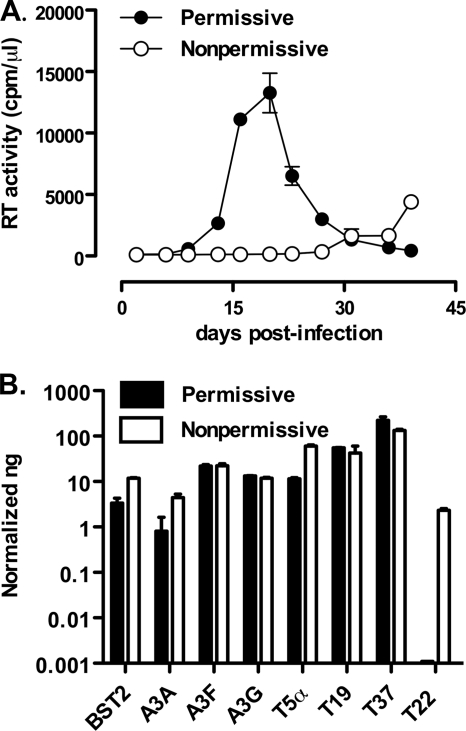
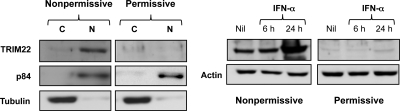
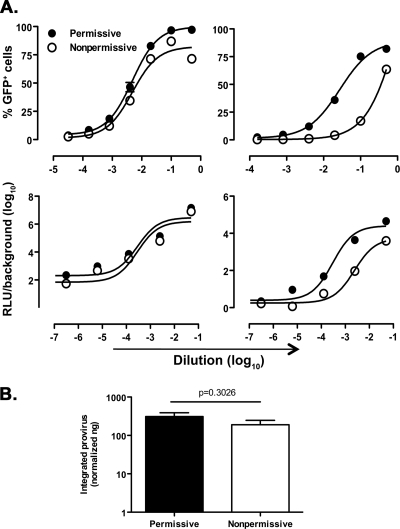
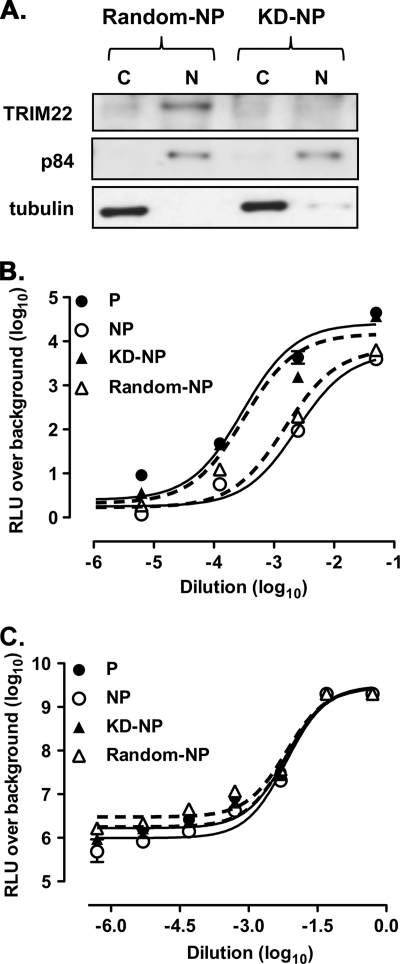
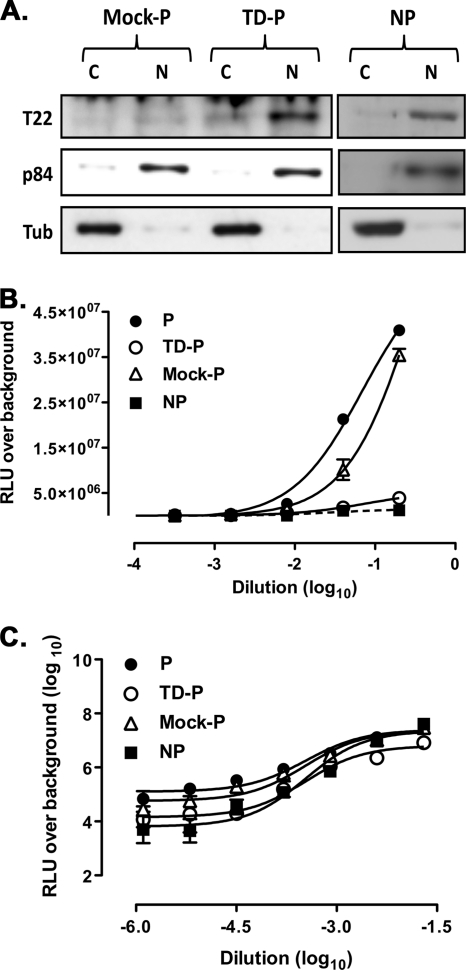
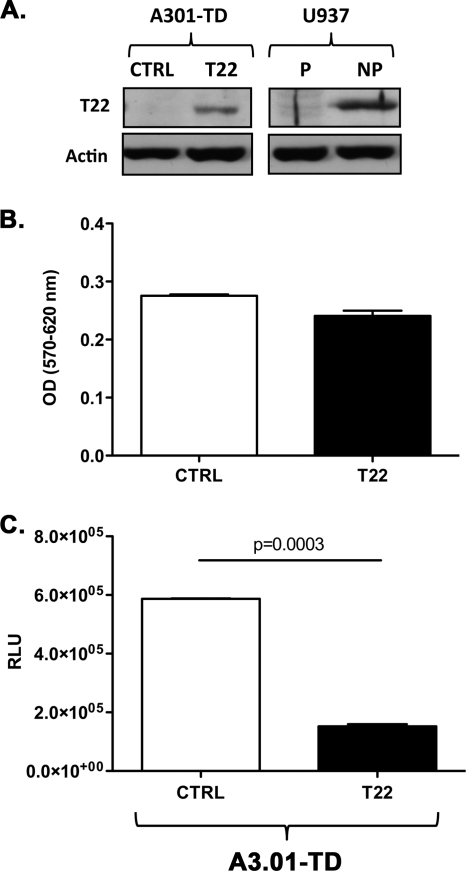
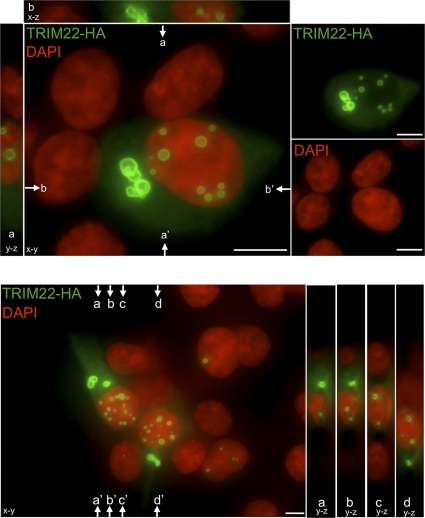
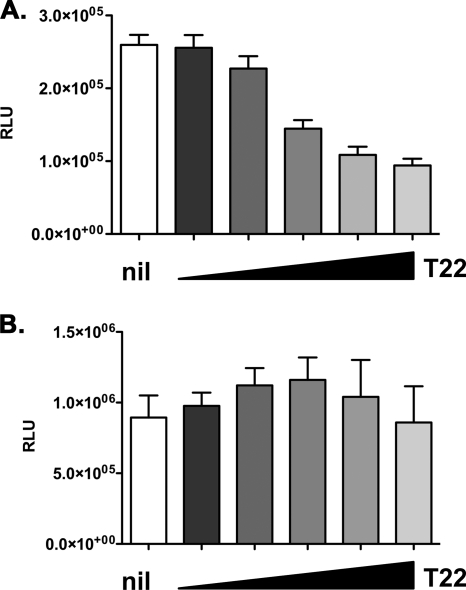
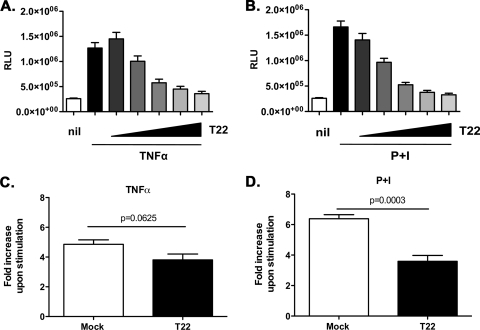
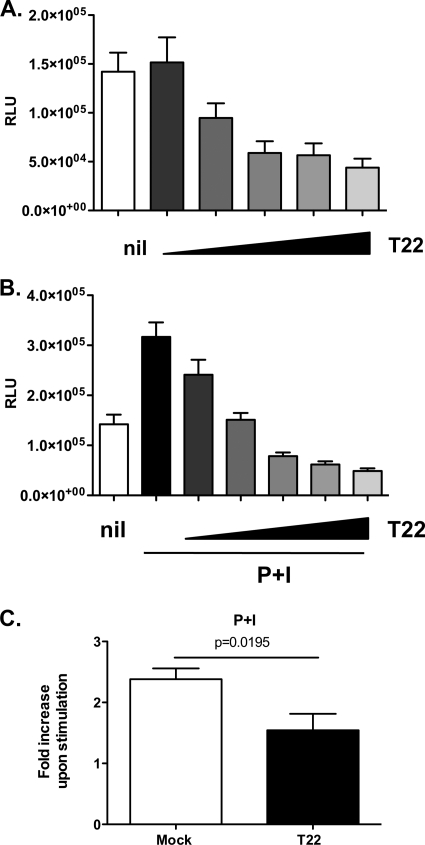
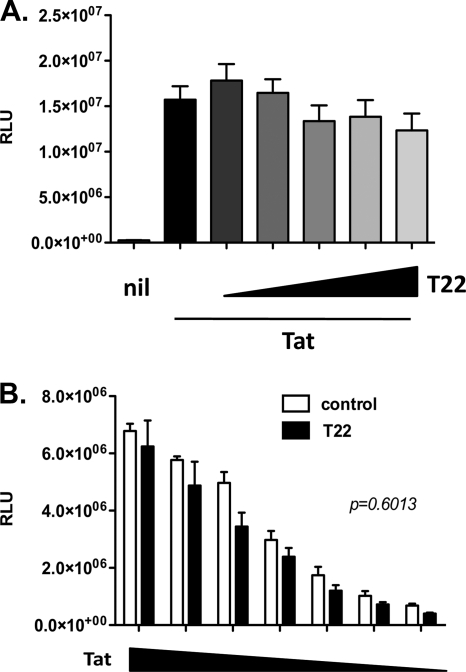
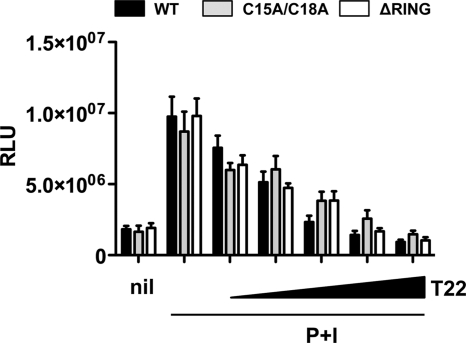
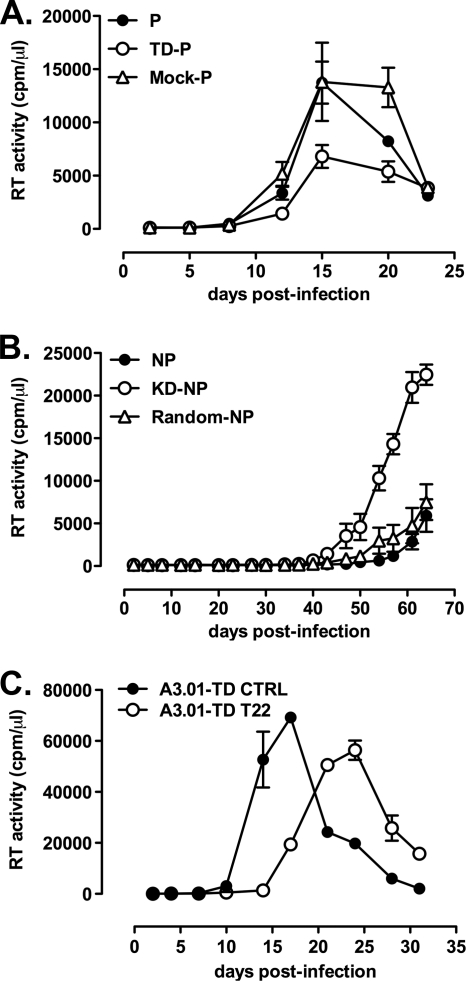
Previous studies identified clones of the U937 promonocytic cell line that were either permissive or nonpermissive for human immunodeficiency virus type 1 (HIV-1) replication. These clones were investigated further in the search for host restriction factors that could explain their differential capacity to support HIV-1 replication. Among known HIV-1 restriction factors screened, tripartite motif-containing protein 22 (TRIM22) was the only factor constitutively expressed in nonpermissive and absent in permissive U937 cells. Stable TRIM22 knockdown (KD) rescued HIV-1 long-terminal-repeat (LTR)-driven transcription in KD-nonpermissive cells to the levels observed in permissive cells. Conversely, transduction-mediated expression of TRIM22 in permissive cells reduced LTR-driven luciferase expression by ∼7-fold, supporting a negative role of TRIM22 in HIV-1 transcription. This finding was further confirmed in the human T cell line A3.01 expressing TRIM22. Moreover, overexpression of TRIM22 in 293T cells significantly impaired basal and phorbol myristate acetate-ionomycin-induced HIV-1 LTR-driven gene expression, whereas inhibition of tumor necrosis factor alpha-induced viral transcription was a consequence of lower basal expression. In agreement, TRIM22 equally inhibited an LTR construct lacking the tandem NF-κB binding sites. In addition, TRIM22 did not affect Tat-mediated LTR transactivation. Finally, these effects were independent of TRIM22 E3 ubiquitin-ligase activity. In the context of replication-competent virus, significantly higher levels of HIV-1 production were observed in KD-nonpermissive versus control nonpermissive U937 cells after infection. In contrast, lower peak levels of HIV-1 replication characterized U937 and A3.01 cells expressing TRIM22 versus their control transduced counterpart. Thus, nuclear TRIM22 significantly impairs HIV-1 replication, likely by interfering with Tat- and NF-κB-independent LTR-driven transcription.
Figures
References
-
- Alfano M., Rizzi C., Poli G., Biswas P. 2007. HIV-1 Infection of promonocytic U937 and U1 cell lines: clonal distribution of innate restriction factors, p. 89–114 In Herbein G. (ed.), Macrophage and HIV infection. Transworld Research Network, Kerala, India
-
- Asjo B., et al. 1987. Susceptibility to infection by the human immunodeficiency virus (HIV) correlates with T4 expression in a parental monocytoid cell line and its subclones. Virology 157:359–365 - PubMed
-
- Ben-Neriah Y. 2002. Regulatory functions of ubiquitination in the immune system. Nat. Immunol. 3:20–26 - PubMed
Publication types
MeSH terms
Substances
Grants and funding
LinkOut - more resources
Full Text Sources
Other Literature Sources
