Higher maternal gestational glucose concentration is associated with lower offspring insulin sensitivity and altered beta-cell function
- PMID: 21346075
- PMCID: PMC3176781
- DOI: 10.1210/jc.2010-2902
Higher maternal gestational glucose concentration is associated with lower offspring insulin sensitivity and altered beta-cell function
Abstract
Context: Intrauterine exposure to elevated glucose concentrations may be a mediating factor in prenatal programming of offspring diabetes risk. However, studies examining the effects of maternal glucose concentration on measures of insulin sensitivity and β-cell response in prepubertal children are limited.
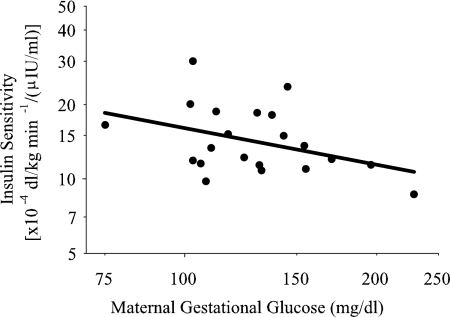
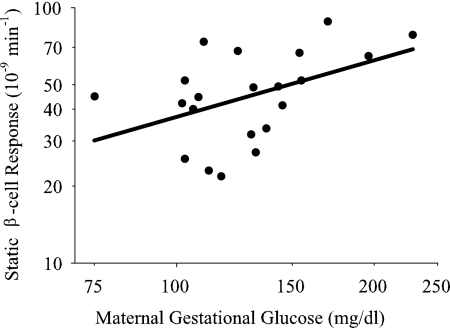
Objective: We tested the hypothesis that maternal gestational glucose concentration would be inversely associated with children's insulin sensitivity independent of adiposity and positively associated with children's β-cell response independent of adiposity and insulin sensitivity.
Design, setting, and participants: This was a cross-sectional study of 21 children aged 5-10 yr in a clinical research setting.
Outcomes measured: Children's insulin sensitivity index and basal, static, dynamic, and total β-cell response to glucose were determined by mathematical modeling using insulin, glucose, and C-peptide values after a liquid meal tolerance test. Children's percent body fat was determined by dual-energy x-ray absorptiometry. Maternal gestational glucose concentration for the target pregnancy was determined after a 50-g, 1-h oral glucose challenge test at 24-28 wk gestation.
Results: Maternal glucose concentration was significantly, inversely associated with children's insulin sensitivity, independent of percent fat and ethnicity (P <0.05). A significant, positive association was observed for maternal glucose concentration with static β-cell response, independent of percent fat and insulin sensitivity (P < 0.05).
Conclusions: Maternal gestational glucose concentration was significantly associated with offspring insulin sensitivity and β-cell response independent of adiposity. These results suggest that maternal glucose may program the fetus both at the pancreas and at the level of insulin target tissues such as skeletal muscle and liver.
Figures
References
-
- Plagemann A, Harder T, Kohlhoff R, Rohde W, Dörner G. 1997. Glucose tolerance and insulin secretion in children of mothers with pregestational IDDM or gestational diabetes. Diabetologia 40:1094–1100 - PubMed
-
- Silverman BL, Metzger BE, Cho NH, Loeb CA. 1995. Impaired glucose tolerance in adolescent offspring of diabetic mothers. Relationship to fetal hyperinsulinism. Diabetes Care 18:611–617 - PubMed
-
- Dabelea D, Hanson RL, Lindsay RS, Pettitt DJ, Imperatore G, Gabir MM, Roumain J, Bennett PH, Knowler WC. 2000. Intrauterine exposure to diabetes conveys risks for type 2 diabetes and obesity: a study of discordant sibships. Diabetes 49:2208–2211 - PubMed
-
- Bergman RN, Finegood DT, Kahn SE. 2002. The evolution of beta-cell dysfunction and insulin resistance in type 2 diabetes. Eur J Clin Invest 32(Suppl 3):35–45 - PubMed
-
- Krishnaveni GV, Hill JC, Leary SD, Veena SR, Saperia J, Saroja A, Karat SC, Fall CH. 2005. Anthropometry, glucose tolerance, and insulin concentrations in Indian children: relationships to maternal glucose and insulin concentrations during pregnancy. Diabetes Care 28:2919–2925 - PubMed
Publication types
MeSH terms
Substances
Grants and funding
LinkOut - more resources
Full Text Sources
Medical