


Iron homeostasis and nutritional iron deficiency
- PMID: 21346101
- PMCID: PMC3056584
- DOI: 10.3945/jn.110.127639
Iron homeostasis and nutritional iron deficiency
Abstract
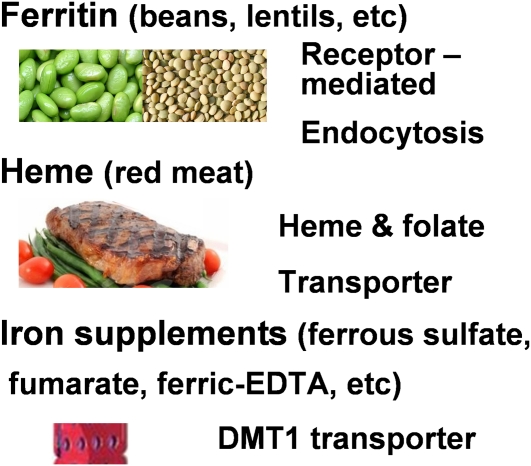
Nonheme food ferritin (FTN) iron minerals, nonheme iron complexes, and heme iron contribute to the balance between food iron absorption and body iron homeostasis. Iron absorption depends on membrane transporter proteins DMT1, PCP/HCP1, ferroportin (FPN), TRF2, and matriptase 2. Mutations in DMT1 and matriptase-2 cause iron deficiency; mutations in FPN, HFE, and TRF2 cause iron excess. Intracellular iron homeostasis depends on coordinated regulation of iron trafficking and storage proteins encoded in iron responsive element (IRE)-mRNA. The noncoding IRE-mRNA structures bind protein repressors, IRP1 or 2, during iron deficiency. Integration of the IRE-RNA in translation regulators (near the cap) or turnover elements (after the coding region) increases iron uptake (DMT1/TRF1) or decreases iron storage/efflux (FTN/FPN) when IRP binds. An antioxidant response element in FTN DNA binds Bach1, a heme-sensitive transcription factor that coordinates expression among antioxidant response proteins like FTN, thioredoxin reductase, and quinone reductase. FTN, an antioxidant because Fe(2+) and O(2) (reactive oxygen species generators) are consumed to make iron mineral, is also a nutritional iron concentrate that is an efficiently absorbed, nonheme source of iron from whole legumes. FTN protein cages contain thousands of mineralized iron atoms and enter cells by receptor-mediated endocytosis, an absorption mechanism distinct from transport of nonheme iron salts (ferrous sulfate), iron chelators (ferric-EDTA), or heme. Recognition of 2 nutritional nonheme iron sources, small and large (FTN), will aid the solution of iron deficiency, a major public health problem, and the development of new policies on iron nutrition.
Conflict of interest statement
Author disclosures: E. C. Theil, no conflicts of interest.
Figures

References
-
- Kordas K. Iron, lead, and children’s behavior and cognition. Annu Rev Nutr. 2010;30:123–48 - PubMed
-
- Macdougall IC. Iron supplementation in the non-dialysis chronic kidney disease (ND-CKD) patient: oral or intravenous? Curr Med Res Opin. 2010;26:473–82 - PubMed
-
- Theil EC. Iron, ferritin and nutrition. Annu Rev Nutr. 2004;24:327–43 - PubMed
-
- Ganz T. Cellular iron: ferroportin is the only way out. Cell Metab. 2005;1:155–7 - PubMed
Publication types
MeSH terms
Substances
Grants and funding
LinkOut - more resources
Full Text Sources
Medical
Research Materials
Miscellaneous
