


Pediatric cardiovascular drug dosing in critically ill children and extracorporeal membrane oxygenation
- PMID: 21346597
- PMCID: PMC3155009
- DOI: 10.1097/FJC.0b013e318213aac2
Pediatric cardiovascular drug dosing in critically ill children and extracorporeal membrane oxygenation
Abstract
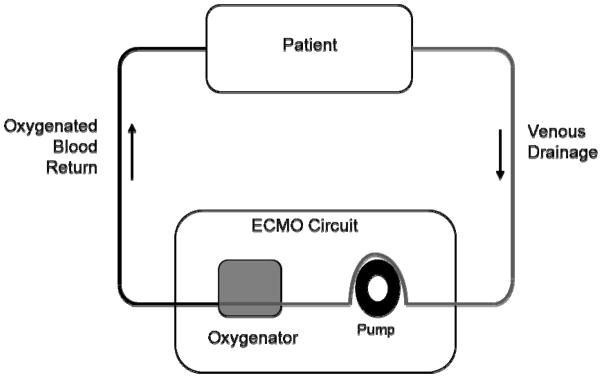
Cardiovascular disease in children is common and results in significant morbidity and mortality. The sickest children with cardiovascular disease may require support with extracorporeal membrane oxygenation (ECMO), which provides life-saving assistance for children with refractory cardiorespiratory failure. Many classes of cardiovascular drugs are used in children, but very few of these agents have been well studied in children. The knowledge gap is even more pronounced in children supported by ECMO. Pharmacokinetic (PK) data collected to date (primarily from antibiotics and sedatives) suggest that the ECMO circuit has the potential to significantly alter the PK of drugs including changes in clearance and volume of distribution. Of all cardiovascular drugs administered to children supported by ECMO, only 11 have been partially studied and reported in the medical literature. Esmolol, amiodarone, nesiritide, bumetanide, sildenafil, and prostaglandin E1 seem to require dosing modifications in children supported by ECMO, whereas it seems that hydralazine, nicardipine, furosemide, epinephrine, and dopamine can be dosed similarly to children not supported by ECMO. However, trials evaluating the PK of these drugs in patients supported by ECMO are extremely limited (ie, case reports), and therefore, definitive dosing recommendations are not plausible. Research efforts should focus on evaluating the PK of drugs in patients on ECMO to avoid therapeutic failures or unnecessary toxicities.
References
-
- Pasquali SK, Hall M, Slonim AD, et al. Off-label use of cardiovascular medications in children hospitalized with congenital and acquired heart disease. Circ Cardiovasc Qual Outcomes. 2008 Nov;1(2):74–83. - PubMed
-
- Moller JH. Perspectives in pediatric cardiology: surgery of congenital heart disease: Pediatric Cardiac Care Consortium, 1984–1995. Vol. 6. Armonk, NY: Futura Publishing Company; 1998.
-
- Lloyd-Jones D, Adams RJ, Brown TM, et al. Heart disease and stroke statistics--2010 update: a report from the American Heart Association. Circulation. 2010 Feb 23;121(7):e46–e215. - PubMed
-
- Bartlett RH, Gazzaniga AB, Jefferies MR, Huxtable RF, Haiduc NJ, Fong SW. Extracorporeal membrane oxygenation (ECMO) cardiopulmonary support in infancy. Trans Am Soc Artif Intern Organs. 1976;22:80–93. - PubMed
Publication types
MeSH terms
Substances
Grants and funding
- K24 HD058735/HD/NICHD NIH HHS/United States
- T32 HD043029/HD/NICHD NIH HHS/United States
- R01 HD057956/HD/NICHD NIH HHS/United States
- 1R01HD057956-02/HD/NICHD NIH HHS/United States
- 5T32HD043029-09/HD/NICHD NIH HHS/United States
- U10 HD045962/HD/NICHD NIH HHS/United States
- 1U10-HD45962-06/HD/NICHD NIH HHS/United States
- 1K24HD058735-01/HD/NICHD NIH HHS/United States
- 1U54RR023469-01/RR/NCRR NIH HHS/United States
- R01 FD003519/FD/FDA HHS/United States
- 1R01FD003519-01/FD/FDA HHS/United States
- HHSN275201000002C/HD/NICHD NIH HHS/United States
- 1K23HD064814-01/HD/NICHD NIH HHS/United States
- K23 HD064814/HD/NICHD NIH HHS/United States
- HHSN275201000002I/PHS HHS/United States
LinkOut - more resources
Full Text Sources
Miscellaneous
