Noncanonical compensation of zygotic X transcription in early Drosophila melanogaster development revealed through single-embryo RNA-seq
- PMID: 21346796
- PMCID: PMC3035605
- DOI: 10.1371/journal.pbio.1000590
Noncanonical compensation of zygotic X transcription in early Drosophila melanogaster development revealed through single-embryo RNA-seq
Abstract
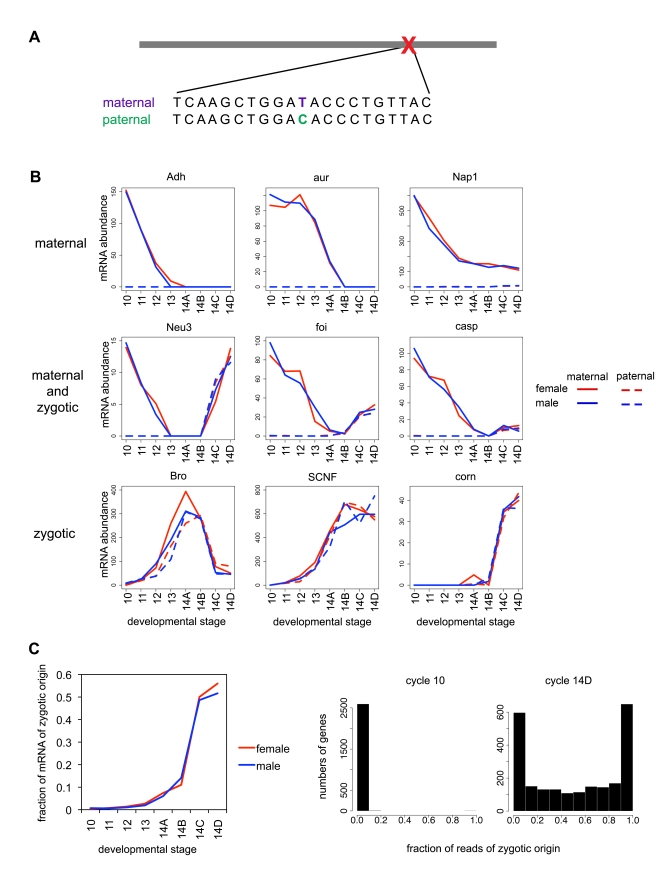
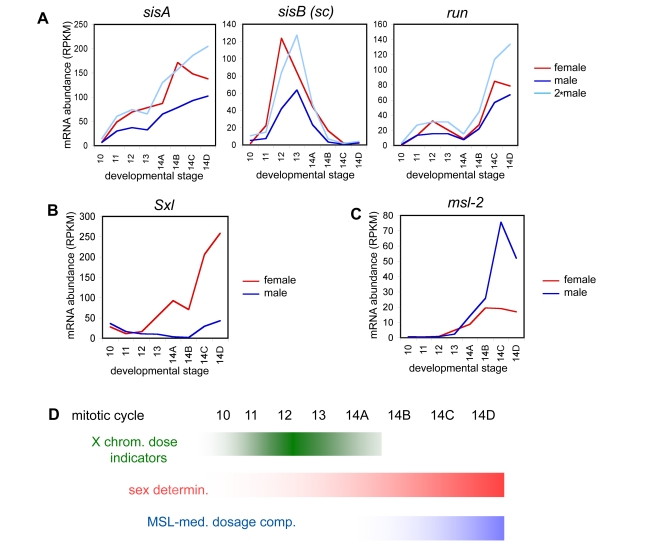
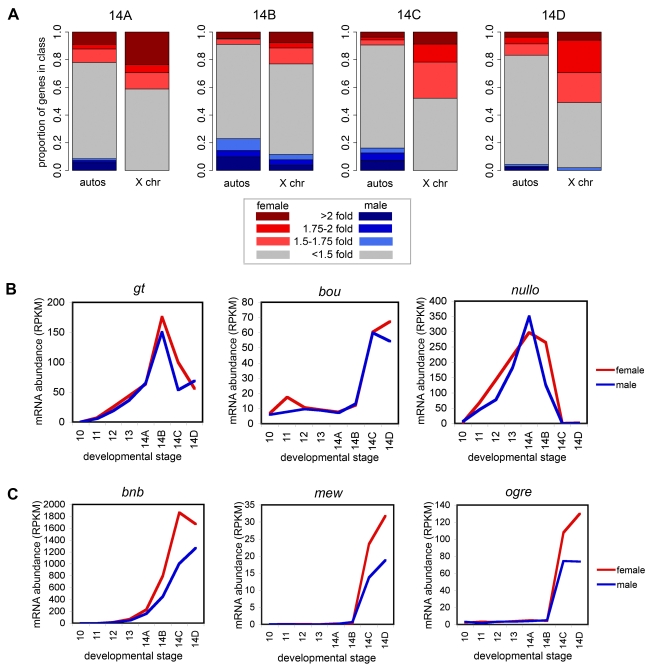
When Drosophila melanogaster embryos initiate zygotic transcription around mitotic cycle 10, the dose-sensitive expression of specialized genes on the X chromosome triggers a sex-determination cascade that, among other things, compensates for differences in sex chromosome dose by hypertranscribing the single X chromosome in males. However, there is an approximately 1 hour delay between the onset of zygotic transcription and the establishment of canonical dosage compensation near the end of mitotic cycle 14. During this time, zygotic transcription drives segmentation, cellularization, and other important developmental events. Since many of the genes involved in these processes are on the X chromosome, we wondered whether they are transcribed at higher levels in females and whether this might lead to sex-specific early embryonic patterning. To investigate this possibility, we developed methods to precisely stage, sex, and characterize the transcriptomes of individual embryos. We measured genome-wide mRNA abundance in male and female embryos at eight timepoints, spanning mitotic cycle 10 through late cycle 14, using polymorphisms between parental lines to distinguish maternal and zygotic transcription. We found limited sex-specific zygotic transcription, with a weak tendency for genes on the X to be expressed at higher levels in females. However, transcripts derived from the single X chromosome in males were more abundant that those derived from either X chromosome in females, demonstrating that there is widespread dosage compensation prior to the activation of the canonical MSL-mediated dosage compensation system. Crucially, this new system of early zygotic dosage compensation results in nearly identical transcript levels for key X-linked developmental regulators, including giant (gt), brinker (brk), buttonhead (btd), and short gastrulation (sog), in male and female embryos.
Conflict of interest statement
MBE is a cofounder and member of the Board of Directors of PLoS.
Figures


Comment in
-
Doubling the dose.PLoS Biol. 2011 Feb 8;9(2):e1001017. doi: 10.1371/journal.pbio.1001017. PLoS Biol. 2011. PMID: 21346808 Free PMC article. No abstract available.
References
-
- Pritchard D. K, Schubiger G. Activation of transcription in Drosophila embryos is a gradual process mediated by the nucleocytoplasmic ratio. Genes Dev. 1996;10:1131–1142. - PubMed
-
- Cline T. W, Meyer B. J. Vive la difference: males vs females in flies vs worms. Annu Rev Genet. 1996;30:637–702. - PubMed
-
- Schutt C, Nothiger R. Structure, function and evolution of sex-determining systems in Dipteran insects. Development. 2000;127:667–677. - PubMed
-
- Erickson J. W, Quintero J. J. Indirect effects of ploidy suggest X chromosome dose, not the X∶A ratio, signals sex in Drosophila. PLoS Biol. 2007;5:e332. doi: 10.1371/journal.pbio.0050332. - DOI - PMC - PubMed
Publication types
MeSH terms
Substances
Grants and funding
LinkOut - more resources
Full Text Sources
Other Literature Sources
Molecular Biology Databases
Miscellaneous