


Identification of clinically relevant protein targets in prostate cancer with 2D-DIGE coupled mass spectrometry and systems biology network platform
- PMID: 21347291
- PMCID: PMC3037937
- DOI: 10.1371/journal.pone.0016833
Identification of clinically relevant protein targets in prostate cancer with 2D-DIGE coupled mass spectrometry and systems biology network platform
Abstract
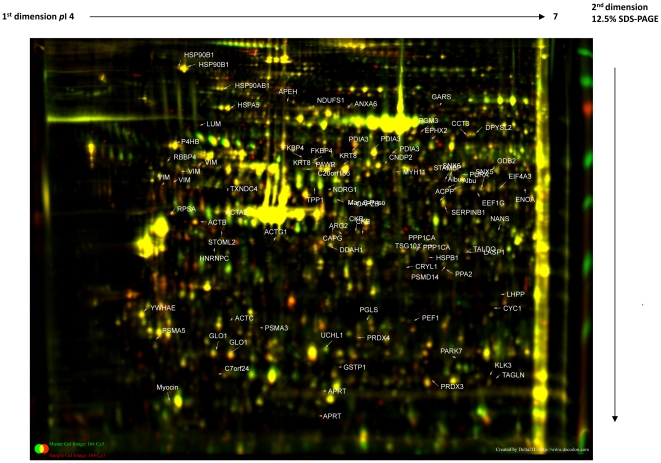
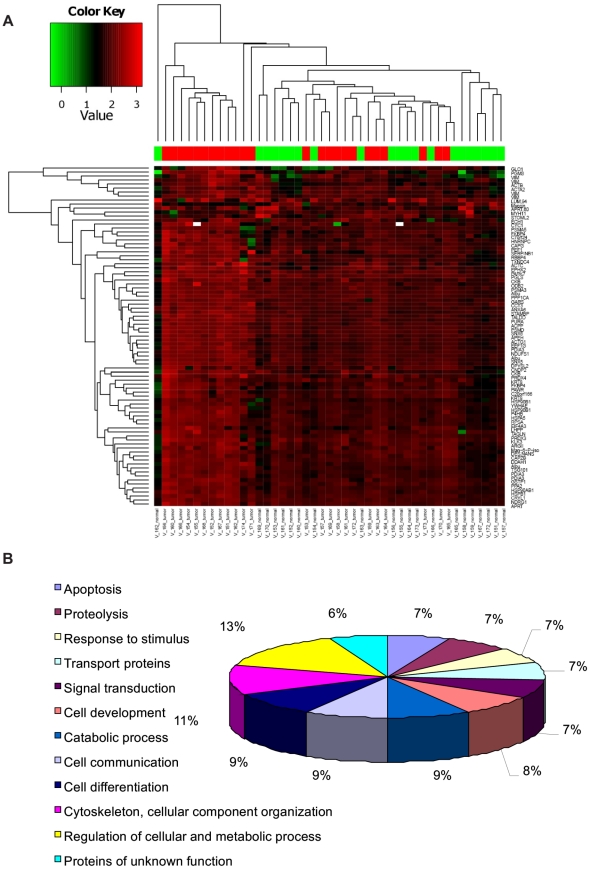
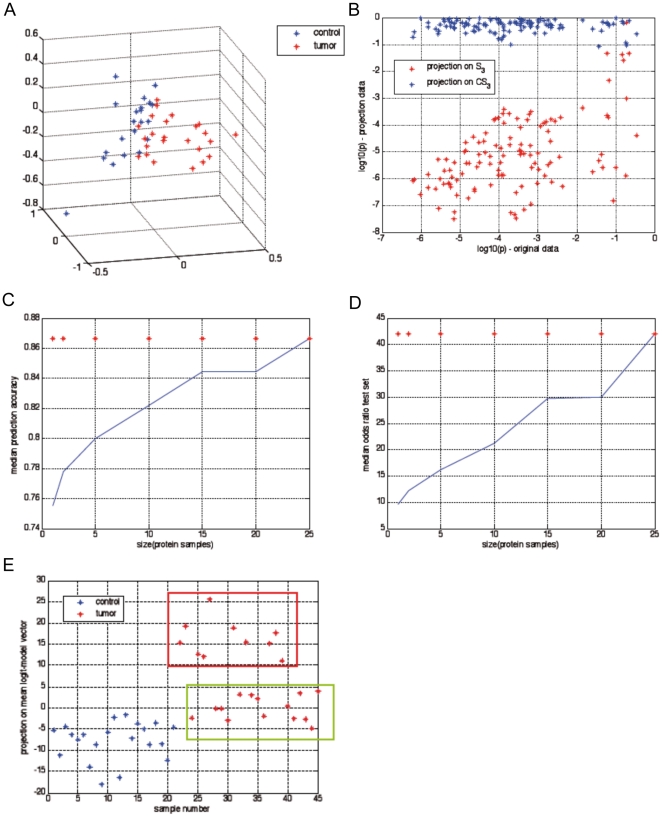
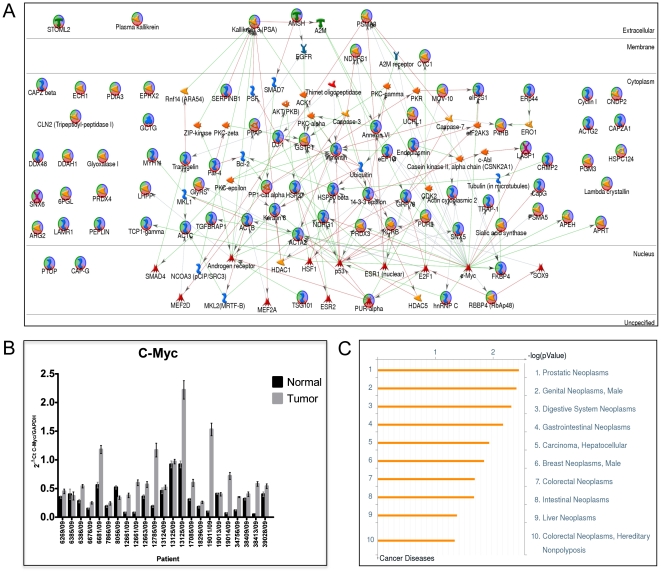
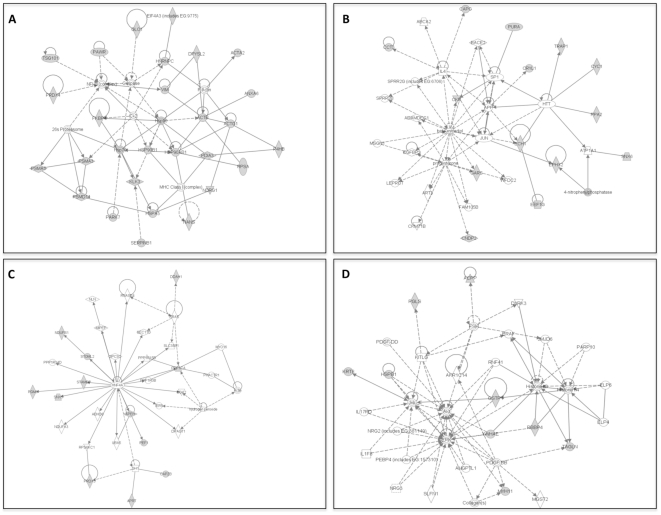
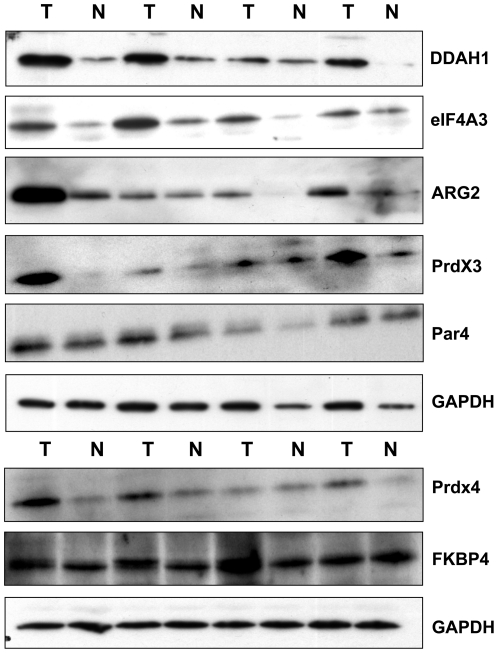
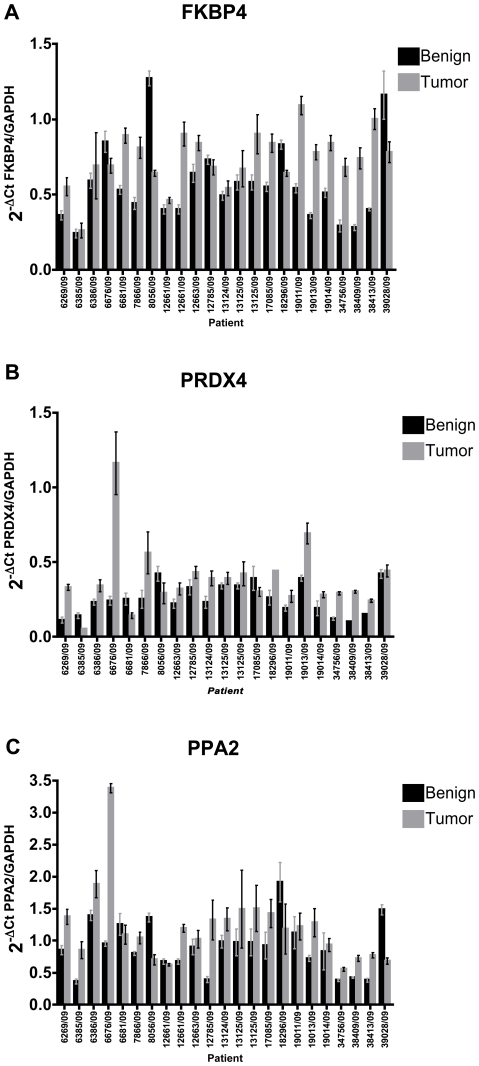
Prostate cancer (PCa) is the most common type of cancer found in men and among the leading causes of cancer death in the western world. In the present study, we compared the individual protein expression patterns from histologically characterized PCa and the surrounding benign tissue obtained by manual micro dissection using highly sensitive two-dimensional differential gel electrophoresis (2D-DIGE) coupled with mass spectrometry. Proteomic data revealed 118 protein spots to be differentially expressed in cancer (n = 24) compared to benign (n = 21) prostate tissue. These spots were analysed by MALDI-TOF-MS/MS and 79 different proteins were identified. Using principal component analysis we could clearly separate tumor and normal tissue and two distinct tumor groups based on the protein expression pattern. By using a systems biology approach, we could map many of these proteins both into major pathways involved in PCa progression as well as into a group of potential diagnostic and/or prognostic markers. Due to complexity of the highly interconnected shortest pathway network, the functional sub networks revealed some of the potential candidate biomarker proteins for further validation. By using a systems biology approach, our study revealed novel proteins and molecular networks with altered expression in PCa. Further functional validation of individual proteins is ongoing and might provide new insights in PCa progression potentially leading to the design of novel diagnostic and therapeutic strategies.
Conflict of interest statement
Figures
Similar articles
-
Proteomics analysis of malignant and benign prostate tissue by 2D DIGE/MS reveals new insights into proteins involved in prostate cancer.Prostate. 2015 Oct;75(14):1586-600. doi: 10.1002/pros.23034. Epub 2015 Jun 12. Prostate. 2015. PMID: 26074449
-
Profiling protein markers associated with lymph node metastasis in prostate cancer by DIGE-based proteomics analysis.J Proteome Res. 2010 Jan;9(1):216-26. doi: 10.1021/pr900953s. J Proteome Res. 2010. PMID: 19894759
-
Stage-related alterations in renal cell carcinoma--comprehensive quantitative analysis by 2D-DIGE and protein network analysis.PLoS One. 2011;6(7):e21867. doi: 10.1371/journal.pone.0021867. Epub 2011 Jul 7. PLoS One. 2011. PMID: 21760917 Free PMC article.
-
Proteomics in diagnosis of prostate cancer.Pril (Makedon Akad Nauk Umet Odd Med Nauki). 2015;36(1):5-36. Pril (Makedon Akad Nauk Umet Odd Med Nauki). 2015. PMID: 26076772 Review.
-
Prostate cancer proteomics: Current trends and future perspectives for biomarker discovery.Oncotarget. 2017 Mar 14;8(11):18497-18512. doi: 10.18632/oncotarget.14501. Oncotarget. 2017. PMID: 28061466 Free PMC article. Review.
Cited by
-
Database-augmented Mass Spectrometry Analysis of Exosomes Identifies Claudin 3 as a Putative Prostate Cancer Biomarker.Mol Cell Proteomics. 2017 Jun;16(6):998-1008. doi: 10.1074/mcp.M117.068577. Epub 2017 Apr 9. Mol Cell Proteomics. 2017. PMID: 28396511 Free PMC article.
-
Ubiquitin Carboxyl-Terminal Hydrolases and Human Malignancies: The Novel Prognostic and Therapeutic Implications for Head and Neck Cancer.Front Oncol. 2021 Jan 29;10:592501. doi: 10.3389/fonc.2020.592501. eCollection 2020. Front Oncol. 2021. PMID: 33585209 Free PMC article. Review.
-
DIGE-Based Biomarker Discovery in Blood Cancers.Methods Mol Biol. 2023;2596:105-112. doi: 10.1007/978-1-0716-2831-7_8. Methods Mol Biol. 2023. PMID: 36378434
-
Protein-protein-interaction network organization of the hypusine modification system.Mol Cell Proteomics. 2012 Nov;11(11):1289-305. doi: 10.1074/mcp.M112.019059. Epub 2012 Aug 10. Mol Cell Proteomics. 2012. PMID: 22888148 Free PMC article.
-
Prostate Cancer Associated Lipid Signatures in Serum Studied by ESI-Tandem Mass Spectrometryas Potential New Biomarkers.PLoS One. 2016 Mar 9;11(3):e0150253. doi: 10.1371/journal.pone.0150253. eCollection 2016. PLoS One. 2016. PMID: 26958841 Free PMC article.
References
-
- Landis SH, Murray T, Bolden S, Wingo PA. Cancer statistics, 1999. CA Cancer J Clin. 1999;49:8–31, 1. - PubMed
-
- Scardino PT. Early detection of prostate cancer. Urol Clin North Am. 1989;16:635–655. - PubMed
-
- Breslow N, Chan CW, Dhom G, Drury RA, Franks LM, et al. Latent carcinoma of prostate at autopsy in seven areas. The International Agency for Research on Cancer, Lyons, France. Int J Cancer. 1977;20:680–688. - PubMed
-
- Jemal A, Siegel R, Ward E, Murray T, Xu J, et al. Cancer statistics, 2007. CA Cancer J Clin. 2007;57:43–66. - PubMed
-
- Bjellqvist B, Ek K, Righetti PG, Gianazza E, Gorg A, et al. Isoelectric focusing in immobilized pH gradients: principle, methodology and some applications. J Biochem Biophys Methods. 1982;6:317–339. - PubMed
Publication types
MeSH terms
Substances
LinkOut - more resources
Full Text Sources
Medical
