


Neural mechanisms of semantic interference and false recognition in short-term memory
- PMID: 21349335
- PMCID: PMC4472385
- DOI: 10.1016/j.neuroimage.2011.02.048
Neural mechanisms of semantic interference and false recognition in short-term memory
Abstract
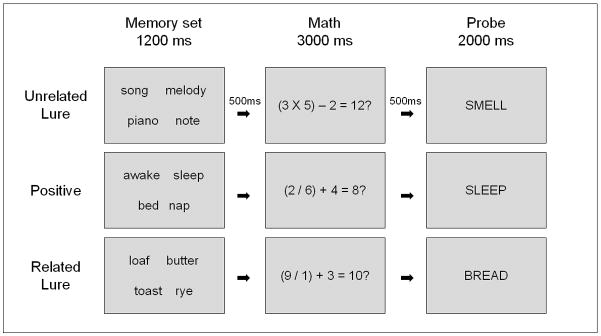
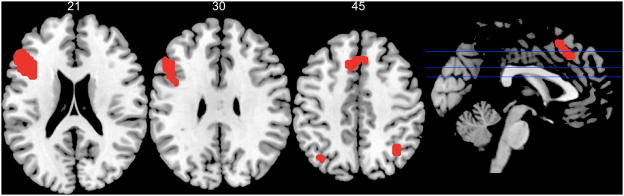
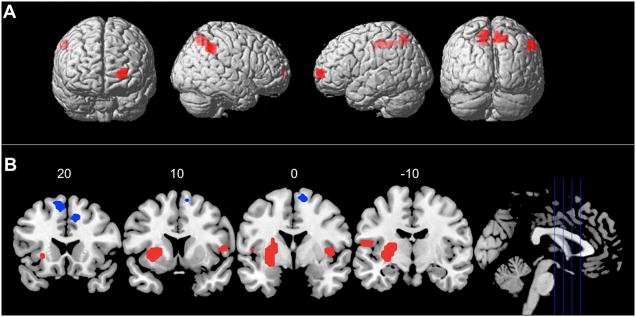
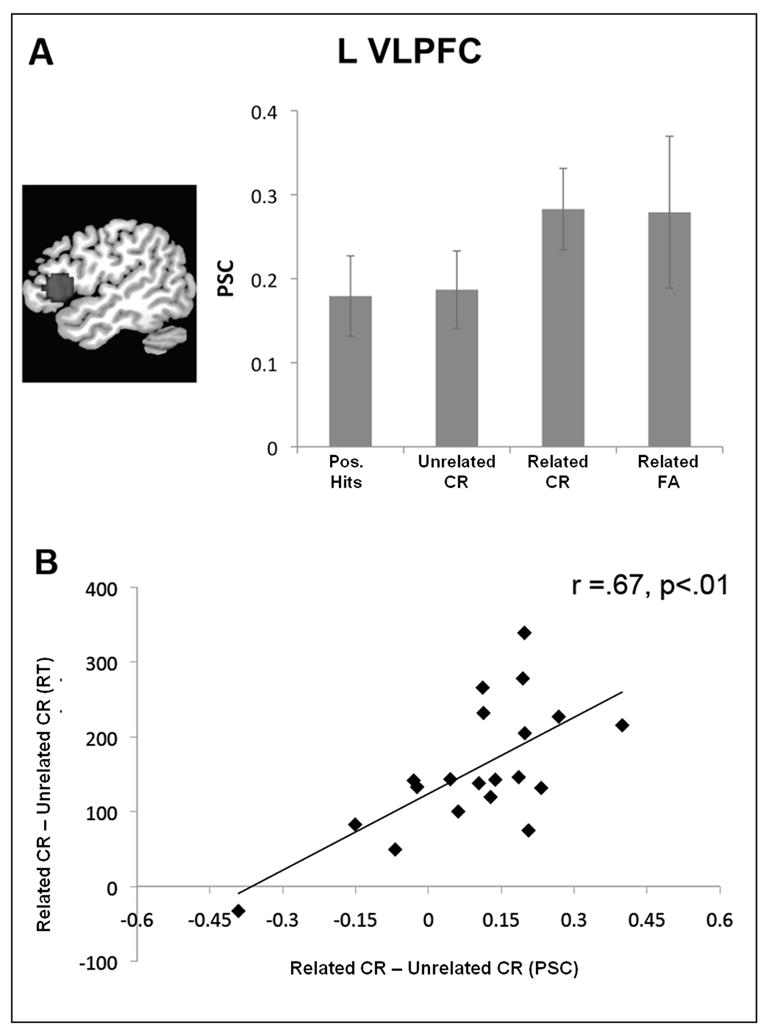
Decades of research using the Deese-Roediger-McDermott (DRM) paradigm have demonstrated that episodic memory is vulnerable to semantic distortion, and neuroimaging investigations of this phenomenon have shown dissociations between the neural mechanisms subserving true and false retrieval from long-term memory. Recently, false short-term memories have also been demonstrated, with false recognition of items related in meaning to memoranda encoded less than 5s earlier. Semantic interference is also evident in short-term memory, such that correct rejection of related lures is slowed relative to correct rejection of unrelated lures. The present research constitutes the first fMRI investigation of false recognition and semantic interference in short-term memory using a short-term DRM paradigm in which participants retained 4 semantic associates over a short 4-s filled retention interval. Results showed increased activation in the left mid-ventrolateral prefrontal cortex (BA45) associated with semantic interference, and significant correlations between these increases and behavioral measures of interference across subjects. Furthermore, increases in dorsolateral PFC occurred when related lures were correctly rejected versus falsely remembered. Compared with false recognition, true recognition was associated with increases in left fusiform gyrus, a finding consistent with the notion that increased perceptual processing may distinguish true from false recognition over both short and long retention intervals. Findings are discussed in relation to current models of interference resolution in short-term memory, and suggest that false short-term recognition occurs as a consequence of the failure of frontally mediated cognitive control processes which adjudicate semantic familiarity in support of accurate mnemonic retrieval.
Copyright © 2011 Elsevier Inc. All rights reserved.
Figures
References
-
- Achim AM, Lepage M. Dorsolateral prefrontal cortex involvement in memory post-retrieval monitoring revealed in both item and associative recognition tests. Neuroimage. 2005;24:1113–1121. - PubMed
-
- Atkins AS, Reuter-Lorenz PA. 'False' working memories: Memory distortion in a mere 4 seconds. Paper presented at the Paper presented at the Psychonomic Society 46th Annual Meeting; Toronto, ON. 2005.
-
- Atkins AS, Reuter-Lorenz PA. False working memories? Semantic distortion in a mere 4 seconds. Memory & Cognition. 2008;36:74–81. - PubMed
-
- Badre D, Wagner AD. Frontal lobe mechanisms that resolve proactive interference. Cerebral Cortex. 2005;15:2003–2012. - PubMed
Publication types
MeSH terms
Grants and funding
LinkOut - more resources
Full Text Sources
Miscellaneous
