


Transient outward current (I(to)) gain-of-function mutations in the KCND3-encoded Kv4.3 potassium channel and Brugada syndrome
- PMID: 21349352
- PMCID: PMC3150551
- DOI: 10.1016/j.hrthm.2011.02.021
Transient outward current (I(to)) gain-of-function mutations in the KCND3-encoded Kv4.3 potassium channel and Brugada syndrome
Abstract
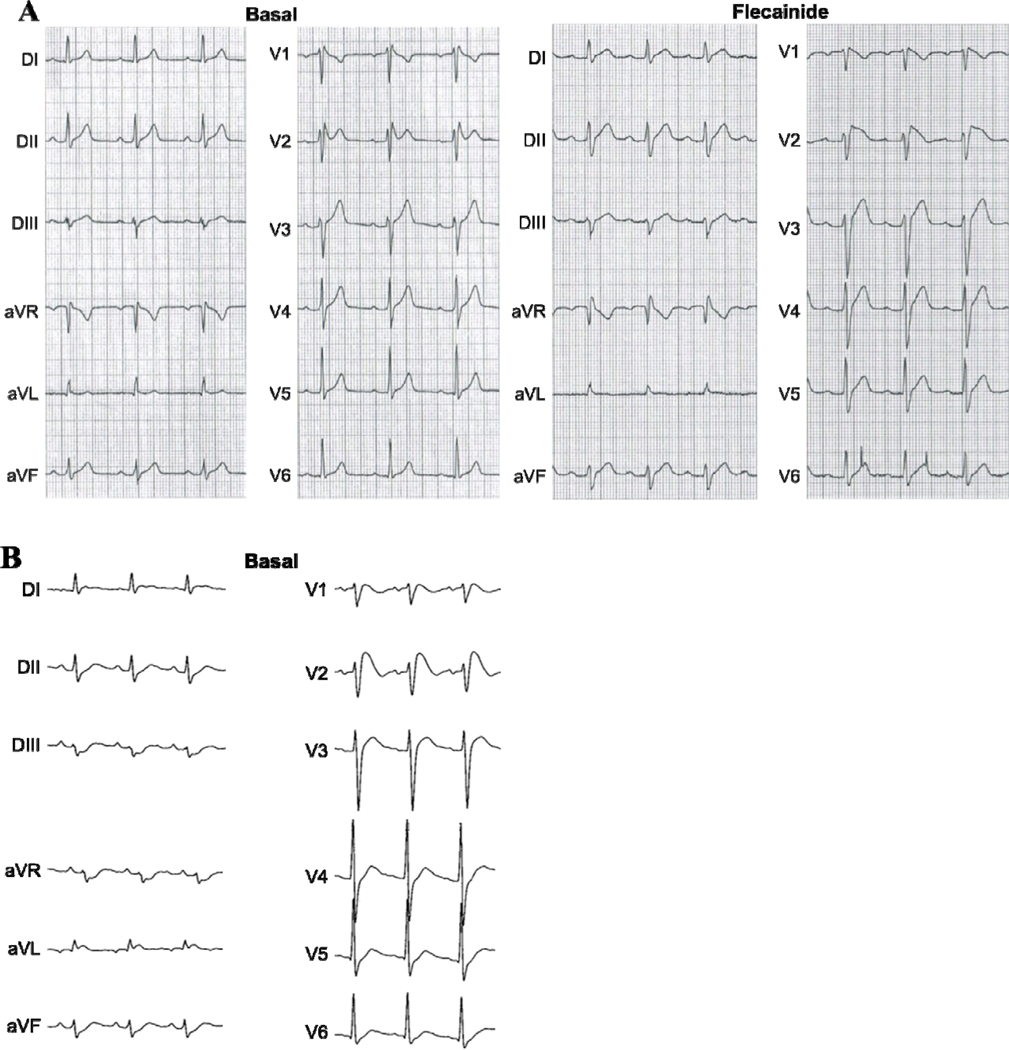
Background: Brugada syndrome (BrS) is a sudden death-predisposing genetic condition characterized electrocardiographically by ST segment elevation in the leads V(1)-V(3). Given the prominent role of the transient outward current (I(to)) in BrS pathogenesis, we hypothesized that rare gain-of-function mutations in KCND3 may serve as a pathogenic substrate for BrS.
Methods: Comprehensive mutational analysis of KCND3-encoded Kv4.3 (I(to)) was conducted using polymerase chain reaction, denaturing high performance liquid chromatography, and direct sequencing of DNA derived from 86 unrelated BrS1-8 genotype-negative BrS patients. DNA from 780 healthy individuals was examined to assess allelic frequency for nonsynonymous variants. Putative BrS-associated Kv4.3 mutations were engineered and coexpressed with wild-type KChIP2 in HEK293 cells. Wild-type and mutant I(to) ion currents were recorded using whole-cell patch clamp.
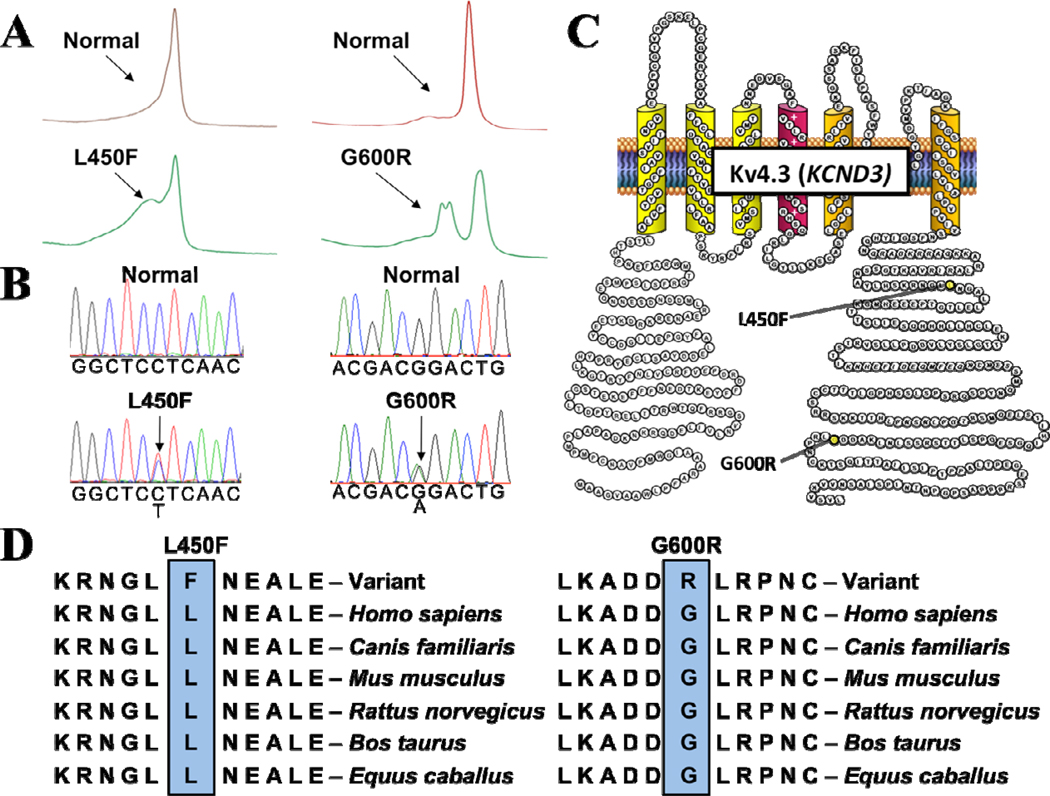
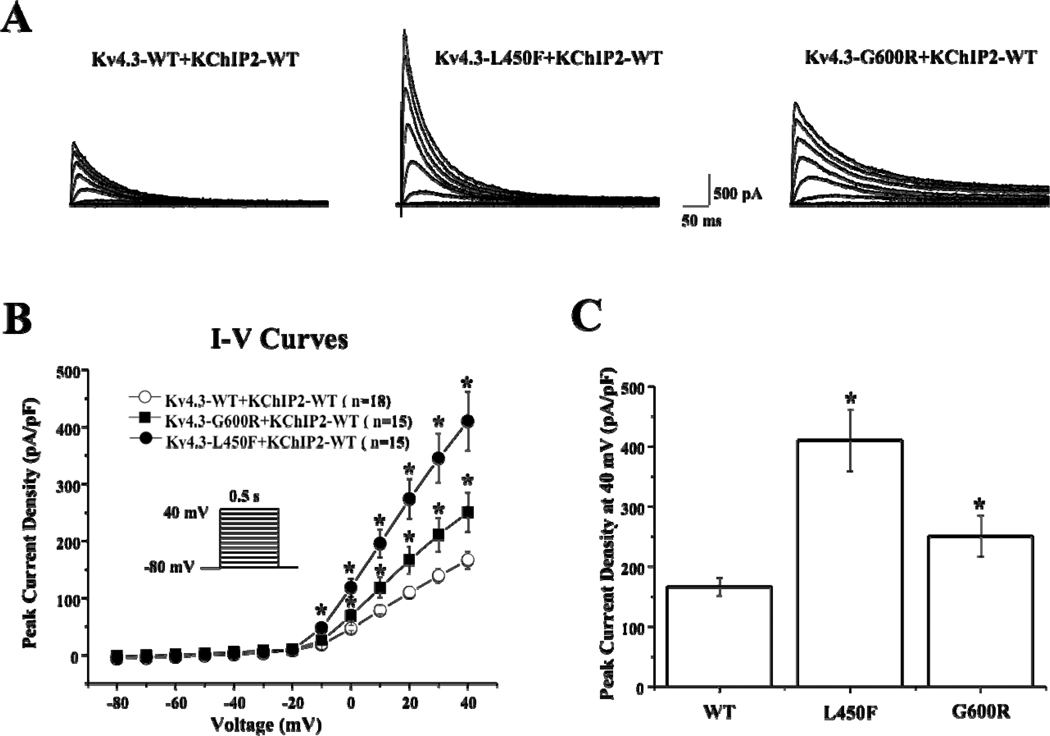
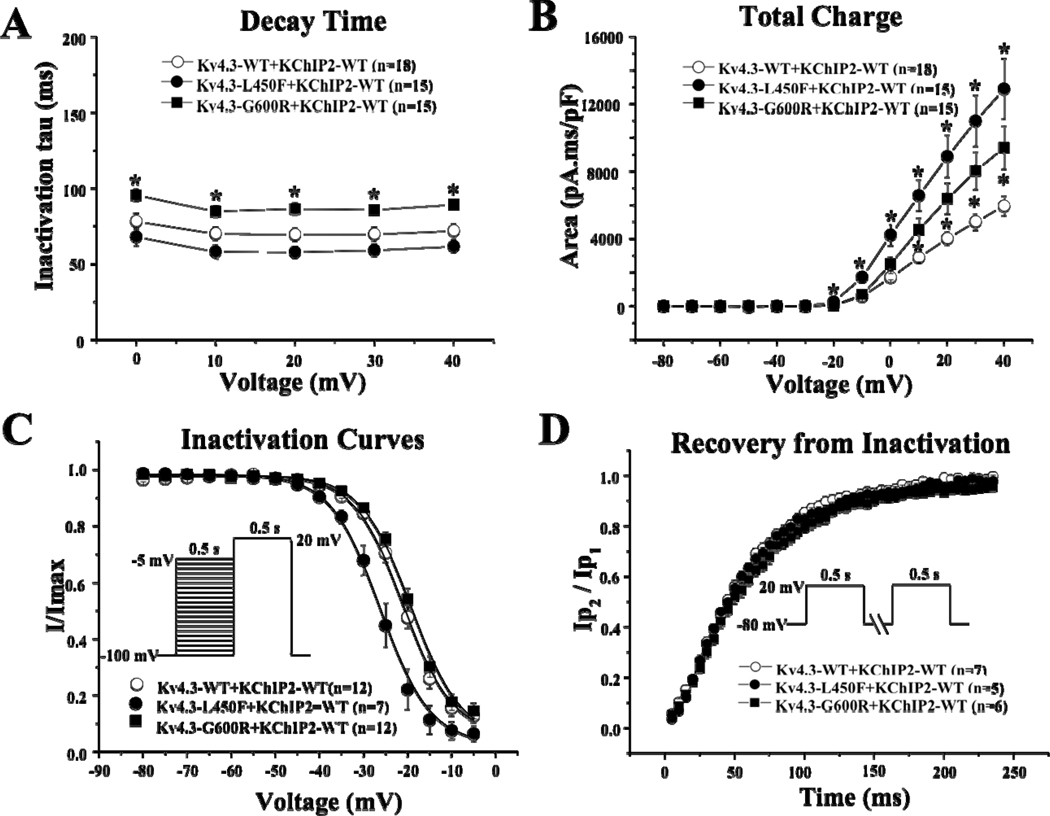
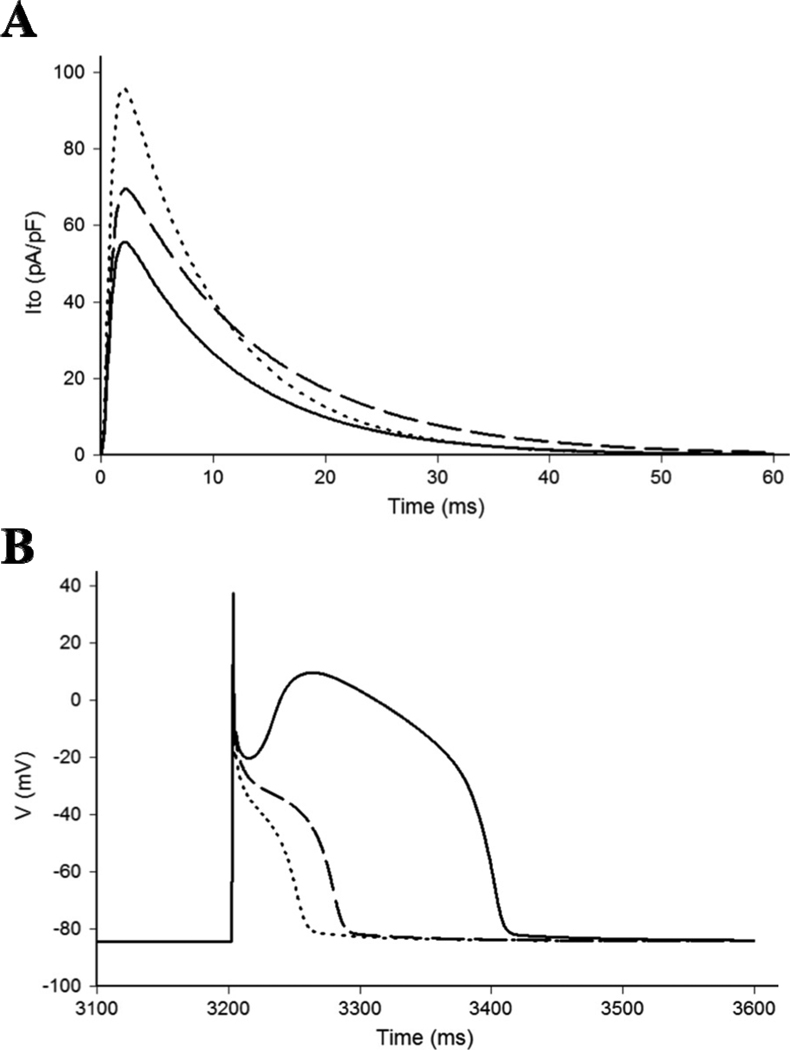
Results: Two BrS1-8 genotype-negative cases possessed novel Kv4.3 missense mutations. Both Kv4.3-L450F and Kv4.3-G600R were absent in 1,560 reference alleles and involved residues highly conserved across species. Both Kv4.3-L450F and Kv4.3-G600R demonstrated a gain-of-function phenotype, increasing peak I(to) current density by 146.2% (n = 15, P <.05) and 50.4% (n = 15, P <.05), respectively. Simulations using a Luo-Rudy II action potential (AP) model demonstrated the stable loss of the AP dome as a result of the increased I(to) maximal conductance associated with the heterozygous expression of either L450F or G600R.
Conclusions: These findings provide the first molecular and functional evidence implicating novel KCND3 gain-of-function mutations in the pathogenesis and phenotypic expression of BrS, with the potential for a lethal arrhythmia being precipitated by a genetically enhanced I(to) current gradient within the right ventricle where KCND3 expression is the highest.
Copyright © 2011. Published by Elsevier Inc.
Conflict of interest statement
MJA is a consultant for Transgenomic/FAMILION. Intellectual property derived from MJA’s research program resulted in license agreements in 2004 between Mayo Clinic Health Solutions (formerly Mayo Medical Ventures) and PGxHealth (recently acquired by Transgenomic).
Figures
Comment in
-
KCND3 mutations in Brugada syndrome: the plot thickens.Heart Rhythm. 2011 Jul;8(7):1033-5. doi: 10.1016/j.hrthm.2011.04.008. Epub 2011 Apr 9. Heart Rhythm. 2011. PMID: 21640846 No abstract available.
References
-
- Zheng ZJ, Croft JB, Giles WH, Mensah GA. Sudden cardiac death in the United States, 1989 to 1998. Circulation. 2001 Oct 30;104:2158–2163. - PubMed
-
- Ellsworth EG, Ackerman MJ. The changing face of sudden cardiac death in the young. Heart Rhythm. 2005 Dec;2:1283–1285. - PubMed
-
- Liberthson RR. Sudden death from cardiac causes in children and young adults. N Engl J Med. 1996 Apr 18;334:1039–1044. - PubMed
-
- Tester DJ, Ackerman MJ. Postmortem long QT syndrome genetic testing for sudden unexplained death in the young. J Am Coll Cardiol. 2007 Jan 16;49:240–246. - PubMed
Publication types
MeSH terms
Substances
Grants and funding
LinkOut - more resources
Full Text Sources
Other Literature Sources
Molecular Biology Databases
