Safety and efficacy of balloon remodeling technique during endovascular treatment of intracranial aneurysms: critical review of the literature
- PMID: 21349960
- PMCID: PMC7966153
- DOI: 10.3174/ajnr.A2403
Safety and efficacy of balloon remodeling technique during endovascular treatment of intracranial aneurysms: critical review of the literature
Abstract
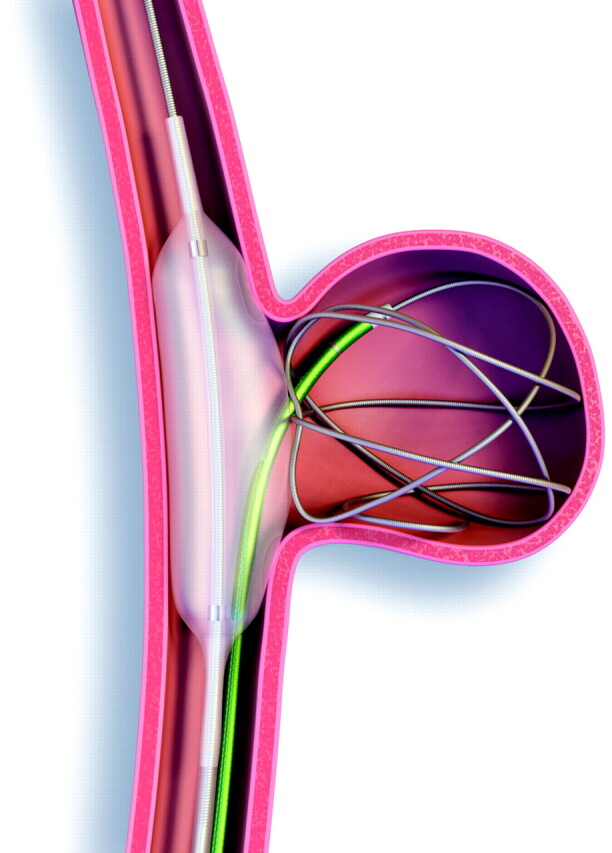
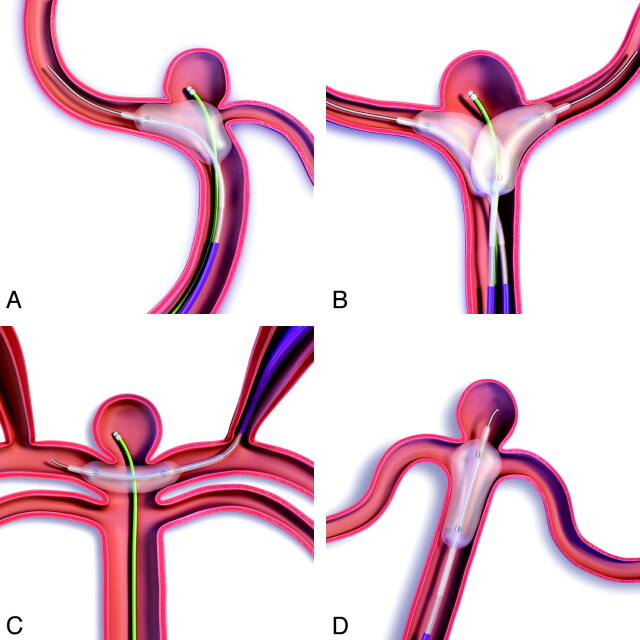
The balloon remodeling technique was initially designed for the endovascular treatment of anatomically complex aneurysms, specifically wide-neck aneurysms. A nondetachable balloon is inflated in front of the aneurysm neck during coil deposition and removed at the end of the procedure. Some controversies regarding the safety of the technique were introduced by the recent publication of a series showing a much higher rate of complications with the remodeling technique compared with the standard coiling technique. However, recent data from the literature review and from the large ATENA and CLARITY series show that the safety of standard coiling and remodeling is quite similar. Anatomic results are also probably better after remodeling. Finally, due to equivalent safety and better anatomic results, the remodeling technique can be widely used in the management of both ruptured and unruptured aneurysms.
Figures
References
-
- Molyneux A, Kerr R, Stratton I, et al. , for the International Subarachnoid Aneurysm Trial (ISAT) Colaborative Group. International Subarachnoid Aneurysm Trial (ISAT) of neurosurgical clipping versus endovascular coiling in 2143 patients with ruptured intracranial aneurysms: a randomised trial. Lancet 2002;360:1262–63 - PubMed
-
- Moret J, Cognard C, Weill A, et al. The “remodeling technique” in the treatment of wide neck intracranial aneurysms. Intervent Neuroradiol 1997;3:21–35 - PubMed
-
- Aletich VA, Debrun GM, Misra M, et al. The remodeling technique of balloon assisted Guglielmi detachable coil placement in wide-necked aneurysms: experience at the University of Illinois at Chicago. J Neurosurg 2000;93:388–96 - PubMed
-
- Lefkowitz MA, Gobin YP, Akiba Y, et al. Balloon-assisted Guglielmi detachable coiling of wide necked aneurysms. II. Clinical results. Neurosurgery 1999;45:531–37 - PubMed
Publication types
MeSH terms
LinkOut - more resources
Full Text Sources
Medical