


Development of transgenic fungi that kill human malaria parasites in mosquitoes
- PMID: 21350178
- PMCID: PMC4153607
- DOI: 10.1126/science.1199115
Development of transgenic fungi that kill human malaria parasites in mosquitoes
Abstract
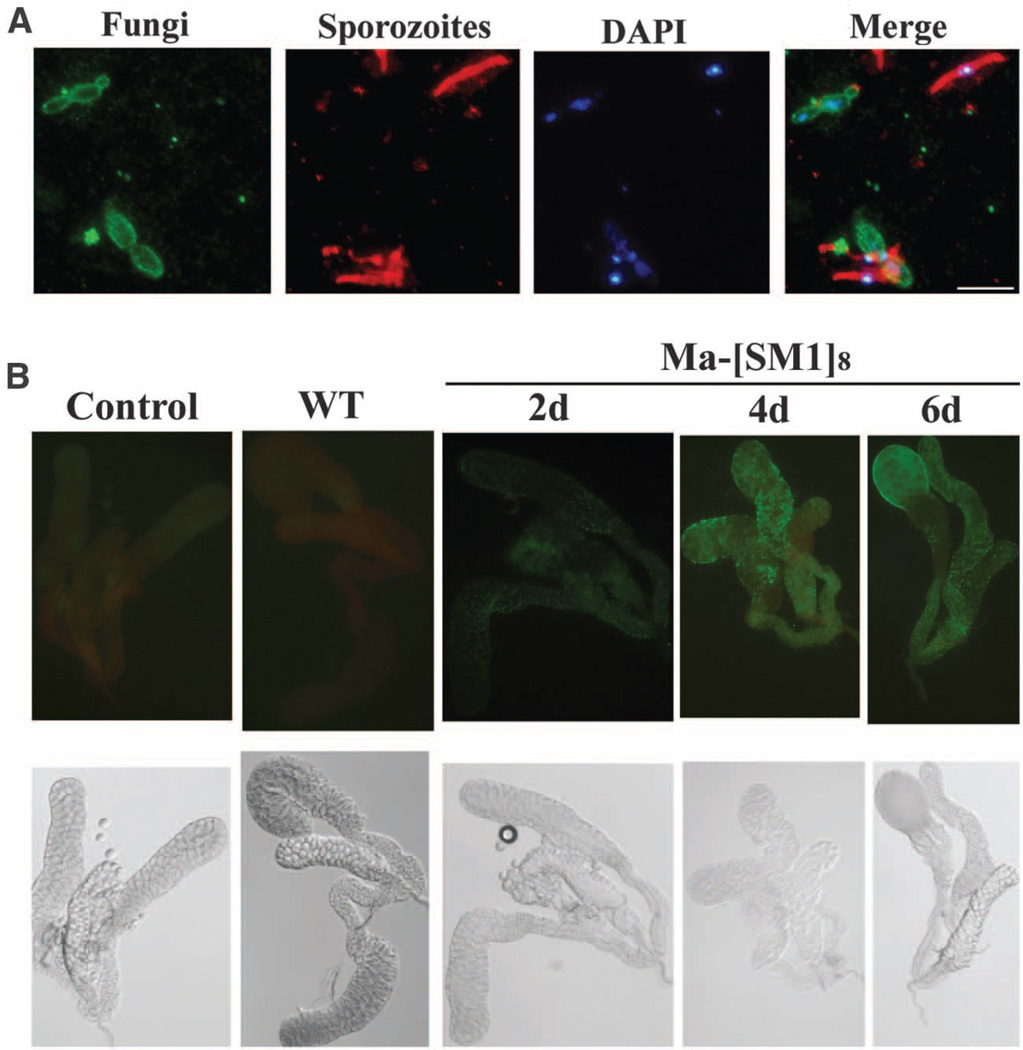
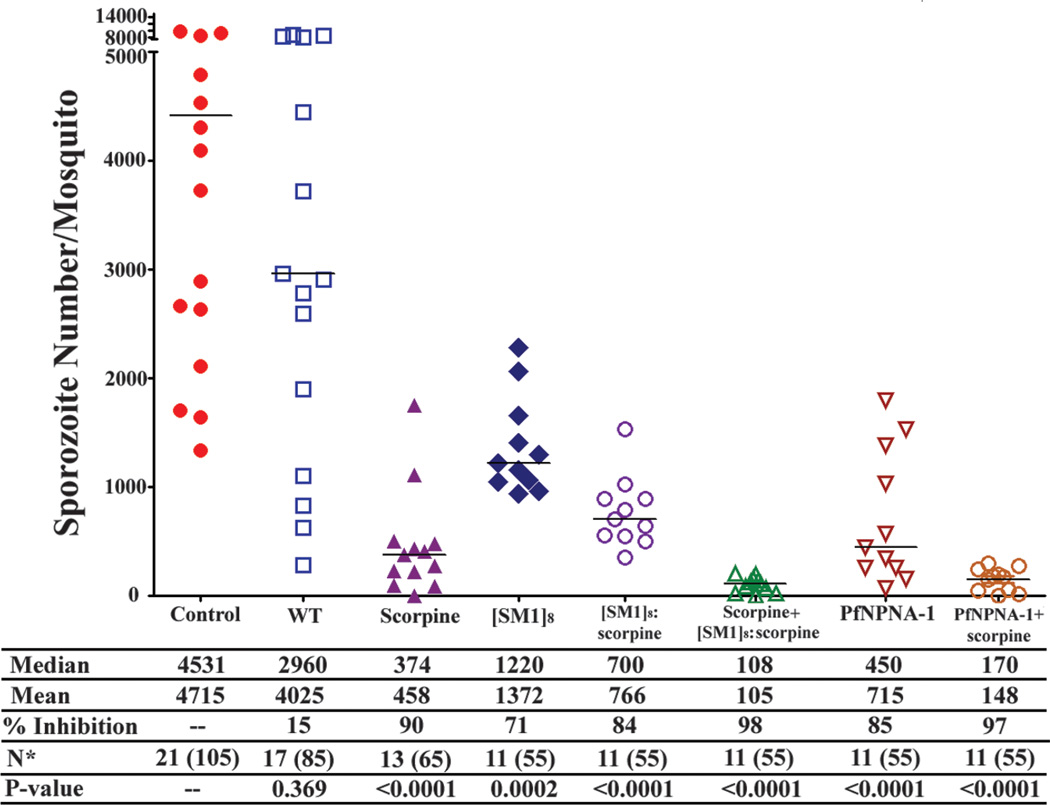
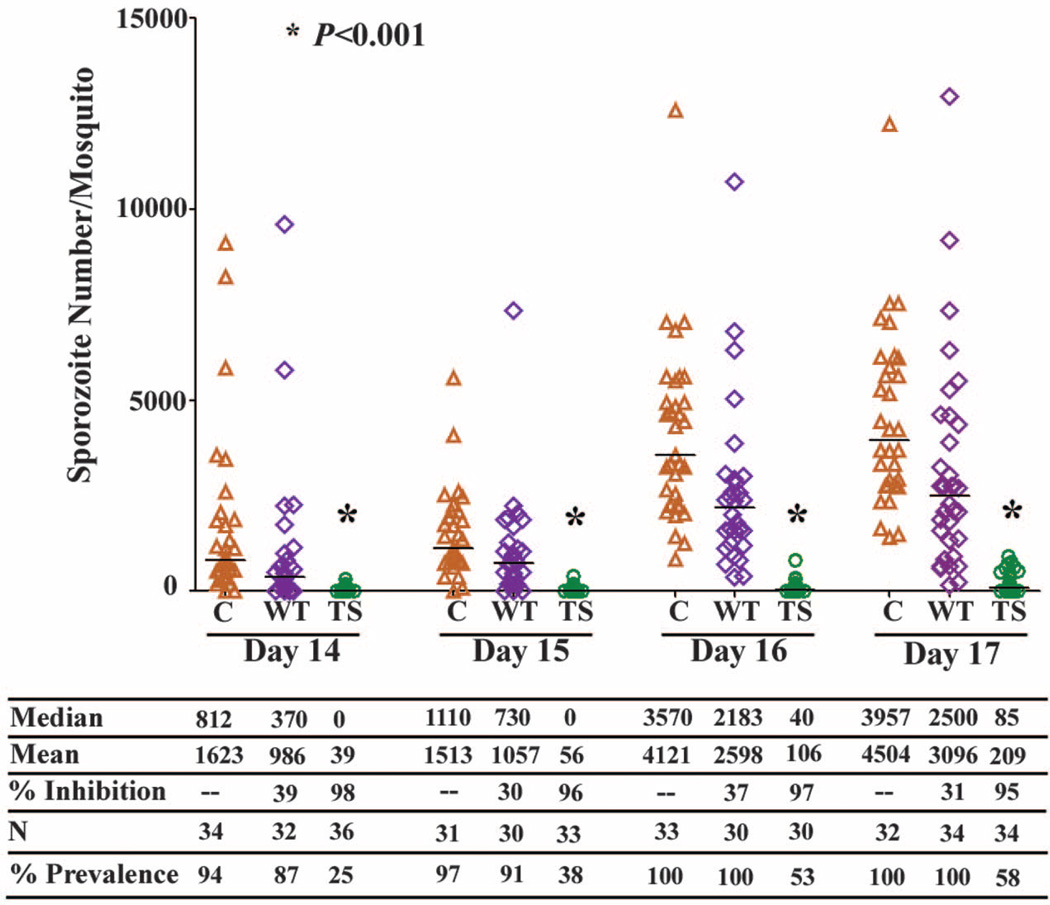
Metarhizium anisopliae infects mosquitoes through the cuticle and proliferates in the hemolymph. To allow M. anisopliae to combat malaria in mosquitoes with advanced malaria infections, we produced recombinant strains expressing molecules that target sporozoites as they travel through the hemolymph to the salivary glands. Eleven days after a Plasmodium-infected blood meal, mosquitoes were treated with M. anisopliae expressing salivary gland and midgut peptide 1 (SM1), which blocks attachment of sporozoites to salivary glands; a single-chain antibody that agglutinates sporozoites; or scorpine, which is an antimicrobial toxin. These reduced sporozoite counts by 71%, 85%, and 90%, respectively. M. anisopliae expressing scorpine and an [SM1](8):scorpine fusion protein reduced sporozoite counts by 98%, suggesting that Metarhizium-mediated inhibition of Plasmodium development could be a powerful weapon for combating malaria.
Figures
Comment in
-
Viability of GM fungi crucial to malaria control.Science. 2011 Apr 8;332(6026):175. doi: 10.1126/science.332.6026.175. Science. 2011. PMID: 21474739 No abstract available.
References
Publication types
MeSH terms
Substances
Grants and funding
LinkOut - more resources
Full Text Sources
Other Literature Sources
