


Enteric glia promote intestinal mucosal healing via activation of focal adhesion kinase and release of proEGF
- PMID: 21350188
- PMCID: PMC3119120
- DOI: 10.1152/ajpgi.00427.2010
Enteric glia promote intestinal mucosal healing via activation of focal adhesion kinase and release of proEGF
Abstract
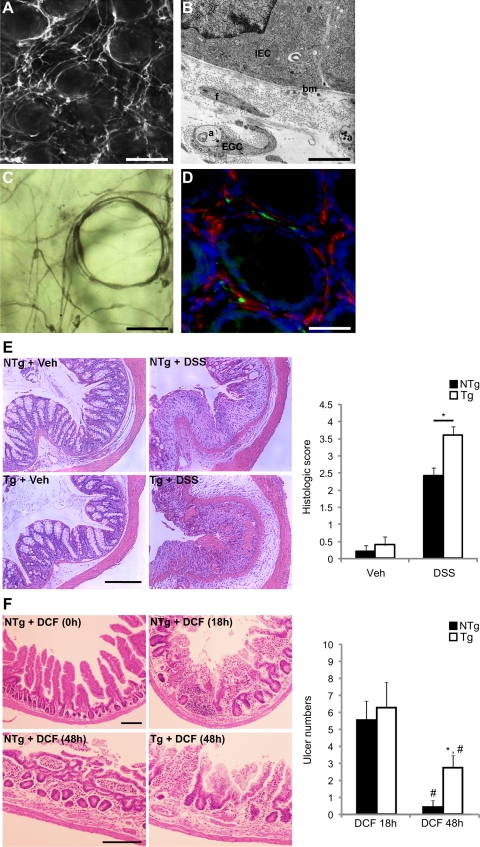
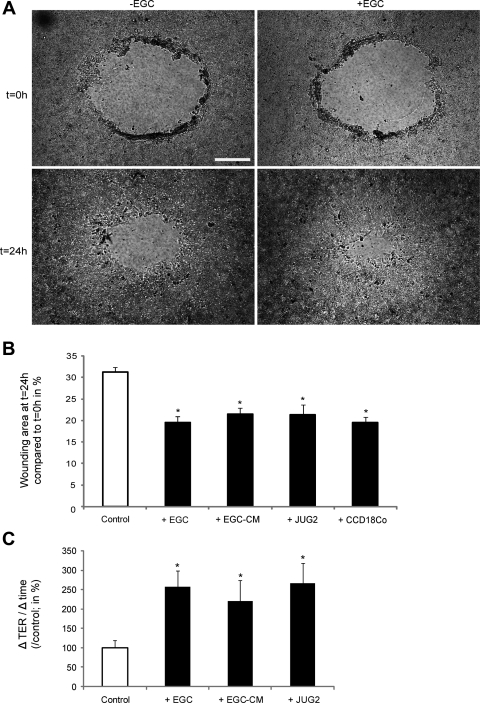
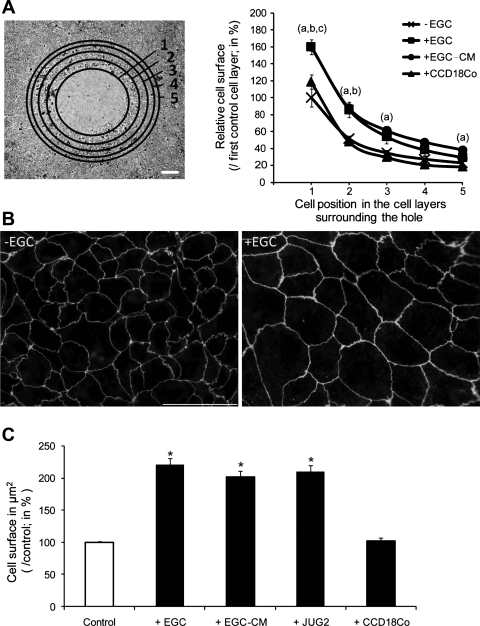
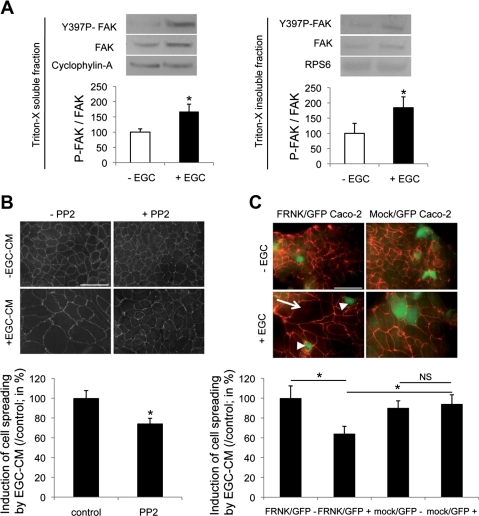
Wound healing of the gastrointestinal mucosa is essential for the maintenance of gut homeostasis and integrity. Enteric glial cells play a major role in regulating intestinal barrier function, but their role in mucosal barrier repair remains unknown. The impact of conditional ablation of enteric glia on dextran sodium sulfate (DSS)-induced mucosal damage and on healing of diclofenac-induced mucosal ulcerations was evaluated in vivo in GFAP-HSVtk transgenic mice. A mechanically induced model of intestinal wound healing was developed to study glial-induced epithelial restitution. Glial-epithelial signaling mechanisms were analyzed by using pharmacological inhibitors, neutralizing antibodies, and genetically engineered intestinal epithelial cells. Enteric glial cells were shown to be abundant in the gut mucosa, where they associate closely with intestinal epithelial cells as a distinct cell population from myofibroblasts. Conditional ablation of enteric glia worsened mucosal damage after DSS treatment and significantly delayed mucosal wound healing following diclofenac-induced small intestinal enteropathy in transgenic mice. Enteric glial cells enhanced epithelial restitution and cell spreading in vitro. These enhanced repair processes were reproduced by use of glial-conditioned media, and soluble proEGF was identified as a secreted glial mediator leading to consecutive activation of epidermal growth factor receptor and focal adhesion kinase signaling pathways in intestinal epithelial cells. Our study shows that enteric glia represent a functionally important cellular component of the intestinal epithelial barrier microenvironment and that the disruption of this cellular network attenuates the mucosal healing process.
Figures
Comment in
-
Neurogastroenterology: A role for enteric glial cells in mucosal healing.Nat Rev Gastroenterol Hepatol. 2011 May;8(5):242. doi: 10.1038/nrgastro.2011.45. Nat Rev Gastroenterol Hepatol. 2011. PMID: 21544057 No abstract available.
References
-
- Abbott NJ, Ronnback L, Hansson E. Astrocyte-endothelial interactions at the blood-brain barrier. Nat Rev Neurosci 7: 41–53, 2006 - PubMed
-
- Amadeu TP, Seabra AB, de Oliveira MG, Costa AM. S-nitrosoglutathione-containing hydrogel accelerates rat cutaneous wound repair. J Eur Acad Dermatol Venereol 21: 629–637, 2007 - PubMed
-
- Blikslager AT, Moeser AJ, Gookin JL, Jones SL, Odle J. Restoration of barrier function in injured intestinal mucosa. Physiol Rev 87: 545–564, 2007 - PubMed
-
- Bouchard V, Demers MJ, Thibodeau S, Laquerre V, Fujita N, Tsuruo T, Beaulieu JF, Gauthier R, Vezina A, Villeneuve L, Vachon PH. Fak/Src signaling in human intestinal epithelial cell survival and anoikis: differentiation state-specific uncoupling with the PI3-K/Akt-1 and MEK/Erk pathways. J Cell Physiol 212: 717–728, 2007 - PubMed
Publication types
MeSH terms
Substances
Grants and funding
LinkOut - more resources
Full Text Sources
Other Literature Sources
Medical
Research Materials
Miscellaneous
