


Daily exercise vs. caloric restriction for prevention of nonalcoholic fatty liver disease in the OLETF rat model
- PMID: 21350190
- PMCID: PMC3094141
- DOI: 10.1152/ajpgi.00510.2010
Daily exercise vs. caloric restriction for prevention of nonalcoholic fatty liver disease in the OLETF rat model
Abstract
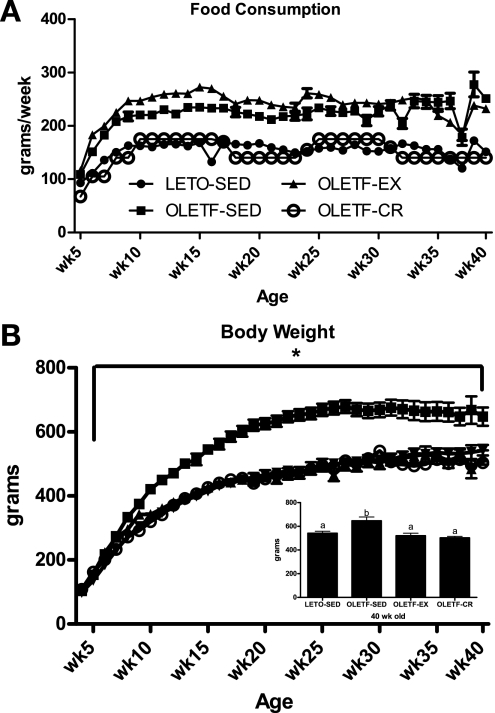
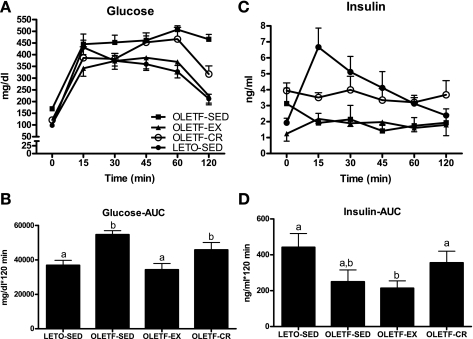
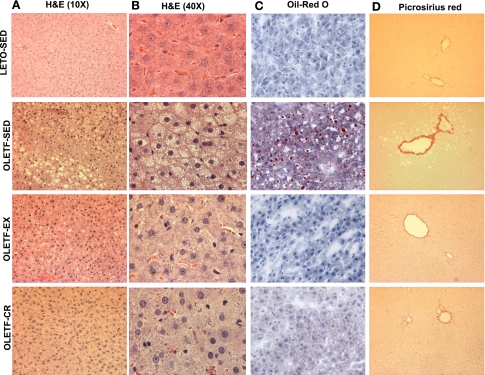
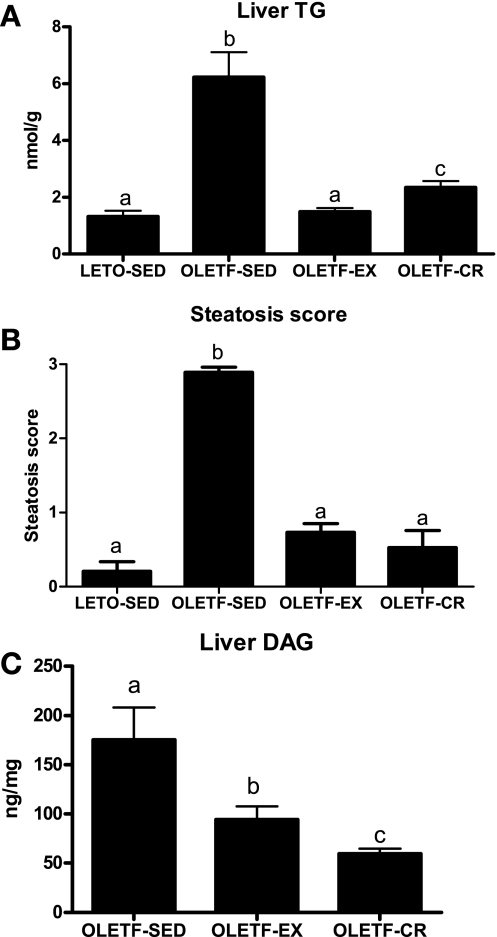
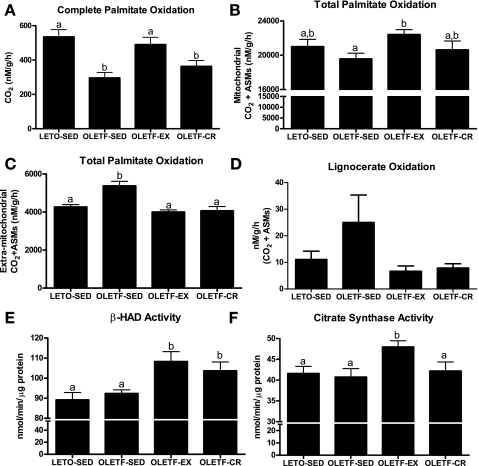
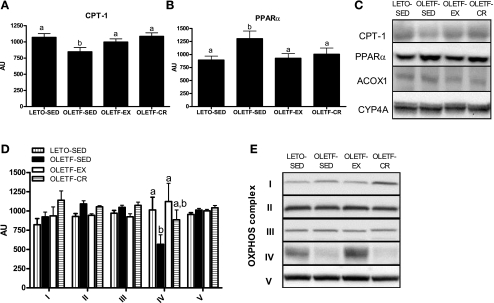
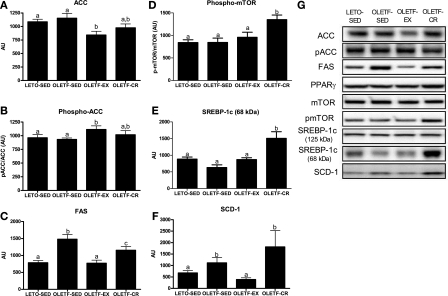
The maintenance of normal body weight either through dietary modification or being habitually more physically active is associated with reduced incidence of nonalcoholic fatty liver disease (NAFLD). However, the means by which weight gain is prevented and potential mechanisms activated remain largely unstudied. Here, we sought to determine the effects of obesity prevention by daily exercise vs. caloric restriction on NAFLD in the hyperphagic, Otsuka Long-Evans Tokushima Fatty (OLETF) rat. At 4 wk of age, male OLETF rats (n = 7-8/group) were randomized to groups of ad libitum fed, sedentary (OLETF-SED), voluntary wheel running exercise (OLETF-EX), or caloric restriction (OLETF-CR; 70% of SED) until 40 wk of age. Nonhyperphagic, control strain Long-Evans Tokushima Otsuka (LETO) rats were kept in sedentary cage conditions for the duration of the study (LETO-SED). Both daily exercise and caloric restriction prevented obesity and the development of type 2 diabetes observed in the OLETF-SED rats, with glucose tolerance during a glucose tolerance test improved to a greater extent in the OLETF-EX animals (30-50% lower glucose and insulin areas under the curve, P < 0.05). Both daily exercise and caloric restriction also prevented excess hepatic triglyceride and diacylglycerol accumulation (P < 0.001), hepatocyte ballooning and nuclear displacement, and the increased perivenular fibrosis and collagen deposition that occurred in the obese OLETF-SED animals. However, despite similar hepatic phenotypes, OLETF-EX rats also exhibited increased hepatic mitochondrial fatty acid oxidation, enhanced oxidative enzyme function and protein content, and further suppression of hepatic de novo lipogenesis proteins compared with OLETF-CR. Prevention of obesity by either daily exercise or caloric restriction attenuates NAFLD development in OLETF rats. However, daily exercise may offer additional health benefits on glucose homeostasis and hepatic mitochondrial function compared with restricted diet alone.
Figures
References
-
- Asayama K, Sandhir R, Sheikh FG, Hayashibe H, Nakane T, Singh I. Increased peroxisomal fatty acid beta-oxidation and enhanced expression of peroxisome proliferator-activated receptor-alpha in diabetic rat liver. Mol Cell Biochem 194: 227–234, 1999 - PubMed
-
- Bass A, Brdiczka D, Eyer P, Hofer S, Pette D. Metabolic differentiation of distinct muscle types at the level of enzymatic organization. Eur J Biochem 10: 198–206, 1969 - PubMed
-
- Bellentani S, Saccoccio G, Masutti F, Croce LS, Brandi G, Sasso F, Cristanini G, Tiribelli C. Prevalence of and risk factors for hepatic steatosis in Northern Italy. Ann Intern Med 132: 112–117, 2000 - PubMed
-
- Browning JD, Szczepaniak LS, Dobbins R, Nuremberg P, Horton JD, Cohen JC, Grundy SM, Hobbs HH. Prevalence of hepatic steatosis in an urban population in the United States: impact of ethnicity. Hepatology 40: 1387–1395, 2004 - PubMed
Publication types
MeSH terms
Substances
Grants and funding
LinkOut - more resources
Full Text Sources
Medical
