


Disinhibited eating in obese adolescents is associated with orbitofrontal volume reductions and executive dysfunction
- PMID: 21350433
- PMCID: PMC3124611
- DOI: 10.1038/oby.2011.15
Disinhibited eating in obese adolescents is associated with orbitofrontal volume reductions and executive dysfunction
Abstract
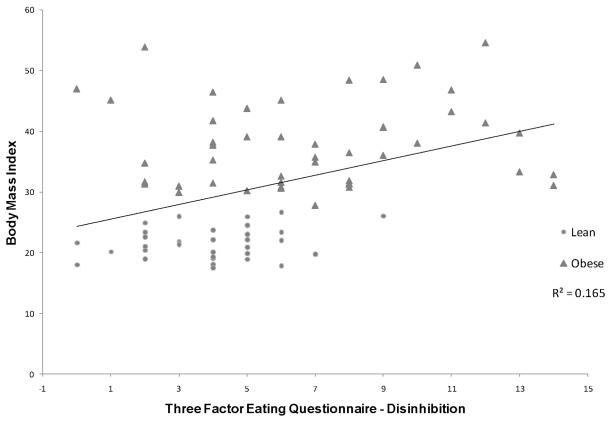
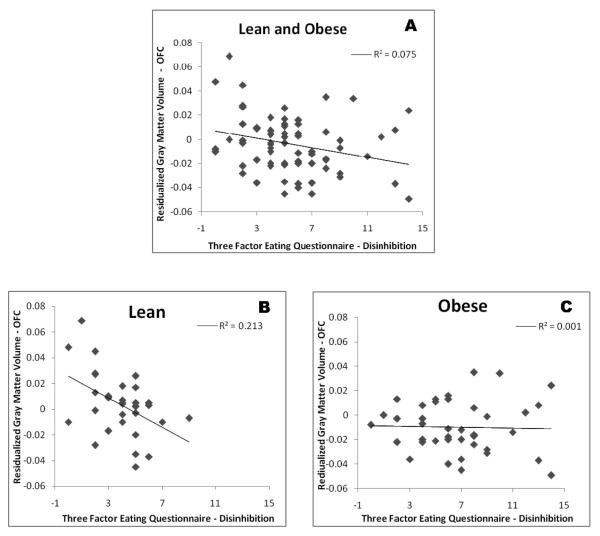
In adults, obesity has been associated with disinhibited eating, decreased cortical gray matter (GM) volume, and lower performance on cognitive assessments. Much less is known about these relationships in adolescence and there are no studies assessing behavioral, cognitive, and neurostructural measures in the same group of study participants. This study examined the relationship between obesity, executive function, disinhibition, and brain volumes in relatively healthy youth. Participants included 54 obese and 37 lean adolescents. Participants received a cognitive battery, questionnaires of eating behaviors, and magnetic resonance imaging (MRI). Neuropsychological assessments included tasks targeting frontal lobe function. Eating behaviors were determined using the Three Factor Eating Questionnaire (TFEQ), and structural MRIs were performed on a 1.5 T Siemens Avanto MRI System (Siemens, Erlangen, Germany) to determine brain GM volumes. Lean and obese adolescents were matched on age, years of education, gender, and socioeconomic status. Relative to lean adolescents, obese participants had significantly higher ratings of disinhibition on the TFEQ, lower performance on the cognitive tests, and lower orbitofrontal cortex (OFC) volume. Disinhibition significantly correlated with BMI, Stroop color-word score, and OFC volume. This is the first report of these associations in adolescents and point to the importance of better understanding the associations between neurostructural deficits and obesity.
Figures
References
-
- Ogden CL, Carroll MD, Flegal KM. High body mass index for age among US children and adolescents, 2003-2006. JAMA. 2008;299:2401–5. - PubMed
-
- Stunkard AJ, Messick S. The three-factor eating questionnaire to measure dietary restraint, disinhibition and hunger. J Psychosom Res. 1985;29:71–83. - PubMed
-
- Schwartz MW, Woods SC, Porte D, Jr., Seeley RJ, Baskin DG. Central nervous system control of food intake. Nature. 2000;404:661–71. - PubMed
-
- Korner J, Leibel RL. To eat or not to eat - how the gut talks to the brain. N Engl J Med. 2003;349:926–8. - PubMed
-
- Martin LE, Holsen LM, Chambers RJ, et al. Neural mechanisms associated with food motivation in obese and healthy weight adults. Obesity (Silver Spring) 2010;18:254–60. - PubMed
Publication types
MeSH terms
Grants and funding
LinkOut - more resources
Full Text Sources
Other Literature Sources
Medical
